Social Determinants Accelerator Act of 2021 This bill establishes the Social Determinants Accelerator Interagency Council to increase coordination among health and social service programs and provide technical assistance to increase the impact of such programs. The council must also assist the Centers for Medicare & Medicaid Services to award up to 25 grants to state, local, or tribal health or human services agencies for social determinants accelerator plans. These plans must address at least one health and one social outcome for a specified target population.
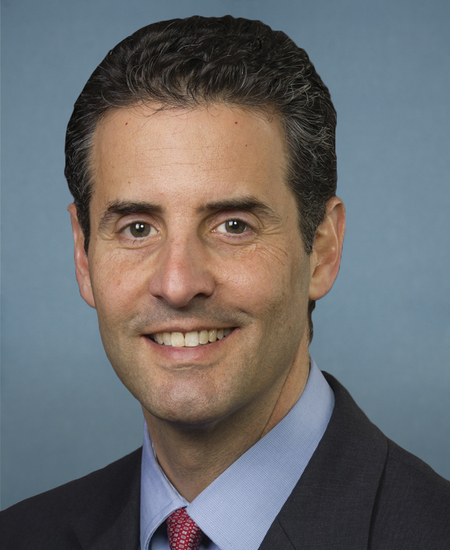
Rep. John P. Sarbanes
Sponsored bills
Legacy Roads and Trails Act This bill directs the Department of Agriculture (USDA) to establish the Forest Service Legacy Roads and Trails Remediation Program. Specifically, under the program, the Forest Service, taking into account predicted changes in weather and hydrology related to global climate change, shall carry out storm damage risk reduction, including deferred maintenance, repairs, road and trail relocation, and associated activities on roads, trails, tunnels, and bridges under the jurisdiction of the Forest Service; restore waterways and natural migration of fish and other aquatic species by removing or replacing culverts or other infrastructure from such waterways; and decommission unneeded roads. In implementing the program, the Forest Service shall give priority to projects that protect or restore water quality and watershed function; a watershed that supplies a public drinking water system; the habitat of a threatened, endangered, or sensitive fish or wildlife species, or a species of conservation concern; or a watershed for which the Forest Service has completed a watershed protection and restoration action plan. The Forest Service shall identify the minimum road system needed for each unit of the National Forest System. USDA shall review, and may revise, an identification of the minimum road system in accordance with federal regulations relating to the administration of the forest transportation system.
Safe Schools Improvement Act of 2021 This bill requires states to direct their local educational agencies (LEAs) to establish policies that prevent and prohibit bullying and harassment of elementary and secondary school students. In particular, these policies must prohibit bullying and harassment based on race, color, national origin, sex, sexual orientation, gender identity, disability, or religion. Further, LEAs must provide (1) students, parents, and educational professionals with annual notice of the conduct prohibited in their disciplinary policies; (2) students and parents with grievance procedures that target such conduct; and (3) the public with annual data on the incidence and frequency of that conduct at the school and LEA level. The Department of Education must conduct and report on an independent biennial evaluation of programs and policies to combat bullying and harassment in elementary and secondary schools. The National Center for Education Statistics must collect state data to determine the incidence and frequency of the conduct prohibited by LEA disciplinary policies.
Merit Systems Protection Board Empowerment Act of 2021 This bill reauthorizes the Merit Systems Protection Board through FY2026 and modifies certain requirements relating to the administration of cases involving whistleblowers. Specifically, it requires cases involving alleged retaliation against whistleblowers to be heard by the board, an administrative law judge, or a designated board employee who has received training regarding the protections afforded whistleblowers under law.
Better Care Better Jobs Act This bill establishes programs and provides funds for state Medicaid programs to improve home- and community-based services (HCBS), such as home health care, personal care, case management, and rehabilitative services. Specifically, the bill provides funds for the Centers for Medicare & Medicaid Services to award planning grants, develop quality measures, and provide technical assistance to states regarding specified HCBS improvements, particularly with respect to access, utilization, and the associated workforce. The bill also increases the Federal Medical Assistance Percentage (i.e., federal matching rate) for HCBS in states that develop plans and meet specified benchmarks for improvements. The bill also makes permanent (1) the Money Follows the Person Rebalancing Demonstration Program (a grant program to help states increase the use of HCBS for long-term care and decrease the use of institutional care), and (2) certain provisions regarding Medicaid eligibility that protect against spousal impoverishment for recipients of HCBS.
Therapeutic Fraud Prevention Act of 20 21 This bill prohibits commercial conversion therapy, which is a practice or treatment designed to change a person's sexual orientation or gender identity or otherwise change behaviors, thoughts, or expressions related to gender or sexual attraction. This prohibition does not apply to treatment that assists an individual undergoing a gender transition or facilitates identity exploration and development.
Saving Hazardous And Declining Environments Act or the SHADE Act This bill requires the Department of Housing and Urban Development to award grants for government entities and nonprofit organizations to plant trees in low-income communities and in communities meeting designated minority or limited English-proficiency thresholds.
U.S.-Greece Defense and Interparliamentary Partnership Act of 2021 This bill authorizes programs to provide defense-related assistance to Greece and addresses related issues. The bill authorizes providing to Greece from FY2022-FY2026 (1) assistance through the European Recapitalization Incentive Program to help Greece meet its defense needs and transition away from Russian-produced military equipment; and (2) International Military Education and Training assistance for various purposes, including to train future leaders and to establish rapport between the U.S. Armed Forces and Greece's military. The President may expedite the delivery of future purchases of F-35 aircraft by Greece. The bill also establishes a group consisting of Senators and Members of the House of Representatives to meet annually with representatives from Cyprus, Greece, and Israel to discuss various issues such as maritime security, defense cooperation, and energy.
Protecting Older Workers Against Discrimination Act of 2021 This bill revises the evidentiary standard for age discrimination by establishing an unlawful employment practice when the complaining party demonstrates that age or participation in an investigation, proceeding, or litigation related to an age discrimination claim was a motivating factor for an adverse practice, even though other factors also motivated the practice (thereby allowing what are commonly known as mixed motive claims). The bill (1) permits the complaining party to rely on any type or form of admissible evidence, which need only be sufficient for a reasonable trier of fact to find that an unlawful practice occurred; and (2) declares that the complaining party shall not be required to demonstrate that age or retaliation was the sole cause of the employment practice (thereby rejecting the Supreme Court's decision in Gross v. FBL Financial Services, Inc. , which requires the complainant to prove that age was the but-for cause for the employer's decision). The bill applies this evidentiary standard to other employment discrimination and retaliation claims, including claims under the Civil Rights Act of 1964, the Americans With Disabilities Act of 1990, and the Rehabilitation Act of 1973. In a claim in which age discrimination is shown, but where the employer demonstrates that it would have taken the same action absent the motivating factor of age, the bill authorizes courts to grant declaratory and injunctive relief, but prohibits the court from awarding damages or issuing an order requiring any admission, reinstatement, hiring, promotion, or payment. This limitation also applies to claims of discrimination based on disability. The bill also includes reporting requirements for the Equal Employment Opportunity Commission and the Department of Labor.

Cultivating Opportunity and Recovery from the Pandemic through Service Act or the CORPS Act This bill makes several changes to AmeriCorps programs during the COVID-19 health emergency. Specifically, the bill: increases living allowance payments to program participants; increases educational awards for program participants; relaxes program requirements, including reducing the age requirement for AmeriCorps Seniors to 45 and older; creates a pilot program to allow state commissions to directly place individuals in approved AmeriCorps programs; and allows for targeted AmeriCorps grants to fund recovery projects in communities disproportionately affected by COVID-19. The bill also excludes AmeriCorps living allowance payments and educational awards from taxable income for program participants.