

Maddy summaryHR 1202, the REDI Act, amends the Higher Education Act to allow medical and dental residents to temporarily pause federal student loan payments without accruing interest during their internship or residency programs. This directly affects borrowers with federal student loans who are enrolled in qualifying medical or dental training programs. The key provision adds a new rule (paragraph 6) ensuring these borrowers qualify for a deferment period where they don't pay principal and interest accrues at 0%. The change modifies existing loan rules to explicitly include medical/dental residents under the "in-school" deferment category. This policy change provides immediate financial relief during a critical training phase for healthcare professionals.
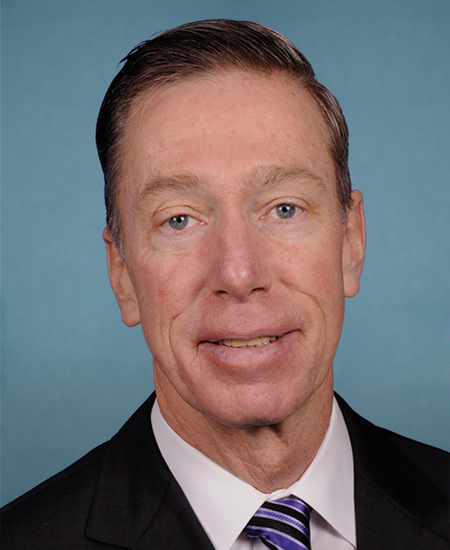
Rep. Stephen F. Lynch
Sponsored bills
Maddy summaryHR 1187, the Civil Aviation Security and Safety Act of 2023, requires the FAA to overhaul aircraft registration to prevent security risks. It mandates that aircraft owners provide personal details (name, address, date of birth, license, and photos), verifies applicants against sanctions lists, and bans registration for sanctioned individuals or entities. The bill also requires the FAA to address specific registration abuses like fictitious owners, false addresses, and unverified ownership transfers. These changes directly affect aircraft owners, dealers, and the FAA, with new verification processes and fees to cover security costs, all aimed at enhancing national security and safety.
Maddy summaryHRES 160 is a non-binding House resolution recognizing Black History Month as a time to honor the contributions of LGBTQI+ Black Americans throughout U.S. history. It commemorates specific historical figures and advocates without creating new laws or policies. The resolution highlights the unique intersection of racial, LGBTQI+, and social justice contributions, including figures like Marsha P. Johnson, James Baldwin, and Alvin Ailey. As a symbolic gesture, it has no legislative effect but aims to raise awareness of underrepresented historical narratives.
Embassy Construction Accountability Act of 2023 This bill requires additional information to be included in a report from the Department of State to Congress concerning overseas capital construction projects and major embassy security upgrade projects. The additional information required for such projects includes (1) the causes of cost increases of 15 percent or more, (2) the causes of completion delays of 180 days or more, and (3) the justification for any stop-work or suspension-of-work orders issued by the State Department.
OFAC Outreach and Engagement Capabilities Enhancement Act This bill addresses the outreach activities of the Office of Foreign Assets Control (OFAC), including by requiring the Government Accountability Office (GAO) to assess such outreach activities. (OFAC, within the Department of the Treasury, is one of the agencies that administers and enforces economic and trade sanctions.) Specifically, GAO must conduct a study examining various aspects of OFAC’s outreach activities, including (1) the goal and strategy of such activities; and (2) how, if at all, the activities help with sanctions enforcement. After reviewing the GAO study, OFAC must assess the feasibility of a voluntary public-private information sharing program to support efforts to administer and enforce economic sanctions. After reviewing the GAO study and OFAC feasibility assessment, Treasury may direct OFAC to establish a pilot program to facilitate such voluntary public-private information sharing.
Maddy summaryHR 1088, the Shirley Chisholm Congressional Gold Medal Act, authorizes a posthumous Congressional Gold Medal to honor Congresswoman Shirley Chisholm, the first African-American woman elected to Congress (1968) and the first Black candidate for a major party's presidential nomination (1972). The bill directs the Treasury Secretary to design and strike a gold medal featuring Chisholm's image, which will be presented by Congress and then permanently displayed at the Smithsonian Institution. Duplicate bronze medals may be sold to the public to cover production costs, with proceeds deposited into the U.S. Mint fund. This bill commemorates Chisholm's legacy and achievements without creating new laws or affecting any current policies.
Maddy summaryThis bill authorizes a posthumous Congressional gold medal for Constance Baker Motley, a pioneering civil rights attorney and federal judge. It directs the Treasury to strike a gold medal featuring her image and name, to be presented to her son, Joel Motley III, and niece, Constance Royster. The medal is a commemorative tribute recognizing her historic contributions to civil rights and her service as the first African-American woman appointed to a federal judgeship. No new policies or programs are created; the bill solely honors her legacy through a commemorative medal.
Maddy summaryHR 907, the Protecting Community Television Act, is a procedural bill that modifies the legal definition of "franchise fee" in the Communications Act of 1934. It changes the wording from "includes" to "means" and adds "other monetary" before "assessment" in the fee definition. This amendment does not alter actual fee amounts, payment requirements, or protections for community television providers. It solely adjusts the technical language used in federal law to describe these fees. The bill has no direct impact on community TV operations or funding, as it only refines the statutory definition.
Maddy summaryHR 902, "Ellie’s Law," authorizes $10 million annually from fiscal years 2024 through 2028 for the National Institute of Neurological Disorders and Stroke to conduct broader research on unruptured brain aneurysms. The funding aims to study diverse patient populations by age, sex, and race, supplementing existing research budgets without replacing them. This bill directly affects researchers and future patients by increasing federal investment in a condition impacting 6.6 million Americans, with current federal spending at only $2.08 per affected person yearly. The legislation focuses on advancing scientific understanding to improve prevention and treatment, citing the high mortality rate (50% fatal) and significant healthcare costs ($4.1 billion annually in direct costs) associated with brain aneurysm ruptures.
Maddy summaryThe HELP Copays Act (HR 830) changes how health insurance plans calculate patient cost-sharing. It requires that payments made by third parties (like pharmacies, charities, or discount programs) toward medical costs count toward a patient's deductible, copay, or out-of-pocket limit. This directly affects insured individuals who receive financial assistance, discounts, or product vouchers for healthcare expenses. The law ensures these external payments reduce the patient's actual out-of-pocket costs more quickly, aligning with existing Affordable Care Act and Public Health Service Act requirements.