

Maddy summaryThis bill expands health care coverage under TRICARE for military dependents. It eliminates a separate premium for young adults aged 21-26 enrolled in the TRICARE Young Adult Program, meaning they will no longer pay an extra fee for coverage. The bill also removes an eligibility restriction that previously limited coverage for some dependents in this age group. These changes directly affect military service members' adult children and spouses who rely on TRICARE Young Adult coverage. The policy update simplifies enrollment and reduces out-of-pocket costs for these beneficiaries.
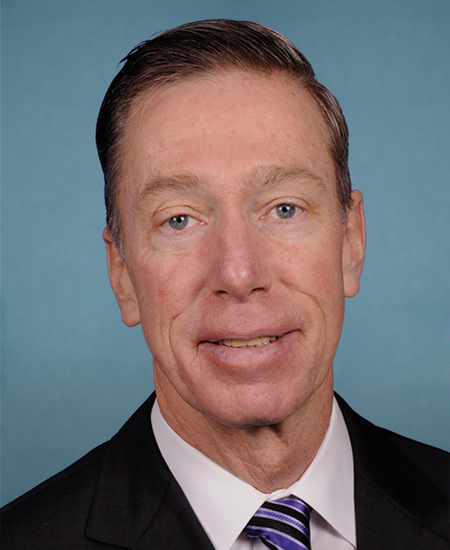
Rep. Stephen F. Lynch
Sponsored bills
Maddy summaryThis bill authorizes a single Congressional Gold Medal to honor all U.S. Army Dustoff crews who served during the Vietnam War (1962-1973). It recognizes their critical role in evacuating nearly 900,000 wounded personnel, including U.S., South Vietnamese, and allied forces, under extreme combat conditions. The medal, designed with input from the Secretary of Defense, will be presented to the U.S. Army Medical Department Museum for permanent display. Duplicate bronze medals may be sold to cover costs, but the primary action is the commemorative recognition of these crews' service.
Veterans Infertility Treatment Act of 2023 This bill requires the Department of Veterans Affairs (VA) to furnish infertility treatments, standard fertility preservation services, or both to a covered veteran or partner of a covered veteran. A covered veteran is a veteran who is enrolled in the VA health care system and has infertility or is at risk of having infertility, as determined by a licensed physician. The VA may furnish up to three completed in vitro fertilization cycles that result in live birth, or 10 attempted cycles, whichever occurs first. Additionally, the VA may furnish in vitro fertilization treatment using donated gametes or embryos. The VA must receive consent to furnish an in vitro fertilization cycle from the covered veteran, the partner of a covered veteran, and the third-party donor (if applicable). For purposes of paying travel expenses for treatment or services to the partner of a covered veteran, the VA must deem the partner to be a veteran receiving treatment or care. The VA must prescribe regulations related to the provision of infertility treatments and standard fertility preservation services as required by this bill. Prior to the enactment of such regulations, the VA must ensure that (1) counseling and treatment furnished under existing authority is available to a veteran and the veteran's partner, regardless of whether they are married; and (2) treatment under existing authority may be furnished using donated gametes or embryos.
Maddy summaryThe AIM Act of 2023 removes numerous restrictions on the Bureau of Alcohol, Tobacco, Firearms and Explosives (ATF) that were previously placed in annual appropriations bills. The bill eliminates prohibitions on sharing firearms trace data with law enforcement, requirements for physical inventory checks of firearms dealers, and the 24-hour destruction rule for background check records. It also revises standards for revoking firearms licenses, changing the requirement from "willful" to "knowing" violations, and removes barriers to processing Freedom of Information Act requests related to firearms. This legislation directly affects the ATF's operations and firearms dealers who must comply with federal licensing requirements.
Maddy summaryHR 964, the Democracy in Design Act, requires the General Services Administration (GSA) to follow the 1962 "Guiding Principles for Federal Architecture" when designing all new U.S. public buildings. It mandates the GSA Administrator to create new regulations within 180 days of the bill's enactment, establishing minimum design standards for federal buildings. These regulations must be developed after public notice and comment, as required by standard federal rulemaking procedures. The bill directly affects all federal building projects and the GSA's design process, ensuring adherence to established architectural principles.
Maddy summaryThe Saracini Enhanced Aviation Safety Act of 2023 requires the Federal Aviation Administration (FAA) to mandate secondary cockpit barriers on all commercial passenger aircraft operating under standard airline regulations. Specifically, it directs the FAA to issue an order requiring installation of these barriers within 18 months of the law's enactment. This applies to most major airlines operating scheduled passenger flights in the U.S. The key provision is the new safety requirement for barriers to prevent unauthorized cockpit access during flights. The law directly affects commercial airlines and their aircraft, focusing on a concrete operational safety change without specifying cost or implementation details.
Maddy summaryHR 800, the "DO NOT Call Act of 2023," amends the Telephone Consumer Protection Act of 1991 to increase penalties for intentional telemarketing violations. It adds criminal penalties of up to one year in prison or fines for willfully and knowingly making unwanted calls, with harsher penalties (up to three years) for severe offenses like sending over 100,000 calls in 24 hours, causing $5,000+ in damages, or committing calls to further a felony. The bill also raises civil penalties for providing false caller identification information from $10,000 to $20,000 per violation. This directly affects telemarketers, debt collectors, and businesses making unsolicited calls, increasing legal consequences for repeated or large-scale violations.
Maddy summaryHR 782 prohibits state officials from interfering with abortion services provided across state lines. It specifically blocks states from restricting: (1) out-of-state patients traveling for legal abortions, (2) providers offering such services, (3) assistance for travel or care, or (4) the interstate shipment of FDA-approved abortion drugs. The bill allows the federal Attorney General or affected individuals to sue violators for injunctions, damages, and attorney fees. It directly affects patients seeking care in other states, healthcare providers, transportation services, and pharmacies handling FDA-approved abortion medications. The law focuses on preventing state laws from blocking access to legally permitted abortion services.
Maddy summaryHRES 119 is a symbolic resolution expressing the U.S. House of Representatives' support for designating March 2023 as "Music in Our Schools Month." It highlights music's cultural importance, historical role in education, and documented benefits for student engagement and development. The resolution specifically notes inequitable access to music programs in underserved schools (including those in urban/rural areas, high-poverty districts, and majority-Black, Hispanic, or Native American communities). As a non-binding resolution, it does not create new policies, funding, or mandates - it solely serves to publicly recognize the value of music education.
Maddy summaryHR 927, the Supreme Court Ethics Act, establishes new ethics rules and oversight for Supreme Court justices. It requires the Judicial Conference to create a binding code of conduct within one year and mandates the appointment of an Ethics Investigations Counsel to receive public complaints, investigate potential violations, and issue annual public reports. The bill also requires justices to publicly disclose their reasons for recusing themselves or denying recusal motions in cases. These provisions directly affect Supreme Court justices by creating a formal process for handling ethics concerns and increasing transparency around their conduct.