

Maddy summaryHRES 967 would amend House rules to allow Members who have recently given birth to vote by proxy for up to six weeks after childbirth. Specifically, a new rule permits a Member to designate another Member as their proxy during this period to cast votes on their behalf. The proxy cannot be used to count the Member's presence for quorum purposes in the House or its committees. This change directly affects female Members during their postpartum leave, with no other proxy voting allowed under the amendment.
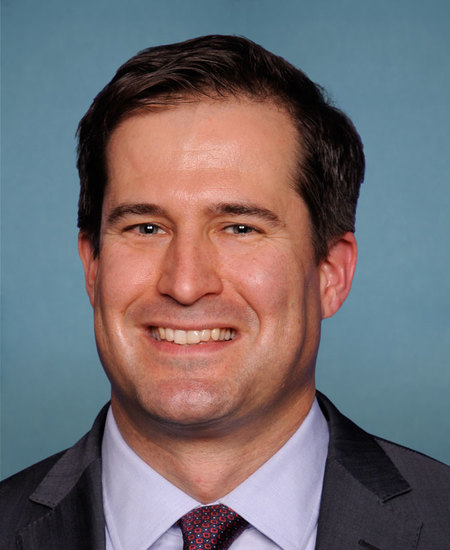
Rep. Seth Moulton
Sponsored bills
Maddy summaryHRES 963 is a symbolic resolution honoring Korean American Day, which commemorates the January 13, 1903 arrival of the first large wave of Korean immigrants to the U.S. It recognizes Korean Americans' contributions to U.S. society, including their economic, cultural, and military impacts, and marks the 121st anniversary of this historic migration. The resolution urges all Americans to observe Korean American Day to appreciate these contributions. As a commemorative measure, it does not create new policies or affect specific groups beyond this ceremonial recognition.
Maddy summaryHRES 955 is a resolution commending Taiwan for its democratic election history and supporting Taiwan's democratic institutions. It recognizes Taiwan's transition to democracy since the late 1980s, including 7 presidential and 9 legislative elections held since then, all deemed free and fair. The resolution specifically expresses support for Taiwan's upcoming January 13, 2024, elections and condemns interference by the Chinese Communist Party. It affirms U.S. commitment to a strong partnership with Taiwan across multiple domains and supports Taiwan's self-defense and liberty. As a procedural resolution, it does not create new law but formally expresses congressional support for Taiwan's democratic development.
Maddy summaryThe Affordable Connectivity Program Extension Act of 2024 allocates $7 billion in funding for the Affordable Connectivity Program (ACP) during fiscal year 2024. The ACP provides subsidies to low-income households to help cover the cost of internet service and connected devices like laptops or tablets. This funding ensures the program can continue supporting eligible households throughout the year, with the money remaining available until fully spent. The bill extends existing program funding without changing eligibility criteria or service requirements.
Maddy summaryHR 6524, the Federal Cybersecurity Workforce Expansion Act, creates a new federal apprenticeship program to address the cybersecurity workforce shortage by training individuals for cybersecurity roles within federal agencies. The program partners with community colleges, career and technical schools, and other educational institutions to provide training aligned with federal cybersecurity needs. It also establishes a pilot program specifically for veterans and military members transitioning to civilian life, offering cybersecurity training with portable credentials that can be used across the job market. The bill requires coordination with multiple federal agencies and includes reporting requirements to assess program effectiveness and track participant employment outcomes.
Maddy summaryThe Restore Honor to Service Members Act of 2023 establishes a Department of Defense "Tiger Team" to improve outreach to veterans with certain discharge statuses (specifically those discharged under "former section 654" before 2011, often related to policies like the "Don't Ask, Don't Tell" era). The team will collaborate with the VA, veterans' groups, and other stakeholders to identify eligible veterans, share contact information, and guide them through the existing review process under Section 527 of the 2020 National Defense Authorization Act. The bill requires the team to submit regular progress reports to Congress and a final report within three years, tracking how many veterans successfully changed their discharge status to "honorable" through the review process. This focuses on streamlining access to an existing review mechanism, not creating new benefits or altering discharge standards.
Maddy summaryThe Care Across Generations Act (HR 6835) creates a competitive grant program to fund child care centers within long-term care facilities (like nursing homes and assisted living centers). It directly affects facilities that operate or partner with licensed child care centers to coordinate activities between children and seniors. Key provisions include 36-month grants for co-locating child care, mandatory evaluations of program effectiveness, and required reports to Congress on outcomes and best practices. The bill aims to test whether integrated facilities improve experiences for both children and seniors, with findings to inform future policy.
Maddy summaryThis bill provides back pay and benefits to senior military officers (O-7 rank or higher) whose promotions were delayed due to a Senate confirmation suspension starting in February 2023. It requires the Secretary of Defense to retroactively pay these officers from a specific date - determined as the later of 30 days after their nomination was placed on the Senate Executive Calendar or the date they would have been appointed without the delay - and to establish their seniority from that same date. The law directly affects officers confirmed between December 5-31, 2023, who were impacted by the confirmation pause. It does not change future confirmation procedures but corrects past financial and career consequences for affected service members.
Maddy summaryHR 6416, the "Russian War Crimes in Ukraine Tax Act," imposes a 100% tax on interest and dividends earned from frozen Russian and Belarusian sovereign assets held abroad. This tax revenue is directed into a new Ukraine Reconstruction Trust Fund, which must be used for Ukraine's reconstruction, humanitarian aid, economic development, and transparent governance. The bill requires U.S. financial institutions to withhold this tax from qualifying income and overrides international treaty obligations to ensure implementation. It also mandates annual reports on fund usage to Congress, specifying that all revenues from the tax must support Ukraine's recovery efforts as defined in the legislation.
Maddy summaryThis bill establishes tax relief for qualified residents of Taiwan earning income in the United States by reducing tax rates on interest, dividends, and royalties to 10% or 15% (instead of the standard 30%). It also exempts certain wages and income from entertainment activities under $30,000 from U.S. taxation. To qualify, individuals must meet specific residency requirements, and entities must demonstrate substantial business activity in Taiwan. The bill modifies withholding tax procedures to implement these new rates and requires reciprocal tax benefits from Taiwan to be in place.