

Maddy summaryHR 7265 establishes federal grant programs to reduce youth suicide rates among individuals under 26. It funds health care providers and schools to implement evidence-based training on suicide risk assessment, safe firearm storage counseling, and culturally appropriate prevention strategies. Grants support health systems in educating providers on identifying at-risk youth and addressing racial disparities, while schools develop curricula on lethal means safety and suicide prevention. The bill allocates $20 million for health programs and $10 million for educational curricula over 2025-2028, with annual reports to Congress.
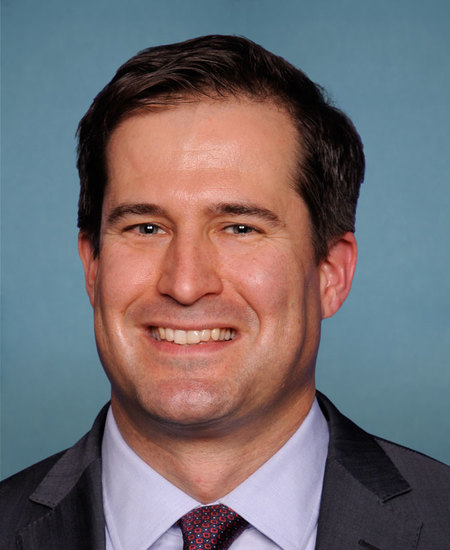
Rep. Seth Moulton
Sponsored bills
Maddy summaryThe TIGER Act increases dollar thresholds for foreign military sales under the Arms Export Control Act, raising key amounts like the $14 million threshold to $23 million and the $50 million threshold to $83 million. For sales exceeding three times these new thresholds, it requires the Secretary of State to consult with defense agencies, report progress to Congress, and certify that the sale aligns with U.S. foreign policy interests. The bill also establishes a Special Defense Acquisition Fund, allowing the Department of Defense to transfer funds directly to the State Department without reprogramming requirements, provided Congress is notified 15 days in advance. These changes primarily affect the process for approving and funding major defense sales to foreign partners, streamlining oversight for larger transactions.
Maddy summaryThe Credit for Caring Act of 2024 creates a new federal tax credit for family caregivers. It allows eligible caregivers to claim a credit equal to 30% of qualified caregiving expenses (like home modifications, medical supplies, or respite care) exceeding $2,000 per year, capped at $5,000 annually. To qualify, caregivers must earn over $7,500 in income and provide care for a relative (like a spouse or parent) certified by a healthcare provider as needing long-term care for at least 180 days. The credit phases out for higher earners, with a $75,000 income threshold for single filers and $150,000 for joint returns.
Maddy summaryThe SWIMS Act of 2024 bans the captivity of orcas, beluga whales, false killer whales, and pilot whales for public display in the United States. It prohibits exporting, importing, or taking these animals for display - except for relocation to a sanctuary meeting specific welfare standards or release into the wild. The bill also makes it illegal to breed these species for public display. This directly affects marine parks and aquariums that currently display these animals, preventing them from acquiring new animals for exhibits or breeding them for that purpose.
Maddy summaryThis bill amends the Servicemembers Civil Relief Act (SCRA) to improve access to existing financial protections for active-duty service members, reservists, and their dependents. It requires military financial literacy training to include SCRA consumer protections (like interest rate limits), mandates notifications about these benefits at key service milestones (e.g., when entering service or being mobilized), and clarifies that creditors must apply the SCRA interest rate cap to *all* pre-service debts, not just specified ones. Creditors must also provide multiple submission methods (online, mail, fax) for servicemembers to submit required documents. These changes aim to make SCRA benefits easier to understand and utilize without creating new financial obligations.
Maddy summaryThe ACCESS Act of 2024 creates a federal grant program to help clinics and health care providers expand abortion and reproductive health services in states where abortion is legal (outside of life or health exceptions). It authorizes $200 million annually for fiscal years 2024-2028 to fund specific capacity-building activities, including facility expansions, hiring clinical staff, telehealth services, and culturally appropriate patient resources. Priority is given to providers in states experiencing the highest increases in out-of-state patients seeking abortion care. The bill directly supports health care entities serving patients who travel across state lines for services, aiming to reduce wait times and improve access for vulnerable communities.
Maddy summaryThe Complete Streets Act of 2024 requires states to establish programs that help local governments, transit agencies, and other eligible entities design and build transportation infrastructure accommodating all users, including pedestrians, cyclists, and public transit riders. States must provide technical assistance and grants for complete streets projects, with 5% of certain transportation funds allocated to these programs. The bill establishes design standards requiring features like protected bike lanes, accessible sidewalks, and appropriate lighting for all transportation projects, applying to new projects on Federal-aid highways within metropolitan areas. It mandates that states develop complete streets policies and prioritization plans to improve safety and accessibility, particularly in underserved communities, with compliance required by 2026 or 2029 for different project types.
Maddy summaryThis bill prohibits U.S. government agencies from contracting with or purchasing biotechnology equipment/services from specific Chinese companies deemed national security threats, including BGI, MGI, Complete Genomics, and WuXi Apptec. It directly affects U.S. federal agencies (for procurement decisions), these Chinese biotech firms (for U.S. market access), and their U.S. contractors using their equipment. Key provisions establish a formal list of "biotechnology companies of concern" and ban government use of their equipment/services, with limited waivers allowed for national security needs. The law focuses on preventing U.S. genetic data collection via these firms, which the government asserts could be accessed by Chinese authorities under Chinese law.
Maddy summaryHR 7056, the Access to Family Building Act, establishes federal rights for individuals to access assisted reproductive technology (ART) like IVF without unreasonable restrictions, directly affecting patients seeking fertility treatments and health care providers offering ART services. The bill prohibits states from imposing limitations on ART that are more burdensome than those for comparable medical procedures, fail to advance safety, or unduly restrict access, while allowing health and safety regulations that are necessary and least restrictive. It creates federal enforcement mechanisms, including lawsuits by the Attorney General or affected individuals to challenge violating state laws, and preempts conflicting state regulations. The bill explicitly preserves state authority over health/safety regulations and does not alter existing state insurance coverage laws for ART.
Maddy summaryThe Stronger Communities through Better Transit Act establishes a new federal grant program to improve public transportation service. It provides funding to urban areas, states, and Indian tribes to cover up to 50% of public transit operating costs (up to 80% in persistent poverty areas and 100% for Indian tribes), with requirements to report on service frequency, access to jobs, and conduct community surveys. The program mandates that a majority of funds must benefit underserved communities and areas of persistent poverty, defined as census tracts with high poverty rates or minority populations. Recipients must maintain their transit funding levels and report on improvements in access to essential services. The bill authorizes $20 billion annually for fiscal years 2024-2027.