

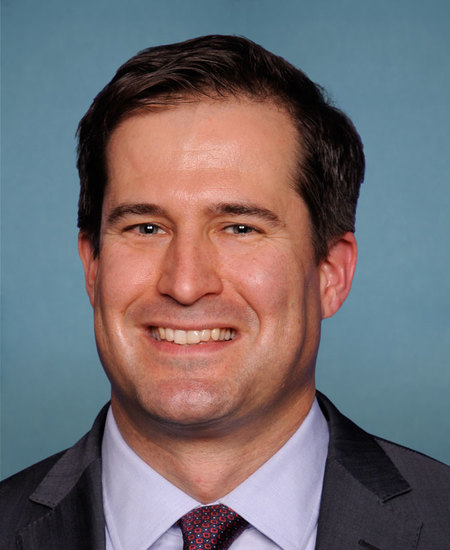
Photo of Seth Moulton
D United States House · District 6 · Massachusetts

Rep. Seth Moulton

Compare
Total votes
2,837
all sessions
Attendance
95%
130 missed
Lower than 97% of chamber peers
With party
97%
of cast votes
Near the chamber average
Bipartisan score
1%
crosses aisle rarely
Near the chamber average
Sponsored
1,870
bills & resolutions
Higher than 95% of chamber peers
Committees
7
assignments
1,870 bills and resolutions

Sponsored bills

Total
1,870
Primary
56
Co-sponsor
1,814
This page
1,870
matching current filters
Co-sponsor HR 620
In committee · United States House · Co-sponsor
Alzheimer’s Accountability and Investment Act

Maddy summaryThe Alzheimer’s Accountability and Investment Act (HR 620) requires the National Institutes of Health (NIH) Director to annually submit a budget estimate for Alzheimer’s-related initiatives - including personnel needs - directly to the President for review and then to Congress. This budget must be prepared after public comment and submitted without changes by the Secretary of Health and Human Services or the Advisory Council. The bill directly affects the NIH’s budget reporting process for Alzheimer’s research and programs, mandating transparency in how funds are allocated. It does not change funding levels but establishes a specific annual reporting mechanism to improve accountability.

In committee May 31, 2024 1 co-sponsor
Co-sponsor HR 8568
In committee · United States House · Co-sponsor
First Rhode Island Regiment Congressional Gold Medal Act

Maddy summaryThis bill authorizes Congress to award a gold medal to the First Rhode Island Regiment, a historically significant Revolutionary War unit composed of Black, Indigenous, and white soldiers who served together. The medal, designed by the Treasury Secretary, will be displayed at the Rhode Island State Library, with bronze duplicates available for sale to cover costs. The bill recognizes the regiment's role as one of America's first integrated military units, formed in 1778 when Rhode Island allowed enslaved people to enlist and gain immediate freedom. The medal serves as a commemorative honor, not a policy change, with no direct effect on current individuals or legislation.

In committee May 24, 2024 1 co-sponsor
Co-sponsor HR 8491
In committee · United States House · Co-sponsor
Coal Royalty Fairness and Communities Investment Act of 2024

Maddy summaryHR 8491 establishes new rules for calculating royalties on federally leased coal, requiring payments based on the actual market value (via a public coal price index) rather than a flat rate, with annual reviews to ensure fair returns. It creates a $75 million annual fund from coal royalty revenues, directing $70 million to economic development grants for communities negatively impacted by coal industry decline (e.g., job losses, environmental effects) and $5 million for carbon capture projects. The fund supports specific activities like workforce training, business development, and site redevelopment through existing federal programs. This directly affects coal lessees, federal land managers, and communities in coal-dependent regions, using existing royalty revenue for targeted reinvestment.

In committee May 24, 2024 1 co-sponsor
Co-sponsor HR 619
In committee · United States House · Co-sponsor
NAPA Reauthorization Act

Maddy summaryThis bill reauthorizes the National Alzheimer's Project Act through 2035 (extending the previous deadline of 2025) and adds new requirements to promote healthy aging and reduce Alzheimer’s risk factors. It mandates the program to provide information on healthy behaviors that may lower cognitive decline risk and expands the advisory group to include representatives from agencies like the Department of Justice, FEMA, and Social Security Administration, plus experts with diverse clinical trial experience. The bill directly affects Alzheimer’s research, care programs, and the federal advisory group overseeing national efforts. Key changes include requiring annual evaluations instead of initial ones and adding a focus on reducing health disparities in Alzheimer’s initiatives.

In committee May 24, 2024 1 co-sponsor
Co-sponsor HR 8545
In committee · United States House · Co-sponsor
Camp Lejeune Justice Act of 2024

Maddy summaryThis bill amends the 2022 Camp Lejeune Justice Act to clarify and correct technical details. It updates eligibility requirements for claimants (requiring 30 days at Camp Lejeune and defining "latent harm" instead of "latent disease"), clarifies court jurisdiction for cases, and specifies attorney fee structures (20% pre-litigation, 25% post-litigation). The changes directly affect individuals who developed health issues due to contaminated water at Camp Lejeune, streamlining their legal process under the existing 2022 law.

In committee May 23, 2024 1 co-sponsor
Co-sponsor HRES 616
In committee · United States House · Co-sponsor
Expressing support for the people of Afghanistan, condemning the Taliban's assault on human rights and the specific targeting of women, girls, and members of religious and ethnic minorities, and expressing support for any Afghans who assisted in the United States mission in Afghanistan.

Maddy summaryThis resolution (HRES 616) condemns the Taliban's ongoing human rights abuses in Afghanistan, specifically targeting women, girls, religious minorities (including Hazaras and Sikhs), and ethnic groups. It expresses support for Afghans who assisted U.S. missions and calls for the U.S. government to halt Taliban violence and address systemic repression. Key mechanisms include urging the State Department to assess potential crimes against humanity, developing strategies to support human rights defenders, and expediting refugee processing for Afghans with Special Immigrant Visas. The resolution does not impose new legal requirements but formalizes congressional stance and policy guidance. It directly affects U.S. foreign policy implementation toward Afghanistan.

In committee May 22, 2024 1 co-sponsor
Co-sponsor HR 8501
In committee · United States House · Co-sponsor
To prohibit the issuance of licenses for the exportation of certain defense articles to the United Arab Emirates, and for other purposes.

Maddy summaryHR 8501 prohibits the U.S. government from issuing licenses to export certain defense articles to the United Arab Emirates (UAE) or its agencies. This ban takes effect immediately upon the bill's enactment and continues until the President certifies to Congress that the UAE has stopped providing material support to Sudan's Rapid Support Forces (RSF). The restriction applies specifically to military equipment listed in Categories I-VIII, XIV, XVI-XVIII of the U.S. Munitions List (e.g., weapons, vehicles, and related technology). The bill directly affects U.S. defense exporters and the UAE government, requiring congressional oversight before exports can resume.

In committee May 22, 2024 1 co-sponsor
Co-sponsor HR 8323
In committee · United States House · Co-sponsor
Comprehensive Addiction Resources Emergency Act of 2024

Maddy summary# Summary of Legislative Text This is a comprehensive legislative proposal focused on addressing substance use disorder through public health approaches, with significant funding and program requirements. Key elements include: 1. **Major Funding Programs:** - **Subtitle A (Local Grants):** $3.0 billion annually (2024-2033) for local entities to provide prevention, treatment, and recovery services - **Subtitle B (State/Regional Grants):** $4.6 billion annually (2024-2033) for state-level programs - **Subtitle C (Other Grants):** $1.0 billion annually (2024-2033) for specific entities and underserved populations - **Subtitle D (Innovation/Training):** $1.5 billion annually (2024-2033) for training, research, and capacity building 2. **Key Program Requirements:** - Mandates for evidence-based treatment services across multiple levels of care - Requirements for cultural competency, particularly for Native American communities - Specific focus on harm reduction, prevention, and recovery support - Provisions for naloxone distribution and overdose reversal programs 3. **Regulatory Changes:** - New certification requirements for covered manufacturers, distributors, and dispensers of Schedule II controlled substances - Penalties for failure to submit certifications or submitting false certifications - Creation of a "Comprehensive Addiction Resources Fund" for penalty revenues 4. **Focus Areas:** - Prevention services (including trauma-informed approaches) - Early intervention services - Recovery support services - Harm reduction programs - Workforce development for treatment providers - Special attention to underserved populations (rural communities, racial minorities, formerly incarcerated individuals) 5. **Funding Priorities:** - 10% of funds for Native American communities - Specific requirements for cultural competency and language access - Mandated data collection and reporting systems This legislation represents a significant shift toward public health approaches to substance use disorder, emphasizing prevention, treatment, and recovery support rather than punitive measures, with substantial funding commitments over a decade.

In committee May 17, 2024 1 co-sponsor
Co-sponsor HR 8426
In committee · United States House · Co-sponsor
Public Service Freedom to Negotiate Act of 2024

Maddy summaryThe Public Service Freedom to Negotiate Act of 2024 establishes federal minimum standards for collective bargaining rights for public employees and supervisory employees. The Federal Labor Relations Authority will determine if each state's laws "substantially provide" for these rights, and if not, federal standards will apply to that state. These standards include the right to self-organization, collective bargaining, recognition of labor organizations, and procedures for resolving disputes. The bill preserves existing collective bargaining agreements and excludes certain employee categories like emergency services workers from some provisions.

In committee May 16, 2024 1 co-sponsor
Co-sponsor HR 8046
In committee · United States House · Co-sponsor
Rosatom Sanctions Enforcement Act

Maddy summaryHR 8046, the Rosatom Sanctions Enforcement Act, requires the U.S. to end reliance on Russia's Rosatom nuclear energy sector by imposing sanctions on Rosatom and related entities. It mandates a presidential strategy within 180 days to replace Rosatom-supplied nuclear services, block transactions with Rosatom, and pause U.S.-Russia nuclear cooperation (the 123 Agreement) until Russia meets specific conditions like ending hostilities in Ukraine. The bill blocks U.S. transactions with Rosatom, its executives, contractors for nuclear projects, and entities linked to the Zaporizhzhia plant, with limited waivers allowed for medical isotope production. It directly affects Rosatom, its affiliates, and U.S. entities engaging in significant transactions with them, while requiring congressional oversight of sanctions implementation.

In committee May 16, 2024 1 co-sponsor
Showing 851 to 860 of 1,870 bills
Previous 1 … 85 86 87 … 187 Next