

Maddy summaryThis bill requires gun dealers to provide buyers with specific secure storage information, including how to store firearms unloaded, locked, away from children, and separately from ammunition. It also mandates that dealers stock a variety of secure storage devices (like safes, lock boxes, and trigger locks) rather than just one type. Additionally, the bill creates a $500 tax credit for individuals purchasing "qualified gun safes" designed for secure, authorized-access storage of firearms. The law affects federal firearms licensees (dealers) and firearm buyers directly, with implementation set for six months after enactment.
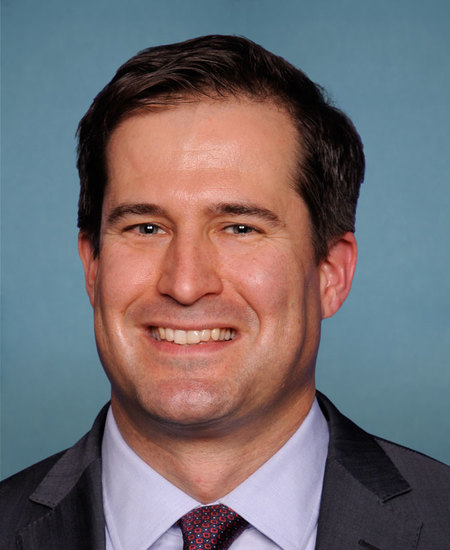
Rep. Seth Moulton
Sponsored bills
Maddy summaryThe NEST Act (HR 8715) creates a federal pilot program to provide newborn supply kits to mothers in underserved communities. The kits, containing essentials like diapers, postpartum supplies, blood pressure monitors, and health resources, are distributed through grants to community organizations or hospitals. Priority goes to mothers in areas with limited maternal care access (e.g., rural regions or high-mortality "Delta" communities) and those earning under 185% of the poverty line. The program, funded at $5 million annually through 2029, requires annual reports tracking distribution demographics and health outcomes to Congress.
Maddy summaryThis bill allows veterans who served between 1944 and 1977 (and never used VA home loan benefits) to transfer those benefits to family members. Living veterans can transfer benefits to spouses, children, grandchildren, or other direct descendants. For deceased veterans who served in that period and never used benefits, the VA will transfer benefits to eligible family members who apply within 10 years of the law's enactment. Legatees receive full benefits immediately but cannot transfer them further and must still pay applicable fees. The bill updates VA definitions to treat transferred-benefit recipients as "veterans" for home loan purposes.
Maddy summaryHR 5012 (SHINE for Autumn Act of 2023) authorizes federal funding to improve stillbirth research and data collection. It provides $5 million annually for states to collect standardized stillbirth data (including risk factors) while protecting privacy, $1 million annually for developing public educational materials and data collection guidelines, and $3 million annually for medical fellowships training pathologists in perinatal autopsy and stillbirth research. The bill directly affects state health departments, medical professionals (like obstetricians and pathologists), and families who experience stillbirth by improving data quality for future research. It requires federal reports on guidelines and program effectiveness within five years but does not provide direct medical care or financial assistance to families.
Maddy summaryHR 537 authorizes a Congressional Gold Medal to honor 60 diplomats who saved Jewish lives during the Holocaust by issuing visas and passports against their governments' orders, risking expulsion and personal danger. The medal will be presented to the next of kin of these diplomats, alongside representatives from their home countries, and permanently displayed at the United States Holocaust Memorial Museum. The bill also permits the sale of bronze duplicates to cover production costs, with proceeds going to the U.S. Mint. This legislation recognizes the diplomats' humanitarian actions without creating new government programs or altering existing laws.
Maddy summaryThis resolution (HRES 1286) supports continued U.S. funding for Gavi, the Vaccine Alliance, to expand access to vaccines in low-income countries. It directly aids children and communities in these nations by enabling immunization against preventable diseases like measles, malaria, and polio, which has averted an estimated 17.3 million deaths since 2000. Key provisions highlight Gavi's role in reducing child mortality from vaccine-preventable diseases by 70%, achieving a $54 economic return for every $1 invested, and strengthening health systems through cold-chain infrastructure. The resolution urges sustained U.S. financial commitments to maintain Gavi's market-shaping impact, support malaria vaccine rollout, and ensure global health security.
Maddy summaryThis bill would allow Czech citizens to apply for E-1 business visas to work in the United States for trade and business, but only if the Czech Republic grants similar visa access to U.S. citizens. It directly affects Czech nationals seeking to conduct business in the U.S. and U.S. citizens traveling to the Czech Republic for business. The bill conditionally adds the Czech Republic to the list of countries eligible for E-1 visas, requiring reciprocity in visa treatment between the two nations. This change would expand E-1 visa eligibility for Czech citizens if the Czech government meets the reciprocity condition.
Maddy summaryThis bill delays a Medicare policy that would have restricted coverage to only intravenous drugs for managing phosphate levels in kidney failure patients. It specifically postpones the implementation of the "oral-only" policy under Medicare's ESRD payment system until January 1, 2033, or until an intravenous drug for phosphate control receives FDA approval - whichever comes first. The bill directly affects Medicare beneficiaries with end-stage renal disease (ESRD) who rely on oral medications for phosphate management. It ensures continued Medicare coverage for these oral drugs during the extended timeline, without changing the underlying payment structure.
Maddy summaryThis resolution (HRES 1271) is a symbolic gesture expressing the House's support for designating June 7, 2024, as "National Gun Violence Awareness Day" and June 2024 as "National Gun Violence Awareness Month." It does not create new laws or policies but urges the public to wear orange, raise awareness about gun violence, and focus on community safety during summer months when such incidents often increase. The resolution references statistics on gun-related deaths and honors victims like Hadiya Pendleton, who was killed in 2013. It directly affects the public by calling on individuals and communities to participate in awareness activities. This is a non-binding, commemorative measure with no direct legal impact on legislation or regulations.
Maddy summaryThe George Floyd Justice in Policing Act of 2024 establishes a National Police Misconduct Registry to track complaints and disciplinary actions against officers, requiring all federal, state, and local law enforcement agencies to report use-of-force incidents with racial, gender, and age data. It bans chokeholds and carotid holds in police encounters, prohibits no-knock warrants in drug cases, and reforms qualified immunity to make it harder for officers to avoid accountability for misconduct. The bill mandates body cameras for federal officers, requires independent investigations of officer-involved shootings, and creates new data collection systems to monitor racial profiling and use-of-force patterns. It also includes provisions for civilian oversight boards, improved officer training on de-escalation and implicit bias, and restrictions on military equipment transfers to local police departments. This law affects all law enforcement agencies receiving federal funding under programs like Byrne and COPS grants.