

Maddy summaryThis bill creates a federal framework for "extreme risk protection orders" (ERPOs) that temporarily remove firearms from individuals who pose a risk of harming themselves or others. Family members or law enforcement officers can petition a federal court for a temporary order (up to 14 days) based on probable cause, followed by a hearing within 72 hours to determine if a longer-term order (up to 180 days) is warranted. The bill requires clear and convincing evidence of risk at the hearing and mandates respondents to surrender firearms to law enforcement within 48 hours. It also includes provisions for reporting, training law enforcement on ERPOs, and a federal grant program to support state ERPO implementation, without preempting state laws.
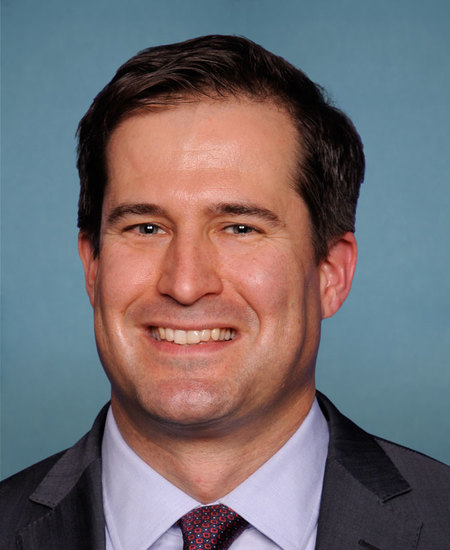
Rep. Seth Moulton
Sponsored bills
Maddy summaryHCONRES 115 is a procedural resolution calling for a joint session of Congress in Philadelphia, Pennsylvania, on July 2, 2026. It directs both the House and Senate to convene together at Independence National Historical Park to commemorate the 250th anniversary (semiquincentennial) of the Declaration of Independence. The resolution does not create new laws or affect any specific group; it solely schedules a ceremonial event honoring Philadelphia's historical role as the site where the Declaration was approved. This is a non-binding commemorative measure focused on marking a historical milestone.
Maddy summaryThis House Resolution (HRES 1320) formally congratulates the Boston Celtics organization for winning the 2024 NBA championship. It directs the House Clerk to send a copy of the resolution to the team's owner (Wyc Grousbeck), president (Brad Stevens), and head coach (Joe Mazzulla). The resolution serves as a ceremonial acknowledgment of the team's championship victory, with no policy changes or financial impact. It is purely symbolic, reflecting Congress's recognition of the Celtics' achievement.
Maddy summaryHR 8830, the High Court Gift Ban Act, sets strict limits on gifts federal judges may accept. It prohibits judges from receiving gifts valued over $50 from a single source in a year, unless the total from that source stays under $100 annually. Key exceptions include gifts paid for by the judge, gifts from relatives, honorary degrees from educational institutions, and public opportunities available to all federal employees. The bill also outlines enforcement mechanisms, requiring the Judicial Conference to refer violations to the Attorney General for civil or criminal penalties. This directly affects all federal judges, including Supreme Court justices and lower court judges, by restricting gifts from sources that may have business before them.
Maddy summaryHRES 1310 is a resolution expressing support for designating June 2024 as "National Post-Traumatic Stress Awareness Month" and June 27, 2024, as "National Post-Traumatic Stress Awareness Day." It aims to raise public awareness about post-traumatic stress disorder (PTSD), particularly among military veterans and active-duty service members, and reduce stigma around seeking mental health treatment. The resolution encourages government agencies like the Department of Veterans Affairs and Department of Defense to continue efforts in educating the public and improving access to PTSD care. As a symbolic gesture, it does not create new laws, allocate funding, or directly change policies.
Maddy summaryHRES 1306 is a non-binding resolution expressing congressional support for designating June 21, 2024, as National ASK (Asking Saves Kids) Day. It encourages parents to ask visitors' homes, "Is there a gun in your house?" and "Is it locked and unloaded?" to promote safe gun storage around children. The resolution specifically supports the ASK Campaign, a national initiative run by the Brady Campaign since 2000 that focuses on preventing accidental child firearm injuries through simple safety conversations. This resolution does not create new laws but formally endorses an existing public health awareness effort.
Maddy summaryHRES 1301 is a symbolic House resolution expressing support for Heart Recovery Awareness Day on February 20, 2025. It highlights cardiovascular disease as a leading cause of death and promotes awareness of heart recovery treatments that may reduce hospital costs and improve patient outcomes by preserving native hearts. The resolution does not create new laws or allocate funds; it solely aims to raise public awareness about innovative heart failure treatments. It directly addresses the public and healthcare community, emphasizing the benefits of heart recovery for patients nationwide.
Maddy summaryHR 8760, the Reverend James Lawson, Jr., Congressional Gold Medal Act, authorizes the awarding of a Congressional Gold Medal to Reverend James Lawson, Jr., in recognition of his lifetime contributions to the civil rights movement and nonviolent activism. The bill directs the Treasury Secretary to strike a gold medal bearing his name and image, with bronze duplicates available for sale to cover production costs. This ceremonial honor, intended to commemorate his role in key movements like the Nashville sit-ins, Freedom Rides, and the March on Washington, does not create new laws or affect any government programs or individuals beyond the medal's presentation.
Maddy summaryHRES 1295 is a symbolic resolution expressing the House's support for recognizing Sunday, June 16, 2024, as Father's Day. It does not create new laws or policies but formally acknowledges the role of fathers in families and society. The resolution urges support for existing policy goals like universal paid family leave, affordable childcare, and child tax credits - though it does not mandate any changes. It directly affects all fathers and families in the U.S. by affirming their importance, but has no binding legal effect. This is a procedural resolution, not a legislative bill with concrete policy changes.
Maddy summaryThis bill amends federal jury selection laws to explicitly prohibit discrimination based on sexual orientation and gender identity. It updates definitions in Title 28 of the U.S. Code by adding "sexual orientation and gender identity" to the protected characteristics under "sex" and defining key terms like "gender identity" and "sexual orientation." The changes directly affect federal jury pools by requiring courts to consider these factors when selecting jurors and preventing discrimination in the process. The law clarifies that discrimination based on these characteristics - including associations with others who share them - is prohibited during jury selection. This is a concrete policy change to expand anti-discrimination protections in federal jury service.