

Maddy summaryThis bill establishes a federal right to access contraception, protecting individuals' ability to obtain contraceptives and health care providers' ability to offer them without government interference. It prohibits states from banning or restricting contraceptive services, products, or information, including laws that force providers to deny care based on personal beliefs or limit access to specific methods. The law immediately overrides conflicting state regulations and ensures that contraception remains available regardless of factors like race, income, disability, or location. It applies to all individuals and providers, building on existing federal protections like the Affordable Care Act's coverage requirements.
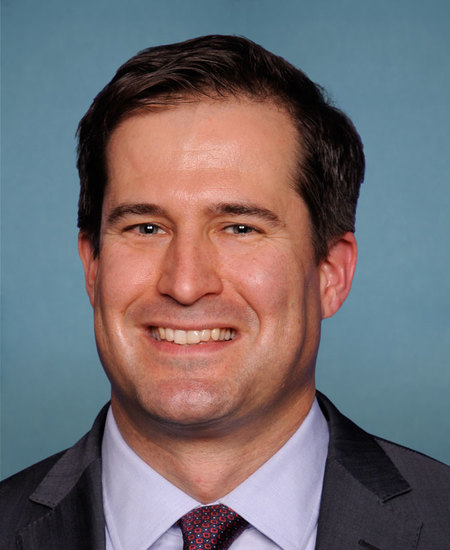
Rep. Seth Moulton
Sponsored bills
This resolution supports federal investment in public K-12 schools, affirms that the Department of Education (ED) plays a vital role in the public education system, and states that public education funding should not be diverted (e.g., through the use of vouchers) to privately run K-12 schools. The resolution also rejects any claim that the executive branch has the legal authority to (1) dismantle or relocate ED or any of its major offices; or (2) reduce federal funding for public education, block federal grants for education, or transfer funding burdens for education to state and local governments.
Maddy summaryHRES 106 is a non-binding resolution calling on the United Nations Security Council to immediately impose an arms embargo on Burma’s military (the Tatmadaw). It directly targets the military junta responsible for the 2021 coup, ongoing human rights abuses, and violence against civilians, including ethnic minorities like the Rohingya. The resolution specifies that lifting the embargo would require the military to end violence, release detained leaders, allow humanitarian access, restore internet, and transition power to a civilian government. It also urges the international community to support affected civilians and promote peace dialogues. This resolution expresses congressional support for UN action but does not create new U.S. policy.
This resolution condemns Russia's nuclear escalatory rhetoric and implied threats on the potential use of nuclear weapons in the context of its invasion of Ukraine. The resolution also (1) condemns Russia's purported suspension of participation in the New START Treaty, (2) emphasizes the value of arms control agreements between the United States and Russia, and (3) calls on the administration to continue pursuing nuclear arms control and risk reduction with Russia and China.
Maddy summaryThis bill reauthorizes the Dr. Lorna Breen Health Care Provider Protection Act, extending mental health support programs for healthcare professionals through 2030 (previously ending in 2024). It requires funded programs to specifically address reducing administrative burdens on healthcare workers while continuing to promote access to mental health and substance use disorder services. The legislation directly affects healthcare providers across the U.S. who may access these federally supported resources. Key provisions include extending funding periods and mandating that grant recipients focus on easing workplace administrative tasks, alongside maintaining existing awareness initiatives. The bill does not create new programs but continues and refines existing mental health support for the healthcare workforce.
This bill provides for the presentation of a Congressional Gold Medal to the Freedom Riders, in recognition of their contribution to civil rights by fighting for equality in interstate travel.
Health Care Workforce Innovation Act of 2025 This bill establishes the Health Care Workforce Innovation Program within the Health Resources and Services Administration to provide grants to federally qualified health centers, rural health clinics, and post-secondary vocational programs for developing education and training for allied health professionals (e.g., professionals providing clinical or non-clinical support services, community health workers, and health education specialists). Specifically, grant recipients must use the funds to carry out innovative, community-based programs to train allied health professionals, with a focus on supporting rural and underserved areas. Grant recipients may use the funds to launch or expand health care professional partnerships (e.g., between a grant recipient and a school), establish apprenticeship or other career programs, or invest in training equipment, among other activities.
Maddy summaryHR 898 establishes two grant programs to address aviation noise and pollution impacts on communities near airports. First, it creates a 3-year EPA-funded research initiative (with $2.5-$5 million grants) to measure noise and emissions using advanced technology, producing neighborhood-level data to identify disproportionately affected areas. Second, it launches a mitigation grant program prioritizing communities identified in the research, funding projects like noise-reducing home retrofits, health services, and environmental programs for disadvantaged groups. The bill requires grantees to collaborate with local communities and report annually on services provided, demographic impacts, and how the work addresses environmental justice concerns.
Stop Antiabortion Disinformation Act or the SAD Act This bill prohibits deceptive advertising for reproductive health services. Specifically, the bill makes it unlawful for a person (i.e., individual, partnership, corporation, association, or organization) to deceptively advertise the reproductive health services they offer, including by misrepresenting that the person (1) offers or provides contraception or abortion services (or referrals for such contraception or abortion services), or (2) employs or offers access to licensed medical personnel. The bill provides for enforcement by the Federal Trade Commission. In addition to any other penalty, violations are subject to a civil penalty that may not exceed the greater of $100,000 (adjusted annually for inflation) or 50% of the revenue earned during the preceding 12-month period by the ultimate parent entity of the person who violated the bill.
Maddy summaryThis bill allows the FDA to request microbial sampling at large livestock facilities (concentrated animal feeding operations or CAFOs) during foodborne illness outbreaks to identify causes and protect public health. CAFOs must grant "reasonable access" for sampling of animals, plants, water, and the environment, though they can specify timing and location to avoid disruption. The law clarifies it does not impose new requirements beyond sampling for USDA-regulated foods (like meat or poultry) and requires sharing collected data with the USDA and public health agencies. It directly affects CAFOs and federal food safety agencies, focusing on outbreak response mechanisms.