

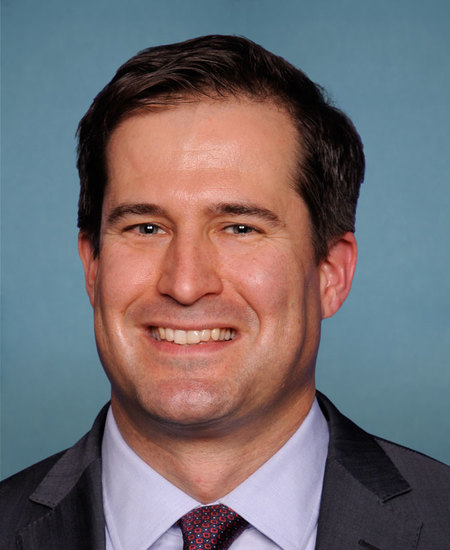
Photo of Seth Moulton
D United States House · District 6 · Massachusetts

Rep. Seth Moulton

Compare
Total votes
2,837
all sessions
Attendance
95%
130 missed
Lower than 97% of chamber peers
With party
97%
of cast votes
Near the chamber average
Bipartisan score
1%
crosses aisle rarely
Near the chamber average
Sponsored
1,870
bills & resolutions
Higher than 95% of chamber peers
Committees
7
assignments
1,870 bills and resolutions

Sponsored bills

Total
1,870
Primary
56
Co-sponsor
1,814
This page
1,870
matching current filters
Co-sponsor HRES 70
In committee · United States House · Co-sponsor
Expressing the sense of the House of Representatives that Congress should take all appropriate measures to ensure that the United States Postal Service remains an independent establishment of the Federal Government and is not subject to privatization.

Maddy summaryThis resolution expresses the House of Representatives' position that Congress should take steps to prevent the privatization of the United States Postal Service (USPS), ensuring it remains a federal independent agency. It highlights USPS’s constitutional role, self-sustaining nature (relying on service revenue, not taxpayer funds), and critical functions - serving 168 million addresses daily, supporting rural communities, and underpinning e-commerce. The resolution opposes privatization, noting it would raise prices, reduce services, and harm the $1.9 trillion mailing industry. As a non-binding resolution, it reflects the House’s stance but does not create new law or policy.

In committee Jan 28, 2025 1 co-sponsor
Co-sponsor HR 768
In committee · United States House · Co-sponsor
Holocaust Education and Antisemitism Lessons Act

Maddy summaryHR 768, the Holocaust Education and Antisemitism Lessons Act, requires the U.S. Holocaust Memorial Museum Director to study how states and school districts currently teach about the Holocaust and antisemitism in K-12 schools. The study will examine curriculum requirements, teacher training, educational materials used, and assessment methods across all states and a representative sample of school districts and schools. It specifically aims to identify gaps, resources needed, and how schools address antisemitism and genocide prevention in their teaching. The Museum must submit a report to Congress within three years of the bill's enactment, detailing findings on current practices and challenges. This bill does not mandate new teaching requirements but seeks to understand existing approaches to Holocaust education.

In committee Jan 28, 2025 1 co-sponsor
Co-sponsor HR 764
In committee · United States House · Co-sponsor
Global Health, Empowerment and Rights Act

Maddy summaryHR 764, the Global Health, Empowerment and Rights Act, removes two barriers for foreign nongovernmental organizations (NGOs) seeking U.S. foreign assistance. It ensures these organizations cannot be denied funding solely because they provide health services (like counseling and referrals) using non-U.S. government funds, as long as those services comply with local laws. The bill also requires that foreign NGOs face the same rules on using non-U.S. funds for advocacy and lobbying as U.S. NGOs receiving similar aid. This directly affects international health-focused NGOs working in countries where U.S. aid is provided.

In committee Jan 28, 2025 1 co-sponsor
Co-sponsor HRES 66
In committee · United States House · Co-sponsor
Affirming the role of the United States in improving access to quality, inclusive public education and improving learning outcomes for children and adolescents, particularly for girls, around the world.

Maddy summaryHRES 66 is a non-binding resolution affirming the U.S. government's leadership in global education. It calls on the State Department and USAID to prioritize quality, inclusive public education for girls, children with disabilities, and children in crisis settings, while integrating education into humanitarian responses. The resolution urges these agencies to meet existing commitments to international education programs and advance learning outcomes for marginalized youth worldwide. It does not create new laws or funding but emphasizes coordination across U.S. government agencies to support global education efforts.

In committee Jan 24, 2025 1 co-sponsor
Co-sponsor HRES 68
In committee · United States House · Co-sponsor
Expressing strong disapproval of the President's announcement to withdraw the United States from the Paris Agreement.

Maddy summaryHRES 68 is a non-binding House resolution expressing strong disapproval of the President’s announcement to withdraw the U.S. from the Paris Agreement. It commends states, businesses, and citizens supporting the Agreement, urges the President to reverse the withdrawal decision, and calls for Congress to prioritize U.S. climate leadership. The resolution does not create new laws or affect specific groups but formally states the House’s position against withdrawing from the international climate accord. It was introduced by 115 co-sponsors and reflects broad congressional concern about reversing U.S. climate commitments.

In committee Jan 24, 2025 1 co-sponsor
Co-sponsor HR 728
In committee · United States House · Co-sponsor
Expanding Head Start Eligibility Act of 2025

Maddy summaryHR 728, the Expanding Head Start Eligibility Act of 2025, would amend the Head Start Act to broaden eligibility criteria. It adds a new definition of "public assistance" to include benefits from programs like SNAP (food stamps), housing assistance under Section 8, and state-funded food programs with similar income standards. This change directly affects low-income families seeking Head Start enrollment, as children in households receiving these benefits would now qualify under the expanded definition. The bill modifies the Head Start Act’s eligibility rules to count these additional benefits, making it easier for more children to access early childhood education programs.

In committee Jan 24, 2025 1 co-sponsor
Co-sponsor HR 738
In committee · United States House · Co-sponsor
Universal Right To Vote by Mail Act of 2025

Maddy summaryHR 738, the Universal Right To Vote by Mail Act of 2025, would require all states to allow any voter to request and cast a mail-in ballot for federal elections without needing to provide a reason, directly affecting all voters in states holding federal elections. The bill prohibits states from adding extra conditions beyond ballot request and return deadlines, and mandates that election officials must notify voters of signature discrepancies or missing information within one business day, giving them three days to correct errors before ballots are rejected. It explicitly preserves states' ability to maintain in-person polling places and applies to federal elections starting in 2026. The bill cites findings that universal mail-in voting increases participation, reduces poll wait times, and has no proven fraud risk, while eliminating requirements for personal justification or notarization.

In committee Jan 24, 2025 1 co-sponsor
Co-sponsor HR 715
In committee · United States House · Co-sponsor
BNA Fairness Act

Maddy summaryHR 715, the BNA Fairness Act, amends the tax code to exclude the basic needs allowance provided to members of the Armed Forces from taxable income. This allowance, paid for daily living expenses like food and housing, directly affects active-duty service members who receive it. The bill adds a specific provision clarifying that this allowance qualifies as a non-taxable "qualified military benefit" under existing tax law. The change takes effect for tax years after the bill becomes law, ensuring service members no longer pay income tax on this specific benefit.

In committee Jan 23, 2025 1 co-sponsor
Co-sponsor HR 583
In committee · United States House · Co-sponsor
BEACH Act of 2025

Beaches Environmental Assessment and Coastal Health Act of 2025 or the BEACH Act of 2025 This bill reauthorizes through FY2029 and expands an existing program of the Environmental Protection Agency (EPA) that awards grants to states and local governments to (1) monitor the water quality of coastal recreational waters adjacent to beaches or similar points of access that are used by the public; and (2) notify the public, local governments, and the EPA when the water is not safe for recreational activities. Specifically, the bill expands the program to allow the EPA to award grants for identifying sources of contamination (i.e., pathogens) for coastal recreation waters. It also allows grants to be used for monitoring and notification of contamination in (1) shallow waters upstream from recreational waters, and (2) recreational waters on beaches.

In committee Jan 22, 2025 1 co-sponsor
Co-sponsor HR 566
In committee · United States House · Co-sponsor
Cleaner Air Spaces Act of 2025

Maddy summaryHR 566, the Cleaner Air Spaces Act of 2025, provides federal grants to air pollution control agencies to establish local programs targeting low-income households with vulnerable residents (such as those with health conditions or elderly members) in wildfire smoke-prone areas. The bill authorizes $30 million over three years to fund programs that must establish accessible clean air centers, distribute at least 1,000 free, certified air filtration units per program (with replacements), provide educational materials, and partner with community organizations. Agencies must track unit types and costs, survey participants on program effectiveness, and report results to Congress within three years. The program directly affects covered households by improving access to clean air during smoke events through tangible, funded support.

In committee Jan 20, 2025 1 co-sponsor
Showing 691 to 700 of 1,870 bills
Previous 1 … 69 70 71 … 187 Next