

Maddy summaryThis bill reauthorizes and expands U.S.-Israel energy cooperation programs through 2031. It increases annual funding for the BIRD Energy Foundation from $2 million to $5 million and for the U.S.-Israel Energy Center from $4 million to $7 million, extending support through fiscal years 2026-2031. The bill adds new focus areas like hydrogen energy, fusion, industrial decarbonization, carbon management, agrivoltaics, grid modernization, and energy infrastructure cybersecurity to existing collaboration efforts. These changes directly affect U.S. and Israeli energy companies, researchers, and institutions working on commercializing clean energy technologies.
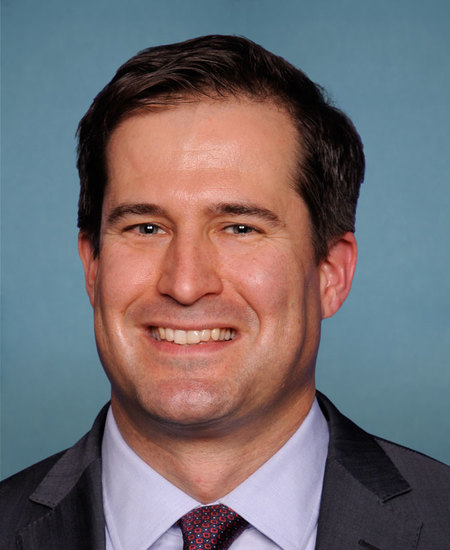
Rep. Seth Moulton
Sponsored bills
Maddy summaryThis bill creates a dedicated Inspector General (IG) position specifically for the Office of Management and Budget (OMB). It clarifies that the OMB IG's oversight authority is limited to matters explicitly assigned by law, preventing broader jurisdiction. The President must appoint this IG within 120 days of the bill's enactment. The bill directly affects OMB's internal oversight structure and the new IG's defined role, with no direct impact on the public or other agencies.
Maddy summaryHR 2205, the NEDD Act, amends existing defense law to expand the Department of Energy's (DOE) authority over drone operations near nuclear facilities. It specifically shifts responsibility from the State Department to the DOE for: (1) exempting DOE from restrictions on purchasing foreign drones, (2) allowing DOE to operate drones near nuclear sites, and (3) managing classified tracking for nuclear facility security. The bill directly affects U.S. nuclear facilities that store, transport, or use special nuclear materials, or research/produce components for nuclear weapons. These changes streamline drone-related security protocols under the DOE’s existing nuclear safety oversight, without creating new restrictions.
Maddy summaryThe Air America Act of 2025 authorizes one-time payments of $40,000 to individuals who worked for Air America or its affiliated companies for at least five years during 1950-1976, or to their surviving spouses, children, or dependents. Additional payments of $8,000 per full year beyond five years are allowed. The program is capped at $60 million total funding, with claims required within two years of final regulations. Payments are a single lump sum with no ongoing benefits, and the bill explicitly states it does not create new entitlements beyond this one-time award.
Maddy summaryThis bill allows employees in trades requiring specialized tools (like construction) to deduct work-related expenses directly from their gross income, rather than as itemized deductions. Specifically, it creates an above-the-line deduction for construction tools, personal protective gear, and other necessary work expenses. This change exempts these costs from the usual 2% floor on miscellaneous itemized deductions. The policy affects blue-collar workers who must purchase or maintain essential equipment to perform their jobs, making these costs fully deductible starting in 2026.
Maddy summaryHR 2200 requires the Coast Guard to retain enlisted members who have completed 18-20 years of service but are otherwise scheduled for separation or discharge. It directly affects Regular Coast Guard enlisted members and Reserve members serving in active status with 18-19 years of service (or 19-20 years) who face involuntary separation or denied reenlistment. The bill mandates retention until the member reaches 20 years of service or for up to two years (for 18-19 years) or one year (for 19-20 years) after their scheduled separation date, whichever comes first. This applies to members not separated for physical disability or cause, ensuring they can complete their service to qualify for retirement benefits.
This bill treats Kenya, Mali, Burkina Faso, and Chad as combat zones for purposes of determining eligibility for certain federal tax benefits available to members of the U.S. Armed Forces. (Conditions apply.) Specifically, under the bill, a qualified hazardous duty area is treated as a combat zone for purposes of determining the filing status of an individual whose spouse is missing in action; excluding compensation received by a member of the Armed Forces serving in a combat zone from gross income and wages subject to withholding; forgiving the income tax liability of a member of the Armed Forces who dies in a combat zone; certain estate tax rules applicable to a member of the Armed Forces who dies in a combat zone or as a result of an injury, wound, or disease suffered while in a combat zone; the exemption from the federal excise tax imposed on certain telephone services for telephone calls originating from a combat zone by a member of the Armed Forces; and postponing certain federal tax deadlines (e.g., filing a tax return, paying taxes, and claiming a tax refund) for a member of the Armed Forces serving in a combat zone. The bill defines a qualified hazardous duty area as Kenya, Mali, Burkina Faso, and Chad if any member of the U.S. Armed Forces is entitled to special pay (e.g., hostile fire pay and imminent danger pay) for services performed in such locations.
Maddy summaryThis bill amends the PACT Act to correct an oversight affecting veterans who served in Guam. It specifically adds the period from August 15, 1958, to July 31, 1980, to the eligibility window for veterans who served in Guam (or its territorial waters) and developed diseases linked to herbicide exposure. The change ensures veterans who served in Guam during that specific timeframe are included in the presumption of service connection for such conditions. This directly impacts veterans who served in Guam between 1958 and 1980, who were previously excluded from the PACT Act's benefits due to the original language. The provision updates the legal text to accurately reflect Guam's historical status during that period.
Maddy summaryHR 2121 establishes a 23-member commission to study the feasibility of creating a National Museum of Irish American History in Washington, D.C. The commission, appointed by the President and congressional leaders, will examine key issues like funding sources (without relying on federal appropriations), potential locations, whether to partner with the Smithsonian, and community engagement strategies. It must submit detailed reports within 24 months, including a fundraising plan and recommendations for potential legislation, but does not authorize the museum's construction or funding. The bill focuses solely on gathering data and recommendations to inform future decisions, with the commission terminating 30 days after final reports are submitted.
Maddy summaryHR 2151, the Seizure Awareness and Preparedness Act, creates a federal grant program to support schools in managing epilepsy and seizure disorders among students. It directly affects students with these conditions and their schools by requiring funded training for staff on emergency care plans, individualized health plans, and seizure recognition. Key provisions mandate that schools develop written emergency and health care plans with medical providers and parents, train all staff (including bus drivers) every two years on seizure response, and ensure proper communication between schools and families. The bill allocates $34.5 million over five years (2026-2030) to supplement, not replace, existing school funding for these programs.