

Maddy summaryThis bill creates a new occupational category (code 31-1123) within the federal Standard Occupational Classification system specifically for direct support professionals (DSPs) who assist people with intellectual or developmental disabilities. It directly affects DSPs, state agencies, and federal data collectors by reclassifying their work - currently grouped under home health aides - into a distinct category. The key mechanism is revising the SOC system to better track DSP workforce data, address high turnover rates (43% nationally), and recognize their unique role in promoting clients' independence and community inclusion. This change aims to improve data accuracy for addressing staffing challenges, without altering service delivery or benefits.
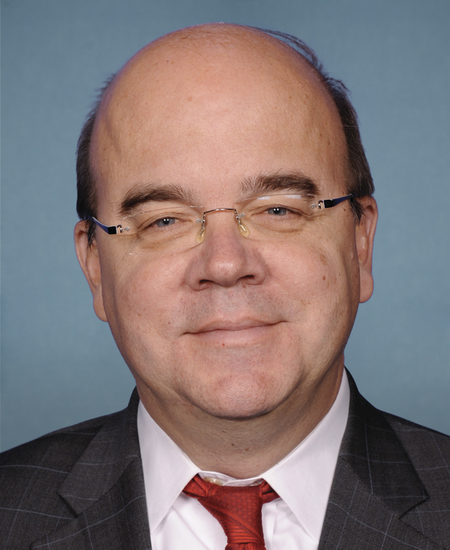
Rep. James P. McGovern
Sponsored bills
Maddy summaryThe Homes Act of 2024 would establish a new Housing Development Authority within the Department of Housing and Urban Development to develop permanently affordable housing. The Authority would acquire properties and convey them to eligible entities (including community land trusts, tenant organizations, and public housing agencies) under strict requirements for permanent affordability, climate resilience, and community control. The bill would set rents at 25% of household income, limit annual rent increases to 3% or the Consumer Price Index, and require "just-cause" evictions with tenant protections. It would also create a tenant right to purchase their rental properties through a "first look" process and prioritize housing for underserved communities and families experiencing homelessness.
Maddy summaryThis bill directs the U.S. government to immediately restore funding to the United Nations Relief and Works Agency for Palestine Refugees (UNRWA), reversing a temporary funding pause. It repeals two appropriations acts that halted payments and requires the Secretary of State to resume UNRWA funding under existing authorities. The legislation specifically aims to support UNRWA’s critical humanitarian work - providing shelter, education, healthcare, and aid to Palestinian refugees across Gaza, the West Bank, Syria, Lebanon, and Jordan - during an acute famine risk in Gaza. It also mandates quarterly reports to Congress on UNRWA’s implementation of reforms from an independent review, ensuring accountability for its humanitarian mission.
Maddy summaryHR 9647, the President Jimmy Carter Congressional Gold Medal Act, authorizes Congress to award a single gold medal to former President Jimmy Carter in recognition of his service. The bill directs the Treasury Secretary to design and strike the medal, with bronze duplicates available for sale to cover costs. It does not create new policies or affect any government programs or individuals beyond this ceremonial honor. The medal is intended to commemorate Carter's presidency, humanitarian work through the Carter Center, and his Nobel Peace Prize. This is a procedural bill with no substantive legislative impact.
Maddy summaryThe BASIC Act (HR 9669) creates a system to help college students access federal assistance programs that address basic needs like food, housing, and healthcare. It requires federal agencies to share data to identify students who might qualify for programs like SNAP, Medicaid, or housing assistance, and mandates that colleges provide students with information about these programs. The bill authorizes $1 billion in funding for planning grants (up to $75,000 per institution for 2 years) and implementation grants (up to $1 million per institution for 5 years) to help colleges develop and carry out strategies to address student food insecurity, housing insecurity, and other basic needs. Community colleges, historically Black colleges, and other minority-serving institutions receive priority for funding, with at least 25% of funds reserved for each category.
Maddy summaryThe Artsakh Revenue Recovery Act of 2024 would establish a U.S. fund to compensate Armenians displaced from Artsakh (Nagorno-Karabakh) after Azerbaijan's military assault in September 2023. It requires the U.S. government to seize Azerbaijani sovereign assets held in the United States if Azerbaijan fails to compensate displaced Armenians for lost revenue from businesses, property, and employment. The bill creates a claims process through which displaced Armenians can submit claims for compensation for revenue lost since September 2023, with the fund paying claims if Azerbaijan does not compensate within 90 days. The Artsakh Revenue Recovery Fund would operate for up to one year after a peace agreement between Azerbaijan and Armenia is signed or until all claims are paid.
Maddy summaryHRES 1448 is a non-binding House resolution stating that the House believes every person has the right to emergency health care, including abortion care, during medical emergencies. It specifically addresses concerns that abortion restrictions force medical providers to choose between treating patients in life-threatening situations or risking criminal charges. The resolution highlights that such restrictions disproportionately harm Black, Indigenous, people of color, immigrants, low-income individuals, and LGBTQI+ patients. It does not change existing laws but expresses congressional support for ensuring access to emergency care without legal barriers. The resolution was introduced by multiple House members and referred to the Energy and Commerce Committee.
Maddy summaryThe CREATE AI Act of 2023 establishes a National Artificial Intelligence Research Resource (NAIRR) to improve access to AI research tools, computational resources, data, and educational materials for researchers and students across the United States. The NAIRR will provide computational resources, curated datasets, educational tools, and access to AI testbeds, with special emphasis on supporting groups historically underrepresented in STEM fields. Governed by a Steering Subcommittee chaired by the Director of the Office of Science and Technology Policy and managed by a Program Management Office within the National Science Foundation, the NAIRR includes specific requirements for ethical AI development, privacy protections, and security measures. The resource will be accessible to researchers at U.S. institutions of higher education, nonprofits, government agencies, and certain businesses, with priority given to projects addressing privacy, ethics, civil rights, and AI safety.
Supporting Transit Commutes Act This bill allows employers a tax deduction for certain transportation fringe benefits (e.g., commuter and parking costs, bicycle reimbursements) paid to their employees. It also gives employers a 50% tax deduction for the amount of benefits withheld from their employees' wages.
Maddy summaryThe Pigs and Public Health Act prohibits growth-promoting drugs like ractopamine that cause pigs to become nonambulatory (unable to stand or walk), sets new transportation standards for pig welfare including proper bedding, water, and temperature controls, and requires humane euthanasia of nonambulatory pigs rather than processing them for food. It creates an online portal for workers to confidentially report violations of these standards and provides whistleblower protections against retaliation for reporting safety or health concerns. The bill also mandates a study on public health risks from nonambulatory pigs entering the food supply, including pathogens like swine influenza, Salmonella, and antibiotic-resistant bacteria. These requirements apply to slaughter facilities, meat processing plants, and transportation providers that handle pigs. The act aims to improve animal welfare, worker safety, and reduce public health risks associated with diseased pigs entering the food system.