

Green New Deals for Cities Act of 2021 This bill authorizes the Department of Housing and Urban Development to provide funding to states, local governments, or Native American nations to carry out Green New Deal projects, such as projects to clean up pollution, climate adaptation measures, or conservation projects on family farms. In order to receive such funding, a state, local government, or Native American nation must have a local Green New Deal program proposal and meet other requirements as specified by the bill. A proposal must contain certain commitments, including a commitment to zero greenhouse gas emissions by 2030 through a fair and just transition for all communities and workers.
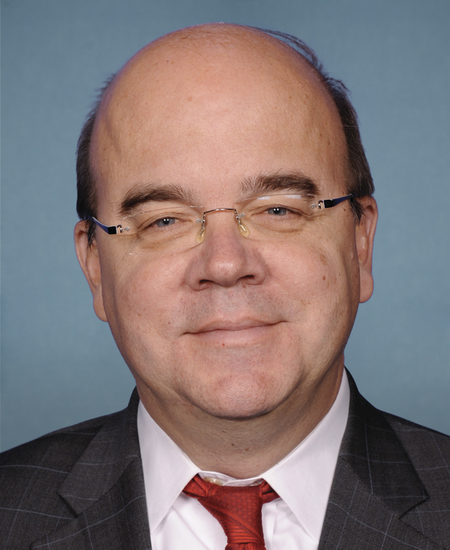
Rep. James P. McGovern
Sponsored bills
Gay and Trans Panic Defense Prohibition Act of 2021 This bill generally prohibits a federal criminal defendant from asserting, as a defense, that the nonviolent sexual advance of an individual or a perception or belief of the gender, gender identify or expression, or sexual orientation of an individual excuses or justifies conduct or mitigates the severity of an offense.
Maddy summaryHR 2584, the Judiciary Act of 2021, would change the structure of the U.S. Supreme Court by increasing the number of associate justices from eight to twelve. This bill directly affects the Supreme Court's composition and operations, requiring a quorum of eight justices instead of six to conduct business. The key provision amends Title 28 of the U.S. Code to reflect these numerical changes to the Court's membership and quorum requirements. This is a procedural change to the Court's statutory structure, not a policy affecting the public.
Veterans Medical Marijuana Safe Harbor Act This bill provides guidance related to veterans and medical marijuana that shall be effective for five years. Specifically, the bill authorizes (1) a veteran to use, possess, or transport medical marijuana in accordance with applicable state or Native American tribal law; (2) a Department of Veterans Affairs (VA) physician to discuss with a veteran the use of medical marijuana as a treatment if the physician is in a state or on tribal land that authorizes such treatment; or (3) a VA physician to recommend, complete forms for, or register veterans for participation in a medical marijuana treatment program in accordance with applicable state or tribal law. The bill requires the VA to report on (1) the effects of medical marijuana on veterans in pain; and (2) the relationship between state-approved medical marijuana treatment programs, program access, and opioid use and abuse reduction.
Maddy summaryThis bill provides permanent resident status (a green card) to three specific individuals: Lucio Enrique Perez Ortiz, Dora Gonzalez Santizo, and Edvin Oriany Perez Gonzalez. It waives standard immigration rules that would typically prevent them from applying for permanent residency, rescinds any existing removal orders against them, and allows them to file applications within two years of the bill's enactment. The bill does not affect other immigrants or change immigration policy - it only addresses the unique circumstances of these three named individuals.
Maddy summaryThis bill provides permanent residency (green card) status to a specific individual, Irida Kakhtiranova, bypassing standard immigration requirements. It waives grounds for removal or denial of admission based on her past records and allows her to apply for permanent residence within 2 years of the bill's enactment. The bill does not affect broader immigration policy but directly grants relief to this one person, requiring a corresponding reduction in immigrant visa numbers for her country of birth.
Defending Each and Every Person from False Appearances by Keeping Exploitation Subject to Accountability Act of 2021 or the DEEP FAKES Accountability Act This bill establishes requirements for advanced technological false personation records (i.e., deep fakes) and establishes criminal penalties for related violations. Specifically, it requires producers of deep fakes to generally comply with certain digital watermark and disclosure requirements (e.g., verbal and written statements). It establishes new criminal offenses related to (1) the production of deep fakes which do not comply with related watermark or disclosure requirements, and (2) the alteration of deep fakes to remove or meaningfully obscure such required disclosures. A violator is subject to a fine, up to five years in prison, or both. It also establishes civil penalties and permits individuals to bring civil actions for damages. Additionally, it revises the criminal offense of fraud in connection with certain identification documents to include deep fakes. The bill also directs the Department of Justice to take certain actions, such as publishing a report related to deep fakes that includes a description of the efforts of Russia and China to use technology to impact elections. Software manufacturers who reasonably believe software will be used to produce deep fakes must ensure it has the technical capability to insert watermarks and disclosures. Finally, the bill directs the Department of Homeland Security to establish a task force to, among other things, advance efforts of the federal government to combat the national security implications of deep fakes.
Voter Empowerment Act of 2021 This bill expands voter registration and voting access. Specifically, the bill expands voter registration by requiring states to (1) make available online voter registration, (2) establish automatic voter registration systems, (3) permit same-day voter registration, and (4) accept voter registration applications from individuals under age 18. Further, the bill limits removing voters from voter rolls and prohibits interference with voter registration or voting. Next, the bill requires states to allow individuals with disabilities to use absentee registration procedures and to vote by absentee ballot in federal elections. The bill also prohibits voter caging (the practice of sending mail to addresses on voter rolls, compiling a list of the undeliverable mail, and using the list to remove registered voters from voter rolls). Next, the bill expands voting access by requiring states to allow early voting and voting by mail without additional conditions. It also requires states to provide secured drop boxes at which individuals may drop off their completed absentee ballots. In addition, the bill declares that the right of a U.S. citizen to vote in any federal election shall not be denied or abridged because that individual has been convicted of a criminal offense unless, at the time of the election, such individual is serving a felony sentence. Finally, the bill permanently reauthorizes the Election Assistance Commission (EAC). It also directs the EAC to make grants to states for specified activities, including to implement automatic voter registration systems.
Health, Opportunity, and Personal Empowerment Act of 2021 or the HOPE Act of 2021 This bill establishes two Health, Opportunity, and Personal Empowerment (HOPE) pilot projects to improve economic security for individuals who meet income or other requirements. The Department of Health and Human Services (HHS), the Department of Agriculture, and the Department of Housing and Urban Development must collaborate on the projects. The first project provides awards to certain government entities to assist eligible individuals in establishing HOPE accounts through banks, credit unions, or governmental agencies. HOPE accounts must (1) provide access to specified financial services and information on public benefits, health insurance, and other topics; and (2) facilitate activities such as applying for government benefits and filing taxes. HHS must hold a competition to award contracts to private businesses and nonprofits to develop technology applications and other tools for HOPE accounts. The second pilot project provides grants that allow government and nonprofit organizations to enter voluntary agreements with eligible individuals to carry out long-term plans related to improving economic security and upward mobility.
Camp Lejeune Justice Act of 2021 This bill allows certain individuals to sue and recover damages for harm from exposure to contaminated water at Camp Lejeune in North Carolina between August 1, 1953, and December 31, 1987. This action is available only to individuals who were exposed to contaminated water for at least 30 days. The bill prohibits the U.S. government from asserting specified immunity from litigation in response to such a lawsuit. The bill also prohibits an individual who brings such an action from bringing a separate tort action against the United States based on the same harm.