

Guaranteed Refugee Admission Ceiling Enhancement Act or the GRACE Act This bill establishes that the maximum number of refugees admitted each fiscal year shall be no less than 125,000 and that the maximum number shall be treated as the numerical goal for refugee admissions for the applicable fiscal year. The President may set a higher number if it is justified by humanitarian concerns or is otherwise in the national interest. Currently, the number admitted each fiscal year may not exceed 50,000 unless the President determines that a higher number is justified by humanitarian concerns or is otherwise in the national interest. The bill directs the President to take into consideration information from the United Nations High Commissioner for Refugees when establishing the maximum admission number and making certain other related decisions. The President shall report to Congress quarterly on (1) the number of refugees admitted during the preceding quarter, (2) the number of aliens who were security-cleared during the preceding quarter, (3) a plan to reach the numerical goal for admitted refugees for that fiscal year, and (4) other related information.
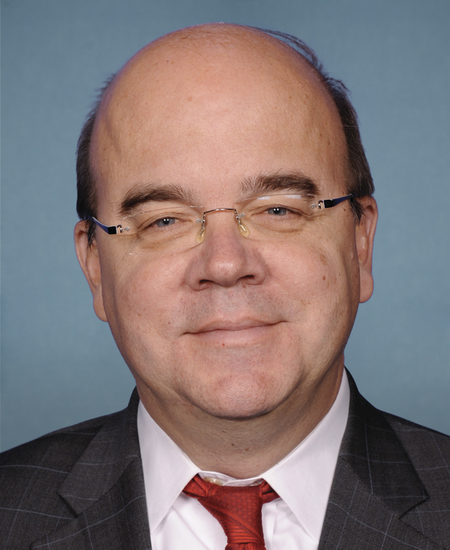
Rep. James P. McGovern
Sponsored bills
Dignity for Detained Immigrants Act of 2021 This bill directs the Department of Homeland Security (DHS) to establish standards for facilities holding aliens in its custody, phases out using non-DHS facilities for such purposes, and contains other related provisions. The standards shall comply with the American Bar Association's Civil Immigration Detention Standards. The DHS Office of Inspector General (OIG) shall conduct periodic unannounced inspections of each facility and shall take various actions against noncompliant facilities, including imposing fines, cancelling contracts, and closing facilities. DHS shall report to Congress any death of an alien in its custody within 24 hours and conduct an investigation within 30 days that identifies policy changes that could reduce the likelihood of such a death. DHS is prohibited from entering into contracts for third parties to operate detention facilities or alternatives to detention programs and shall terminate existing contracts within three years of the bill's enactment. The bill establishes that OIG facility inspection reports and contracts for an outside entity to operate a detention facility are records available to the public under the Freedom of Information Act. DHS shall maintain certain information relating to detained aliens, including the alien's location and whether the alien was separated from family. The bill provides for various requirements and procedures related to detaining aliens, including (1) prohibiting DHS from detaining children, (2) imposing a presumption that an alien should be released, and (3) establishing that aliens in custody shall be subject to the least restrictive conditions. The bill also abolishes mandatory detention for asylum seekers.
Equal Access to Abortion Coverage in Health Insurance Act of 2021 or the EACH Act of 2021 This bill requires federal health care programs to provide coverage for abortion services and requires federal facilities to provide access to those services. The bill also permits qualified health plans to use funds attributable to premium tax credits and reduced cost sharing assistance to pay for abortion services.
Closing the Law Enforcement Consent Loophole Act of 2021 This bill establishes a framework to prohibit law enforcement officers at the federal, state, and local levels from engaging in sexual acts with individuals who are in custody. At the federal level, the bill makes it unlawful for a federal law enforcement officer who is acting under color of law to engage in a sexual act with an individual who is under arrest, in detention, or in custody. Consent is not a defense to prosecution for unlawful conduct. A violator is subject to criminal penalties—a fine, a prison term of up to 15 years, or both. At the state and local level, the bill conditions eligibility for funds under the Community Oriented Policing Services program on the enactment of a similar law.
Stop shielding Assets from Corporate Known Liability by Eliminating non-debtor Releases Act or the SACKLER Act This bill prohibits a bankruptcy court from releasing claims against non-debtors brought by states, tribes, municipalities, or the federal government. However, the bankruptcy court may issue a stay not exceeding 90 days regarding such a claim. Complex bankruptcies may involve creditor claims against non-debtors associated with the debtor, such as the debtor's officers, directors, or employees. Currently, in carrying out a bankruptcy plan, certain courts may release non-debtors from liability (there is a circuit split regarding this practice).
Protect DREAMer Confidentiality Act of 2021 This bill directs the Department of Homeland Security (DHS) to prevent disclosing information from applications to the Deferred Action for Childhood Arrivals (DACA) program to U.S. Immigration and Customs Enforcement (ICE) or U.S. Customs and Border Protection (CBP), except to implement the program. Application information may be shared only to identify or prevent fraudulent claims, for particularized national security purposes relating to the applicant, or to investigate or prosecute a felony not related to immigration status. The bill also prohibits DHS from referring any individual with deferred action status to ICE, CBP, the Department of Justice, or any law enforcement agency.
Arts Education for All Act This bill expands arts education and programming for children in early education, K-12 students, and juveniles and adults in the criminal justice system. Specifically, the bill allows Child Care and Development Block Grant funding to be used for additional activities, including arts programming. Additionally, the bill addresses arts programming in elementary and secondary schools by directing each state educational agency to include information on arts programming in its state plan, including how it will integrate arts education instruction into the curriculum and increase the number of arts teachers in schools; requiring state report cards to include information on arts courses; requiring local educational agency (LEA) plans to describe how the LEA will encourage the use of arts education to improve student achievement; and allowing certain funds to be used for professional development for arts teachers. The bill directs the National Center for Education Research to carry out research on the use of arts and arts education in elementary and secondary schools, including in low-performing schools. Further, the National Center for Education Statistics must compile data on arts education. The National Assessment of Educational Progress must include a specified arts assessment. The bill requires a state's juvenile justice and delinquency plan to describe how the state will coordinate services and activities for juvenile justice and delinquency prevention with arts agencies and arts organizations. Additionally, grants for adult offender reentry demonstration projects may be used for facilitating arts education.
This resolution provides for consideration of H.R. 2119 (reauthorizing the Family Violence and Prevention Services program), H.R. 3110 (expanding access to breastfeeding accommodations), H.R. 3992 (prohibiting actions against job applicants based on age), and S. 1301 (providing for publication of physical activity recommendations).
Choose Home Care Act of 2021 This bill provides for coverage of home-based extended care services under Medicare. Specifically, the bill provides for coverage of services that are furnished to Medicare beneficiaries in their homes by home health agencies, including nursing care, meals and nutritional support, home medical supplies, nonemergency medical transportation, and care coordination. Coverage includes 30 days of post-hospital care and other periods of extended illness, as determined by the Centers for Medicare & Medicaid Services (CMS). Home health agencies that provide such services may receive additional payments in accordance with a specified methodology. The CMS may make payments for covered services furnished before 2022 during any period in which there is a public health emergency.
Stabilizing Medicare Access to Rehabilitation and Therapy Act or the SMART Act This bill modifies the application of a certain Medicare payment methodology for outpatient physical therapy services and outpatient occupational therapy services that are furnished by a therapy assistant. Under current law, effective January 1, 2022, payment for such services is 85% of the otherwise applicable rate. The bill delays this effective date by one year and excludes services that are furnished in rural or medically underserved areas from this payment methodology. The bill also specifies that supervision requirements for outpatient physical therapy services that are furnished through private practice may not be more stringent for purposes of Medicare coverage than under state law.