

Maddy summaryThe HITS Act changes tax rules to help independent music producers by allowing them to deduct costs for creating sound recordings as immediate business expenses, rather than spreading costs over time. It specifically applies to U.S.-produced sound recordings (like albums or podcasts) by qualifying independent producers, with a $150,000 annual cap on deductible costs. The bill also enables bonus depreciation for equipment used in these productions, treating them similarly to film or theater projects for tax purposes. This aims to improve cash flow for smaller music businesses by reducing upfront tax burdens on recording costs.
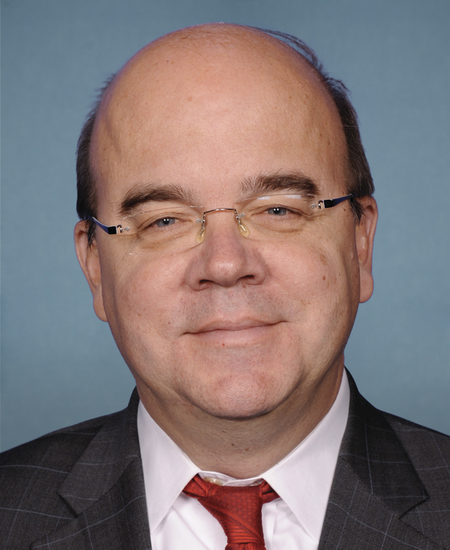
Rep. James P. McGovern
Sponsored bills
Maddy summaryThis bill authorizes the President to posthumously award Doris Miller, an African-American Navy cook who served during World War II, the Medal of Honor - the highest military honor - for his actions during the December 7, 1941, Pearl Harbor attack. It directly affects Miller (who died in 1943) by correcting a historical oversight: he was initially recognized with a Navy Cross but never received the Medal of Honor, despite being among those who could have earned it. The key provision waives standard time limits for posthumous Medal of Honor awards under U.S. Code, enabling the President to formally recognize Miller's valor - specifically his actions manning a machine gun under fire and saving lives - after his death. The bill cites that no African-American sailor received the Medal of Honor for Pearl Harbor actions, while Miller's heroism was documented in Navy reports.
Maddy summaryThis bill requires the removal of statues in the U.S. Capitol that honor individuals who served with the Confederate States of America, as defined by an amendment to existing law. The Architect of the Capitol must identify and remove these statues within 120 days of enactment, with options to return them to the providing state (if requested and costs are covered) or store them in a nonpublic location. The bill appropriates $2 million for removal, transfer, storage, and related costs, and allows states to replace removed statues under standard Capitol display rules. It directly affects Capitol display policies and the states that provided the statues.
Maddy summaryHR 1247 would award a Congressional Gold Medal to the Freedom Riders collectively, honoring their pivotal role in challenging segregation in interstate travel during the Civil Rights movement. The medal, to be struck by the U.S. Mint and displayed at the Smithsonian Institution, recognizes their nonviolent protests that led to the 1961 federal ban on segregation in interstate public facilities. This is a symbolic tribute with no legal effect, as the bill does not create new policies or alter existing laws.
Maddy summaryHR 1244 authorizes Congress to award a gold medal collectively to Africans and their descendants who were enslaved in the U.S. from 1619 to 1865, recognizing their contributions to America's economic foundation. The bill directs the Treasury Secretary to design and strike the medal, which will be permanently displayed at the Smithsonian's National Museum of African American History & Culture. It also permits the sale of bronze duplicates to cover costs, with proceeds going to the U.S. Mint. This is a commemorative measure, not a policy change, focusing on symbolic recognition of historical contributions.
Maddy summaryThe SECURE Notarization Act of 2023 establishes federal standards for electronic and remote notarizations in interstate commerce, allowing notaries to verify identities and perform notarizations remotely using video communication. Key requirements include creating audio-visual recordings of remote notarizations, verifying identities through two distinct methods (or a credible witness), and retaining recordings for at least 5 years. The bill ensures federal courts and all states must recognize valid notarizations performed under these standards, regardless of whether the notarization was done electronically, remotely, or with a physical signature. It does not require notaries to use electronic methods and preserves state authority to enforce stricter rules, as long as they meet the minimum federal baseline.
Maddy summaryThe Richard L. Trumka Protecting the Right to Organize Act of 2023 strengthens workers' rights to organize unions by making it harder for employers to interfere with organizing efforts. Key provisions include changing the definition of "employee" to make it more difficult to classify workers as independent contractors, prohibiting employers from threatening to permanently replace striking workers, and requiring employers to provide voter lists for union elections. The bill also creates a new electronic voting system for union elections, strengthens whistleblower protections for workers reporting labor violations, and increases penalties for unfair labor practices. These changes directly affect workers seeking to form unions, employers who may interfere with organizing, and labor organizations. The bill aims to make it easier for workers to exercise their right to collective bargaining under the National Labor Relations Act.
Maddy summaryHRES 167 allocates $8,335,614 in total for the Committee on Rules' expenses during the 118th Congress, with $4,167,807 designated for the first session (2023-2024) and $4,167,807 for the second session (2024-2025). The funds cover staff salaries and operational costs for the committee's work, including scheduling and procedural matters. Payments must follow House administrative regulations and be authorized by the committee chair and the Committee on House Administration.
Maddy summaryThis is a non-binding resolution expressing the House of Representatives' symbolic support for designating February 27-March 3, 2023, as "Public Schools Week." It does not create new laws, allocate funding, or directly affect any individuals or institutions. The resolution highlights the importance of public schools to democracy, equity, and student success through a series of supporting statements. As a procedural resolution, it has no legal effect beyond acknowledging the significance of public education.
Maddy summaryHR 1204, the Protect Access to Justice for Veterans Act, limits attorney fees for veterans pursuing claims related to water contamination at Camp Lejeune, North Carolina. It caps fees at 20% for claims resolved within 180 days and 33.3% for later settlements or judgments. All settlement funds must be placed into a trust account for the veteran, with attorneys required to notify the veteran and deliver their share promptly before receiving payment. Violations, such as charging excessive fees, can result in fines up to $5,000.