

Maddy summaryThe Justice for Black Farmers Act of 2023 addresses historical discrimination against Black farmers by the USDA through several key provisions. It establishes an Equity Commission to study discrimination and recommend solutions, creates an independent Civil Rights Oversight Board to review discrimination complaints, and provides land grants of up to 160 acres to eligible Black farmers at no cost. The bill also improves access to credit for socially disadvantaged farmers, requires the USDA to collect and publish data on racial disparities in its programs, and includes protections against discriminatory practices in the livestock industry. These measures aim to increase land ownership and economic opportunity for Black farmers while addressing systemic barriers they've faced for decades.
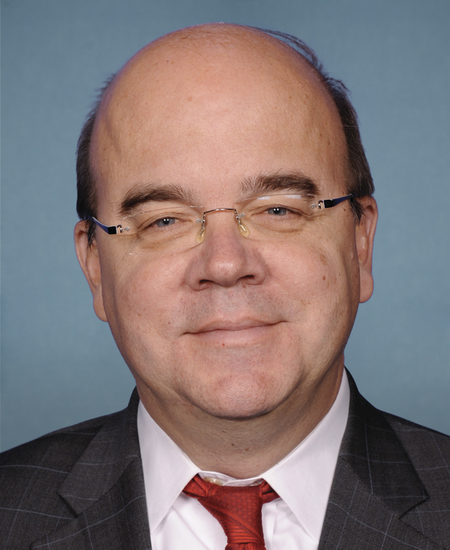
Rep. James P. McGovern
Sponsored bills
This resolution reaffirms the U.S. commitment to Moldova in the face of Russia's malign influence and military aggression. The resolution also (1) lauds the strengthening of civil society, democracy, and democratic institutions in Moldova; (2) welcomes the strong mandate given to pro-reform forces in recent elections; and (3) urges the European Union to continue to promote Moldova's accession processes.
Maddy summaryHR 1124, the Federal Death Penalty Abolition Act of 2023, would eliminate the federal death penalty by repealing provisions in over 30 sections of U.S. Code that currently allow for capital punishment in various criminal offenses. The bill would affect anyone convicted of a federal crime that currently carries the death penalty, including murder during drug trafficking, terrorism, and other violent crimes. It would remove the death penalty as a sentencing option for these offenses and require resentencing for those already under a death sentence. The bill also makes related changes to military justice procedures that currently permit capital punishment.
Maddy summaryHR 1134, the People Over Pentagon Act of 2023, would reduce the U.S. Department of Defense's 2024 budget by $100 billion. It directly affects the Pentagon's funding, though it specifically preserves spending for the Defense Health Program, military personnel, and civil service pay and benefits. The bill mandates this cut while directing the Secretary of Defense to consider a 2021 Congressional Budget Office report on managing a smaller defense budget. It does not specify where the savings would be redirected, only requiring reallocation to address non-military national security priorities.
Maddy summaryThe PREP Civics and Government Act (HR 1133) amends the National Foundation on the Arts and the Humanities Act of 1965 to explicitly include "civics and government" as a subject within the humanities. This change allows the National Foundation on the Arts and the Humanities to fund educational programs focused on civics and government through existing grant programs. The bill directly affects the Foundation’s funding priorities and organizations applying for humanities grants, such as schools, museums, and community groups offering civics education. It does not create new funding but expands eligibility for current humanities grants to cover civics and government content.
Maddy summaryThe Department of Peacebuilding Act of 2023 would establish a new Cabinet-level Department of Peacebuilding within the executive branch of the U.S. government. The department would include multiple offices focused on domestic and international peacebuilding, violence prevention, peace education, and conflict resolution, with specific offices dedicated to areas like peace education, domestic activities, international activities, technology, arms control, and human rights. It would create a Secretary of Peacebuilding position and require the department to develop policies addressing root causes of violence, promote nonviolent conflict resolution, and collaborate with existing federal agencies. The bill would mandate annual reports on progress toward peace in the United States and require consultation with other departments on matters related to conflict prevention and peacebuilding.
Andrew Jackson Statue Removal Act This bill directs the Department of the Interior to remove the Andrew Jackson statue and marble base from Lafayette Square in the District of Columbia. Interior shall donate the Andrew Jackson statue and marble base to a museum or other similar entity. The recipient of the statue and base may not store, display, or exhibit the statue outside, but if the statue is stored, displayed, or exhibited outside, ownership of the statue and marble base will revert back to the federal government.
Emancipation Statue Removal Act This bill directs the Department of the Interior to remove the Emancipation Memorial from Lincoln Park in the District of Columbia. Interior shall donate the Emancipation Memorial to a museum or other similar entity. The recipient of the Emancipation Memorial may not store, display, or exhibit the memorial outside, but if the memorial is stored, displayed, or exhibited outside, ownership of the memorial will revert back to the federal government.
Maddy summaryHR 724, the Arctic Refuge Protection Act, repeals the existing oil and gas program for the Arctic National Wildlife Refuge in Alaska and designates approximately 1.56 million acres of the refuge's coastal plain as federal wilderness. This bill directly affects the Arctic Refuge by permanently prohibiting oil and gas leasing and development in that specific area. The key mechanism is adding the designated land to the National Wilderness Preservation System under the Wilderness Act, requiring it to be managed for its natural conditions. This change legally protects the area from future fossil fuel extraction activities.
Maddy summaryThis bill establishes the Ralph David Abernathy, Sr. National Historic Site in Georgia as part of the National Park System. It specifically preserves the West Hunter Street Baptist Church (where Abernathy served as pastor during the civil rights movement) and honors his leadership role. The site cannot be formally established until the National Park Service acquires sufficient land (through donation or purchase), and requires a management plan within 3 years of funding. The bill directly affects the National Park Service, the State of Georgia, and local communities by designating this location for preservation and public interpretation.