

Maddy summaryHR 2539 permanently extends the New Markets Tax Credit (NMTC) program, which incentivizes private investment in low-income communities. The bill directly affects community development financial institutions (CDFIs) and investors who fund projects in designated low-income areas by ensuring the credit remains available beyond 2025. Key provisions include automatically adjusting the credit amount annually for inflation starting in 2024 and clarifying that the credit can be used to offset alternative minimum tax liability. This maintains the program’s effectiveness in channeling capital to underserved neighborhoods without changing eligibility or funding levels.
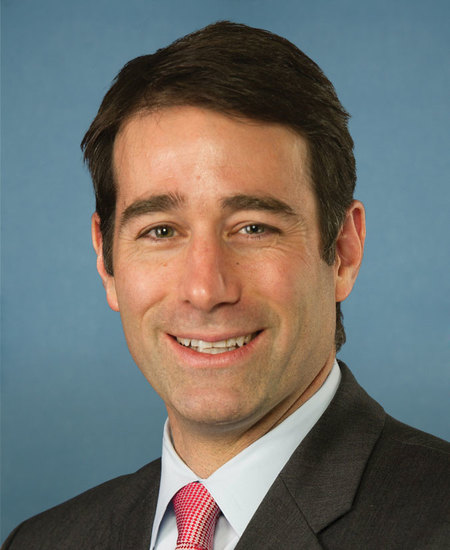
Rep. Garret Graves
Sponsored bills
Maddy summary# Summary of the TAPP American Resources Act This comprehensive legislation, titled the "TAPP American Resources Act" (or "Transparency, Accountability, and Permitting Process for American Resources Act"), is a major overhaul of federal energy and natural resource permitting processes. The key provisions include: 1. **Streamlined Permitting Processes**: - Creates a 50-year term limit for pipeline rights-of-way - Allows oil and gas exploration on non-Federal surface estate without Federal permits - Reduces royalty rates for oil and gas leases from 16.67% to 12.5% - Limits judicial review of permits to cases involving "imminent and substantial environmental harm" 2. **NEPA Reforms**: - Expands categorical exclusions for certain energy projects - Allows use of previously completed environmental assessments for similar projects - Limits environmental reviews to areas directly affected by the proposed action - Reduces consideration of downstream effects of oil and gas consumption 3. **Mining and Mineral Development**: - Designates mining as a "covered sector" for permitting improvement - Creates a memorandum of agreement process for mining projects - Requires mineral resource assessments before land withdrawals - Ensures uranium is considered a critical mineral 4. **Revenue Sharing**: - Changes distribution of Gulf of Mexico revenue to states (37.5% to Gulf states, 62.5% to general fund) - Creates parity in offshore wind revenue sharing with offshore oil and gas - Eliminates administrative fees under the Mineral Leasing Act 5. **Water Quality Certification**: - Limits certification requirements to specific provisions of Clean Water Act sections - Requires states to publish certification requirements within 30 days - Sets 90-day timeline for states to identify additional materials needed The legislation represents a significant shift toward expediting domestic energy production while reducing regulatory burdens, with a focus on oil, gas, and mineral development on federal lands. It includes numerous amendments to existing laws including the National Environmental Policy Act, Mineral Leasing Act, Outer Continental Shelf Lands Act, and Clean Water Act.
Maddy summaryHR 1818, the Aviation Workforce Development Act, expands tax-advantaged savings plans (529 plans) to cover costs for specific aviation training programs. It allows funds from these plans to pay for tuition, fees, and required materials at FAA-certified aviation maintenance technician schools (Part 147) or commercial pilot training programs (Part 61 or 141). This directly affects students pursuing careers as aircraft maintenance technicians or commercial pilots by making these training costs more affordable through existing tax-advantaged savings. The bill amends the tax code to include these programs under "qualified higher education expenses" for 529 plan distributions.
Maddy summaryHR 1831 would award Billie Jean King a Congressional Gold Medal to honor her lifelong advocacy for equal rights in sports and society. The bill directs the Secretary of the Treasury to strike the medal and have it presented by congressional leaders, recognizing her pivotal role in advancing women's equality through tennis (including founding the Women’s Tennis Association and securing equal prize money) and her broader impact on society through initiatives like Title IX advocacy.
Maddy summaryHR 5, the Parents Bill of Rights Act, would require public schools receiving federal funding to provide parents with greater access to educational information. The bill mandates that schools post curricula online or widely distribute it to parents, include school budgets in report cards, and provide specific information about school activities including violent incidents and plans to eliminate gifted programs. It also guarantees parents the right to meet with teachers twice a year, review library materials, and address school boards. These requirements would apply to all local educational agencies and schools covered by the Elementary and Secondary Education Act. The bill amends existing education laws to strengthen parental transparency and involvement in their children's education.
Historic Tax Credit Growth and Opportunity Act of 2023 This bill increases the rehabilitation tax credit and modifies certain requirements for the credit. The bill increases the rate of the credit for qualified rehabilitation expenditures in taxable years beginning after December 31, 2020, and before January 1, 2028, after which the rate reverts to 20%. The bill increases the rate of the credit to 30% for certain small projects whose qualified rehabilitation expenditures do not exceed $2.5 million. The bill also expands the types of buildings eligible for rehabilitation by decreasing the rehabilitation threshold from 100% to 50% of project expenses. It also eliminates the basis adjustment requirement for the credit and modifies rules relating to tax-exempt use property eligible for the credit.
Maddy summaryHR 1777 establishes a $50 million annual fund (2024-2028) for collaborative defense research between the U.S. and Israel in emerging technologies like artificial intelligence, cybersecurity, directed energy, and automation. The bill directly supports U.S. and Israeli military forces by enabling joint development of new warfare capabilities to address current and future defense challenges. Key provisions include authorizing $50 million per year for collaborative projects, building on existing U.S.-Israel defense partnerships like counter-tunnel and counter-drone systems. This funding aims to strengthen bilateral defense innovation without altering existing military aid structures.
Maddy summaryHR 1613, the Drug Price Transparency in Medicaid Act of 2023, requires Medicaid programs to mandate pass-through pricing for covered outpatient drugs. This means pharmacy benefit managers (PBMs) and managed care entities must pay pharmacies directly for the drug's ingredient cost plus a fixed dispensing fee, eliminating "spread pricing" where PBMs keep profits from the difference between what they pay pharmacies and what Medicaid reimburses. The bill also establishes a national survey of retail pharmacy drug prices to determine average acquisition costs, requiring participating pharmacies to report pricing data to states. These changes apply to Medicaid contracts entered into or renewed 18 months after the bill's enactment, affecting states, PBMs, managed care organizations, and community pharmacies.
Maddy summaryThe TAPP American Resources Act (HR 1335) requires the immediate resumption of quarterly onshore oil and gas lease sales in specific states including Wyoming, New Mexico, Colorado, Utah, Montana, North Dakota, Oklahoma, Nevada, and Alaska, with replacement sales if initial sales are canceled or have low bid coverage. The bill streamlines federal permitting processes by establishing strict deadlines for environmental reviews (1 year for assessments, 2 years for impact statements), reducing oil and gas royalty rates from 16.67% to 12.5%, and requiring agencies to publicly report on pending lease applications and permit processing. It directly affects oil and gas companies seeking federal leases, federal agencies managing energy development (like the Bureau of Land Management), and state governments that may receive revenue from energy production. The legislation also includes provisions for geothermal leasing, coal development, offshore oil and gas leasing, and transparency requirements for all federal energy permitting processes.
This resolution recognizes and celebrates the 70th anniversary of the 1953 Baton Rouge Bus Boycott in Baton Rouge, Louisiana, to provide an opportunity for the people of the United States to learn more about the past and to better understand the experiences that have shaped the nation.