

Maddy summaryThis bill amends federal law to require that recipients of certain administrative subpoenas (issued by the Department of Homeland Security in investigations related to child predators) keep the subpoena's existence secret for up to 180 days. The government must certify that disclosure could endanger an investigation (e.g., by risking a person’s safety, causing a suspect to flee, destroying evidence, or intimidating witnesses) to impose this secrecy. Recipients can seek court review of the secrecy order, and courts must uphold it if they find disclosure would jeopardize the investigation. The secrecy period may be extended in 180-day increments if the government demonstrates ongoing risks.
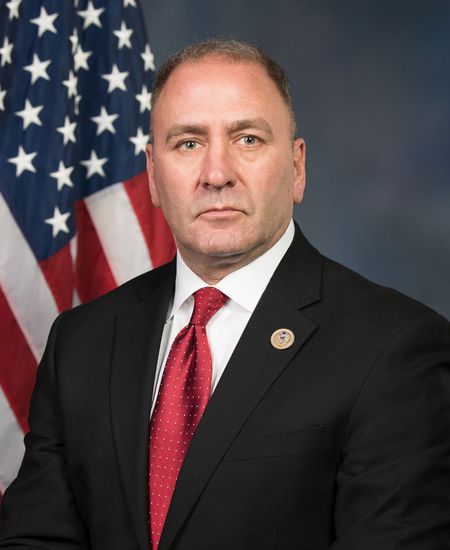
Rep. Clay Higgins
Sponsored bills
Stopping Illicit Fentanyl Trafficking Act of 2023 or the SIFT Act of 2023 This bill permanently adds five fentanyl analogues and the entire category of fentanyl-related substances to schedule I of the Controlled Substances Act. A schedule I controlled substance is a drug, substance, or chemical that has a high potential for abuse; has no currently accepted medical value; and is subject to regulatory controls and administrative, civil, and criminal penalties under the Controlled Substances Act. Fentanyl-related substances are currently regulated under schedule I through a temporary order issued by the Drug Enforcement Administration. The temporary order expires on December 31, 2024. The bill also creates a process to remove from schedule I certain fentanyl-related substances that do not have a high potential for abuse.
Maddy summaryHR 3039, the DRIVE Act, prohibits the Federal Motor Carrier Safety Administration (FMCSA) from requiring speed limiting devices on trucks weighing over 26,000 pounds operating in interstate commerce. This directly affects commercial trucking companies and drivers transporting goods across state lines. The bill's key provision explicitly bans the FMCSA from issuing any rule mandating such devices, which are typically set to limit vehicle speed. The law applies specifically to interstate trucking operations and does not affect state-level regulations.
This resolution expresses U.S. support for Israel and its efforts to defend its right to existence. The resolution also declares that the United States and international community must prevent Iran from acquiring or building nuclear weapons.
Maddy summaryThis bill protects living organ donors from insurance discrimination by prohibiting life, disability, and long-term care insurers from denying coverage, raising premiums, or altering policy terms solely because someone donated an organ while alive. It also updates the Family and Medical Leave Act to include recovery from organ donation surgery as a qualifying health condition, allowing donors to take protected leave for this purpose. Additionally, the bill requires the Health and Human Services Secretary to update public educational materials about living donation benefits, risks, and insurance protections within six months of enactment. These changes directly affect living organ donors, insurers, employers, and healthcare systems by ensuring fair access to insurance and workplace leave.
Bringing Aquaculture Indemnities To Speed Act or the BAITS Act This bill expands the Livestock Indemnity Program (LIP) to eligible producers of farm-raised fish. (LIP provides indemnity payments to eligible livestock producers for loss or reduced sales price due to specified events.) Specifically, the bill adds farm-raised fish to the LIP definition of livestock , expanding LIP indemnity payments to farm-raised fish producers due to (1) an attack by an animal reintroduced into the wild by the federal government or protected by federal law (e.g., avian predators) or (2) disease. Under current law, LIP also provides indemnity payments to eligible livestock producers due to adverse weather. This bill prohibits LIP from making payments to producers of farm-raised fish due to adverse weather.
This joint resolution nullifies a Department of Labor final rule entitled Adverse Effect Wage Rate Methodology for the Temporary Employment of H-2A Nonimmigrants in Non-Range Occupations in the United States and published on February 28, 2023. This rule makes changes to the methodology used to set adverse effect wage rates for H-2A workers (temporary agricultural workers), including by using Bureau of Labor Statistics wage surveys in certain instances. (Generally, the minimum wage for an H-2A worker is the highest of the adverse effect wage rate, the applicable minimum wage, the prevailing wage for that occupation in that area, or any agreed-upon collective bargaining wage.)
Maddy summaryHR 2826, the Save Local Business Act, clarifies when multiple businesses can be held jointly responsible for labor laws. It amends the National Labor Relations Act and Fair Labor Standards Act to state that a business is only a joint employer if it directly controls key employment terms like hiring, pay, schedules, or discipline for another business's workers. This directly affects franchisors, contractors, and similar business models that might previously have been deemed joint employers under broader interpretations. The bill aims to limit joint employer liability to cases where one business has clear, day-to-day control over essential worker conditions.
Maddy summaryHR 734, the Protection of Women and Girls in Sports Act of 2023, amends Title IX to prohibit federally funded schools and athletic programs from allowing individuals assigned male at birth to participate in women's or girls' sports teams. The bill defines "sex" for this purpose as "reproductive biology and genetics at birth," making it a violation of federal law to permit such participation in designated women's or girls' programs. It allows males to train with women's teams only if no female is deprived of a roster spot, competition opportunity, scholarship, or other benefit tied to the team. This law directly affects public and private schools receiving federal financial assistance that operate athletic programs.
Returning Worker Accountability Act of 2023 This bill makes various changes to the H-2B visa program (temporary nonagricultural services), including by requiring the Department of Homeland Security to use biometric data to vet workers to identify any aliases and vet any discovered aliases for issues relating to national security, criminal history, and inadmissibility.