

Maddy summaryHR 2743 prohibits large financial institutions (over $100 billion in assets) from denying banking services to lawful businesses based on subjective political reasons, industry type, or reputational concerns. It requires these institutions to use objective, risk-based assessments for service decisions and provide written justifications for denials. The law applies to banks, credit unions, and payment networks, with civil penalties for violations including fines up to $10,000 per incident. It specifically ensures businesses operating legally under federal law receive fair access to financial services without discrimination. The bill mandates that denials be based on documented risk factors, not political bias or category-based exclusion.
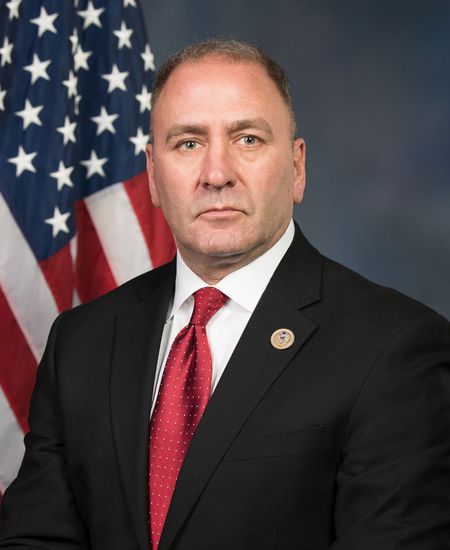
Rep. Clay Higgins
Sponsored bills
Maddy summaryHR 2726, the Small Business Payment for Performance Act of 2023, requires U.S. government agencies to provide small businesses with interim partial payments when they unilaterally change construction contract terms. Specifically, it mandates that agencies pay at least 50% of the estimated additional costs requested by small businesses within the timeframe specified by the contract. The bill also requires small businesses to pass these interim payments to first-tier subcontractors and any lower-tier subcontractors who incurred increased costs due to the contract change. This law applies directly to small business concerns awarded federal construction contracts and takes effect by October 1, 2025, or the start of the next full fiscal year after enactment.
U.S.A. Beef Act This bill modifies label requirements for meat food products of cattle. Specifically, the bill prohibits the label of cattle meat or a meat food product of cattle from bearing the phrase Product of U.S.A. unless such meat or meat food product is exclusively derived from one or more cattle born, raised, and slaughtered in the United States. The requirement does not apply to cattle meat or a meat food product of cattle that is intended and offered for export to a foreign country.
Maddy summaryHJRES 27 is a congressional resolution seeking to block a federal rule that redefined which waterways fall under the Clean Water Act's protections. It targets a rule submitted by the Army Corps of Engineers, Department of Defense, and Environmental Protection Agency (EPA) on January 18, 2023, which aimed to revise the "Waters of the United States" definition. The resolution would formally disapprove this rule under a specific federal procedure (Chapter 8 of Title 5), preventing it from taking effect. This would directly affect how federal agencies regulate pollution and development near water bodies, including wetlands and smaller streams.
Maddy summaryHRES 240 is a non-binding House resolution condemning Russia for downing a U.S. Air Force drone in the Black Sea. It states that Russian Su-27 jets acted recklessly by bumping into the drone while it was operating safely in international airspace, causing it to crash-land. The resolution specifically condemns the Russian military's actions and declares that Russia's attempts to recover the drone pose a threat to U.S. national security. As a symbolic measure, it does not create new laws or affect any specific group.
Maddy summaryHR 2650, the School Resource Officer Training Act of 2023, directs the Attorney General (with the Secretary of Education) to develop and share best practices for training school resource officers (SROs). This includes consulting schools, law enforcement, safety experts, and other stakeholders to create guidelines covering areas like active shooter response, to be published online within one year. The bill requires a report to Congress detailing these best practices, focusing on standardizing occupation-specific education for SROs without changing existing law or funding.
Maddy summaryThis bill requires the Attorney General and Secretary of Education to conduct a federal survey within one year of enactment, examining school resource officer (SRO) assignments at all public elementary and secondary schools. The survey will determine whether each school assigned an SRO on or after January 1, 2022, and for those schools, the number of SROs and whether assignments were full-time or part-time. The results will be submitted to Congress, creating a national dataset on SRO presence in schools. This bill directly affects all public elementary and secondary schools across the U.S. by mandating their inclusion in this data collection effort.
Maddy summaryHR 2557, the CBP Workload Staffing Model Act, requires U.S. Customs and Border Protection (CBP) to create new staffing models for the U.S. Border Patrol and Air and Marine Operations within one year of enactment. These models must account for frontline operations, varying environments, infrastructure, technology, and support needs to ensure adequate staffing. The bill also mandates a workforce tracking system for reporting actual work hours, annual congressional reports on implementation, and a Department of Homeland Security Inspector General review of the models within 120 days. This law directly affects CBP's operational staffing decisions and enhances oversight of how personnel resources are allocated.
Maddy summaryHR 2384, the Complete American Pipelines Act of 2023, requires the expedited construction of existing pipeline projects that received a Federal Energy Regulatory Commission (FERC) certificate of public convenience and necessity before January 1, 2018, and remain active. The bill prohibits judicial review of FERC certificates, related permits, or agency actions for these projects, mandating dismissal of any legal challenges seeking such review. It also grants the U.S. Court of Appeals for the District of Columbia Circuit exclusive authority to hear disputes about the bill's validity or scope. This directly affects pipeline developers with pre-2018 FERC approvals by removing legal barriers to completing their projects.
Maddy summaryThe Safe Students Act (HR 2502) repeals the Gun-Free School Zones Act of 1990, which had prohibited possessing firearms in federally designated school zones under federal law. It also amends related sections of Title 18 (U.S. Code) to remove references to the repealed law and adjust section numbering. This bill does not establish a new federal rule for school zones; it solely eliminates the existing federal prohibition on firearms in school zones. The repeal means the federal government would no longer enforce this specific ban, though state laws may continue to regulate firearms in schools.