

Maddy summaryHR 5791, the "Define the Mission Act," requires the President to submit a comprehensive strategy report to Congress within 30 days of the bill's enactment, detailing U.S. involvement in the Ukraine conflict. The report must define U.S. national interests in the conflict, set specific objectives with timelines, benchmarks, and resource estimates (including personnel and funding), list expected European NATO security contributions, and assess Russia’s natural gas market impact on resolving the conflict. It mandates the strategy must aim for a Russia-Ukraine cease-fire agreement and explicitly cannot depend on U.S. funding for Ukrainian reconstruction. The report must be unclassified but may include a classified annex for full transparency. This bill establishes a formal process for Congress to review and oversee U.S. policy toward Ukraine.
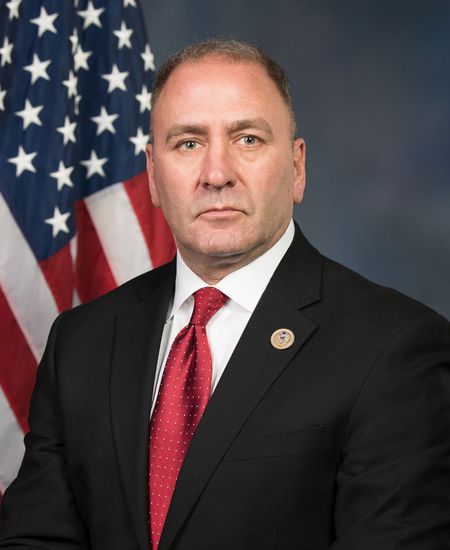
Rep. Clay Higgins
Sponsored bills
Maddy summaryThis bill blocks federal funding for states or local governments that suspend open or concealed firearm carry licenses. It directly affects state and local authorities by denying them access to federal financial assistance (such as for infrastructure or public programs) if they implement such license suspensions. The key mechanism is a funding penalty: any state or local government suspending gun permits forfeits eligibility for federal grants defined under 31 U.S.C. § 7501(a)(5). The policy change is a direct condition on federal aid, not a new regulation on gun ownership.
Maddy summaryHR 5561, the Protecting the Right to Keep and Bear Arms Act of 2023, prevents federal agencies from using emergency declarations to implement gun control measures. It specifically prohibits the President from declaring a national emergency under the National Emergencies Act or the Robert T. Stafford Act for gun control purposes, and stops the Health and Human Services Secretary from declaring a public health emergency under the Public Health Service Act for the same reason. The bill also amends the Stafford Act to explicitly prohibit any emergency-related restrictions on possessing, manufacturing, selling, or transferring firearms, ammunition, ammunition feeding devices, or firearm accessories. This directly affects how federal agencies can respond during emergencies without violating the Second Amendment. The law aims to limit executive actions during emergencies that could restrict gun rights.
Maddy summaryHRES 684 is a symbolic congressional resolution passed by the U.S. House of Representatives on September 14, 2023, condemning New Mexico Governor Michelle Lujan Grisham's emergency order that temporarily suspended open and concealed carry firearm rights for 30 days. The resolution asserts the order violated the Second Amendment, citing Supreme Court precedents (Heller, McDonald, Bruen) and noting a federal judge had already blocked the order's firearm restrictions. It does not change any laws or impose legal consequences - it is solely a formal expression of disapproval from Congress. The resolution directly addresses the Governor's actions but has no effect on New Mexico's laws or citizens' rights.
Maddy summaryHR 5636, the "Protect Children’s Innocence Act," prohibits federal criminal penalties for performing gender-affirming medical care on minors under specific circumstances. It defines prohibited care as surgeries (like hysterectomy or mastectomy), puberty blockers, and hormone therapies at supraphysiologic doses, with exceptions for medical emergencies, intersex conditions, or life-threatening illnesses. The law only applies when the care involves interstate commerce (e.g., payments, communications, or travel across state lines). Minors receiving such care cannot be prosecuted, but they may sue providers for civil damages. The bill directly affects minors under 18, healthcare providers, and families seeking gender-affirming medical treatment.
Maddy summaryThis bill prohibits federal funding for colleges and universities that require students or staff to get a COVID-19 vaccine to enroll, work, or access services. It directly affects institutions of higher education receiving federal funds, such as those participating in student aid programs. The key provision blocks all federal financial support if an institution enforces such vaccine requirements as a condition of enrollment, employment, or benefits. The law does not ban vaccine mandates outright but ties federal funding to compliance with this prohibition.
Maddy summaryHR 5577, the FACE Act Repeal Act of 2023, would repeal a federal law (Section 248 of Title 18, U.S. Code) that made it a crime to block access to abortion clinics or threaten clinic staff. This repeal would remove criminal penalties for obstructing access to clinics, affecting abortion providers, clinic staff, and individuals attempting to access or block clinic entrances. The bill specifically targets the repeal of this prohibition, applying to prosecutions pending or initiated after the law's enactment. It does not change other abortion-related laws or create new policies.
Maddy summaryHR 5465, the Congressional Access to Bureaucratic Offices Act (CABO Act), requires federal agency heads to allow Members of Congress and their staff access to agency headquarters buildings during regular business hours. It mandates that access be granted upon presentation of valid congressional identification (for Members) or a staff badge while accompanied by the employing Member (for staff), with exceptions for areas requiring secret-level security clearance. The bill also ensures this access applies during declared emergencies (like national emergencies under the National Emergencies Act or public health emergencies), without imposing additional costs by using existing agency funds. This directly affects how federal agencies manage physical access for congressional personnel.
Maddy summaryHR 5495, the Political BIAS Emails Act of 2023, prohibits email providers from automatically labeling political campaign emails as spam without a user’s explicit action. It requires email providers to publish quarterly transparency reports showing spam rates for Republican and Democratic campaign emails separately, including how often algorithms flagged them without user input. Political campaigns can request detailed reports about their own email delivery rates and best practices for reaching inboxes, with limits on how frequently they can request this data. The Federal Trade Commission will enforce these rules as unfair or deceptive practices under existing law. The bill directly affects major email services and political campaigns, aiming to increase transparency in how political communications are filtered.
Safeguarding Endangered Children, Unaccompanied and at Risk of Exploitation Act of 2023 or SECURE Act of 2023 This bill requires regular reports to Congress detailing the status of unaccompanied non-U.S. national ( alien under federal law) children. The bill also rescinds certain funding for the agencies responsible for the report for each day that a report is late. Specifically, the Department of Health and Human Services (HHS), the Department of Homeland Security (DHS), and the Federal Bureau of Investigation must jointly report to Congress every 60 days on such children that have been in the custody of the Office of Refugee Resettlement (ORR) since January 1, 2021, and have been released to a parent, family member, or sponsor within the United States. This report must provide each child’s age, sex, location, and detail the child’s health and well-being. Additionally, the report must provide specified information about adults living in the child’s home, such as whether adults in the home have been subject to a fingerprint-based check of national crime information databases. The report must also specify the number of children that ORR has tried to contact without success on at least three separate attempts. The report must be provided for up to three years or until all of the specified children have been accounted for. The bill also rescinds certain funding from HHS, DHS, and the FBI for each day that a report is late. Up to $10 million may be rescinded from each agency for each fiscal year.