

Maddy summaryThe Safeguarding Our Levees Act (HR 5304) requires the federal government to initiate repairs or rehabilitation of flood control infrastructure - such as levees - within 180 days of a request from a local non-Federal sponsor (e.g., a city or county). It also mandates that non-Federal sponsors cover 25 percent of the project cost difference under existing cost-sharing rules. This bill directly affects local communities managing flood control projects and the federal Corps of Engineers, aiming to accelerate repairs and clarify funding responsibilities. The changes apply to projects under the Flood Control Act of 1941, focusing on concrete procedural and financial adjustments.
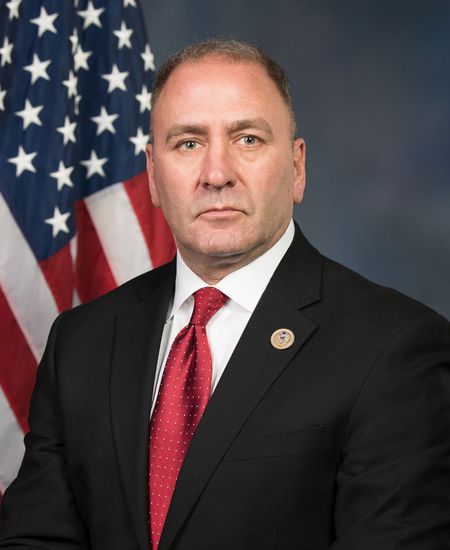
Rep. Clay Higgins
Sponsored bills
Maddy summaryHR 5319, the Ban Offshore Abortion Tourism Act, prohibits performing abortions that result in fetal death within U.S. maritime jurisdiction (e.g., international waters under U.S. authority). It targets abortion providers in these zones, with exceptions for life-threatening medical conditions, pregnancies from rape (requiring 48 hours of counseling or treatment first), or pregnancies from rape/incest involving minors (requiring prior reporting to authorities). The bill allows civil lawsuits against providers for violations, awarding triple damages, medical costs, and attorney fees, but explicitly protects women from prosecution or financial liability. It does not restrict abortion access in foreign countries or U.S. territorial waters.
Maddy summaryHR 5285, the Staff Safety Act, amends federal law to clarify that congressional staff (including Members' employees and committee staff) are exempt from Capitol Grounds firearm regulations under the same constitutional protections as Members of Congress. The bill requires the Capitol Police Board to revise its regulations within 90 days to align with this exemption, removing current restrictions preventing staff from carrying firearms on Capitol grounds. This directly affects congressional staff who are currently barred from carrying firearms under existing Capitol Police regulations. The bill bases its changes on Supreme Court rulings (Heller and Bruen) that affirm the Second Amendment applies to public carry outside the home. It focuses on legal clarification, not new safety measures or policy changes for staff.
Maddy summaryHR 4940, the Fishing Industry Credit Enhancement Act of 2023, expands access to farm credit programs for businesses that support the fishing industry. It amends the Farm Credit Act to include "persons furnishing services directly related to the operating needs" of aquatic product producers or harvesters as eligible for credit from Farm Credit Banks and Production Credit Associations. This change directly affects fishing-related service providers (like equipment suppliers or processors) who previously had limited access to these credit programs. The key mechanism is broadening the existing eligibility criteria to explicitly cover these service businesses, enabling them to secure financing for operational needs.
Maddy summaryHR 4416, the "No Funds for Armed Regulators Act of 2023," prohibits using federal funds to hire or keep armed enforcement officers within three specific agencies: the Internal Revenue Service, the Department of Labor, and the Environmental Protection Agency. The bill defines "armed Federal regulatory enforcement officers" as individuals who enforce laws using tactical means, including weapons or force. It directly affects these agencies' enforcement personnel by blocking funding for armed roles in their regulatory work. The key mechanism is a funding restriction embedded in federal budget allocations, not a new law governing enforcement tactics. This bill focuses solely on restricting financial support for armed enforcement, without altering agency authority or duties.
Maddy summaryHR 5267, the WILLIS Act, prohibits all federal funding from being awarded to the Fulton County District Attorney's Office. It also requires the repayment of all federal funds spent by the office after January 1, 2021, and rescinds any unobligated federal funds previously allocated to it. The bill directly affects only the Fulton County District Attorney's Office in Georgia. Its key provision is a complete funding cutoff and reimbursement requirement for federal money used by this specific office. The bill does not create new policy but restricts financial support to one local government entity.
Maddy summaryHR 5239, the Gulf of Mexico Commerce Protection Act, prohibits the National Oceanic and Atmospheric Administration (NOAA) from creating a vessel slowdown zone in the Gulf of Mexico until the Commerce Secretary completes and reports on a study. The study must prove that any proposed whale protection measures (specifically for Rice’s whales) would not harm supply chains or maritime commerce. The bill requires the Commerce Secretary to develop and report findings within 60 days to specific congressional committees, and explicitly bans nighttime transit bans or fixed slowdown zones in the required mitigation protocols. This bill directly affects NOAA’s regulatory authority and the Commerce Department’s study process, delaying potential environmental rules pending congressional review.
Maddy summaryThis bill amends the Food and Nutrition Act to clarify that households must meet existing income and asset limits to qualify for food assistance benefits (like SNAP). It directly affects individuals and families applying for or receiving federal food aid by requiring strict adherence to current eligibility criteria under the law. The key provision explicitly states that households failing to meet these income and resource standards - already part of the program - cannot receive benefits. The amendment takes effect one year after enactment, with existing certification periods unaffected. This change enforces current rules without creating new restrictions.
Maddy summaryHR 5067, the Empowering Electric Grid Reliability Act, directs the U.S. Secretary of Energy to establish a task force within three months to study supply chains for critical electric grid components like transformers and substation equipment. The task force will identify risks - including geopolitical threats, digital vulnerabilities, and manufacturing gaps - and assess domestic capabilities to ensure reliable power delivery to homes and businesses. It must submit a report with specific policy recommendations for reshoring supply chains, building stockpiles, enhancing workforce training, and improving grid resilience. The bill does not enact immediate changes but mandates a study to inform future decisions on energy infrastructure security.
Maddy summaryThis bill amends U.S. Code to allow capital construction funds - previously used for vessel upgrades - to cover the replacement or purchase of cargo handling equipment at U.S. marine terminals. It defines "cargo handling equipment" to include U.S.-manufactured gear or foreign-made equipment if U.S. supply is insufficient or low-quality, as determined by terminal operators. The bill prohibits using funds for cranes made in China or fully automated equipment that could cause job losses at terminals. Marine terminal operators (not individual vessels) are the primary beneficiaries, with eligibility tied to equipment meeting specific U.S. manufacturing or supply criteria.