

Maddy summaryHRES 795 is a non-binding resolution expressing the House's support for the annual proclamation of "National Cybersecurity Awareness Month" in October. It encourages the public and organizations to recognize cybersecurity importance and support efforts by the Department of Homeland Security, CISA, and the National Cybersecurity Alliance. The resolution highlights existing campaign goals like using strong passwords, enabling multi-factor authentication, updating software, and reporting phishing attempts. It does not create new laws or requirements but formally endorses the ongoing October observance that began in 2004.
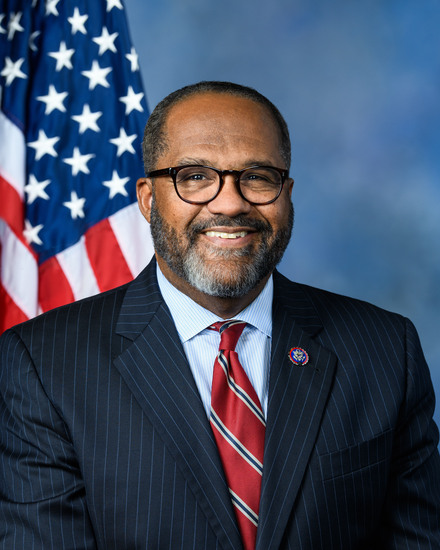
Rep. Troy A. Carter
Sponsored bills
Maddy summaryHRES 771 is a non-binding resolution expressing the U.S. House of Representatives' support for Israel following Hamas' October 7, 2023, attack. It condemns Hamas' actions, affirms Israel's right to self-defense, and calls for the immediate release of hostages. The resolution also urges enforcement of existing laws restricting aid to terrorists and sanctions against Iran for supporting Hamas. It does not create new policies or allocate funds, as it is a symbolic statement of congressional support.
Maddy summaryHRES 768 is a symbolic House Resolution expressing congressional support for Israel following Hamas' October 7, 2023 attacks. It condemns Hamas' actions, reaffirms Israel's right to self-defense, and calls for the immediate release of hostages. The resolution references the U.S. commitment to Israel's security through existing military aid programs, including the 2016 U.S.-Israel Memorandum of Understanding, and emphasizes enforcement of laws like the Taylor Force Act to prevent U.S. aid from reaching terrorist groups. As a symbolic resolution, it does not create new policy but serves as a statement of congressional support for Israel.
Maddy summaryHR 6041, the Runaway and Homeless Youth and Trafficking Prevention Act of 2023, expands federal support for services targeting youth aged 12-26 experiencing homelessness or running away from home. The bill establishes grants for short-term shelter (Basic Center Program), longer-term transitional housing (Transitional Living Program), and specialized services for youth at risk of or experiencing trafficking (Sexual Abuse and Trafficking Prevention Program). It requires grantees to provide trauma-informed, culturally appropriate services that address substance use, mental health, education needs, and connections to caring adults, with special attention to vulnerable populations including LGBTQ youth, youth of color, and those involved with child welfare or justice systems. The bill authorizes $200 million annually for these programs through fiscal year 2028, with specific funding allocations for different program components.
Maddy summaryThis bill authorizes a one-time $40,000 payment to former Air America employees who served at least five years during 1950-1976, or to their survivors (widows/widowers, dependents, or children). Additional $8,000 payments are provided for each full year of service beyond five years. The total funding is capped at $60 million, with claims due within two years of regulations being finalized. It does not create ongoing benefits or change Air America’s legal status, and payments are issued as a single lump sum.
Maddy summaryThe Safe Schools Improvement Act (HR 6031) requires public elementary and secondary schools to implement comprehensive anti-bullying policies that specifically prohibit harassment based on protected characteristics like race, gender identity, disability, religion, and sexual orientation. It mandates schools to collect and publicly report annual data on bullying incidents while establishing clear grievance procedures for students and parents. The bill also requires states to submit biennial reports on school compliance and supports evidence-based interventions, such as restorative practices, to reduce exclusionary discipline. This legislation directly affects all public K-12 schools and students in the U.S., aiming to create safer learning environments through standardized policy requirements and data transparency.
Maddy summaryThis bill creates a 40% tax credit for individuals and businesses purchasing zero-emission electric lawn, garden, and landscape equipment, such as electric mowers or trimmers. The credit covers 40% of the equipment's cost, with a yearly cap of $25,000 and a 10-year aggregate limit of $100,000 per taxpayer. Qualifying equipment must run on electricity (via solar, batteries, fuel cells, or grid power) and cannot use gasoline, diesel, or manual effort. The bill also includes related items like batteries, repair tools, and retrofitting equipment in the credit scope while preventing double benefits with other tax credits.
Maddy summaryThe Reforming Disaster Recovery Act establishes a Long-Term Disaster Recovery Fund to improve federal assistance for communities recovering from major disasters, with a focus on helping low- and moderate-income households and distressed areas. It creates a new Community Development Block Grant Disaster Recovery Program that allocates funds based on unmet needs in the most impacted areas, requires at least 70% of funds to benefit low- and moderate-income persons, and allows preliminary funding of up to $5 million before full disaster assessment. The law mandates detailed grantee plans addressing housing, economic revitalization, infrastructure, and disaster mitigation, with requirements for public input, transparency, and coordination with FEMA and other agencies. It aims to strengthen long-term recovery by addressing pre-disaster challenges, reducing future risks through mitigation, and ensuring resources reach vulnerable communities most affected by disasters.
Supporting Early-childhood Educators' Deductions Act of 2023 or the SEED Act of 2023 This bill expands the tax deduction for the expenses of elementary and secondary school teachers to include early childhood educators.
Maddy summaryThis bill, HR 5920 (Student Loan Marriage Penalty Elimination Act of 2023), changes how married couples can deduct student loan interest on their federal taxes. It amends the tax code to allow each spouse to claim a separate $2,500 deduction limit for student loan interest, instead of a single combined limit for the couple. This directly affects married couples filing jointly who pay student loan interest and qualify for the deduction. The change applies to tax years beginning after December 31, 2022, and ensures the deduction aligns with the tax treatment for individual filers.