

Maddy summaryThis bill creates a permanent task force within CISA (Cybersecurity and Infrastructure Security Agency) to coordinate the agency's work on AI safety and security. The task force must ensure CISA's AI efforts align with federal initiatives, assess risks, leverage expertise to defend against cyber threats, address workforce gaps, and recommend updates to AI programs - all while meeting privacy and civil liberties standards. CISA must report to Congress every six months on the task force's activities. The task force will expire five years after the bill becomes law.
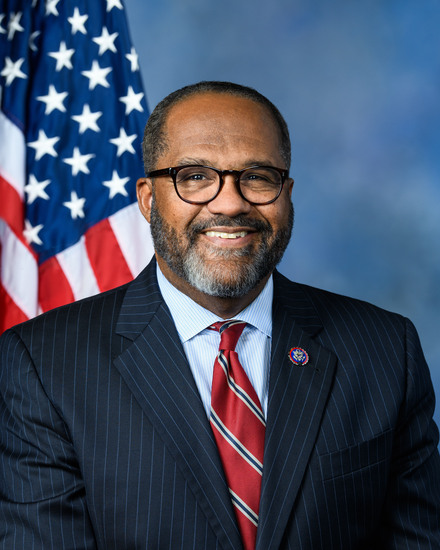
Rep. Troy A. Carter
Sponsored bills
Maddy summaryThis bill directs the Health and Human Services Secretary to fund research on early detection and treatment of uterine fibroids, with a focus on reducing health disparities. It authorizes grants to states for screening programs (including advanced imaging), patient navigation services, and public education campaigns - prioritizing areas with socially vulnerable populations at higher risk. States receiving funds must implement evidence-based strategies to improve access to early intervention. The bill also requires regular reports to Congress on grant outcomes and research findings related to fibroid treatment disparities and related conditions like Asherman’s Syndrome.
Maddy summaryThis bill authorizes the placement of a memorial honoring women who contributed to World War II efforts on the National Mall or adjacent federal land in Washington, D.C. It specifically removes a location restriction (under 40 U.S.C. § 8908) to allow the memorial - previously authorized by the 2023 Consolidated Appropriations Act - to be situated within Area I of the National Mall or the National Mall Reserve. The memorial would commemorate over 18 million women who worked as pilots, engineers, mechanics, and codebreakers during the war. The bill directly affects the Women Who Worked on the Home Front Foundation, which is tasked with establishing the memorial.
Maddy summaryThe BUILD GREEN Infrastructure and Jobs Act establishes a $50 billion annual grant program (2025-2034) to fund electrified transportation infrastructure projects that reduce greenhouse gas emissions and improve transportation access. It prioritizes projects in frontline, vulnerable, or disadvantaged communities (requiring 40% of funds), with 30-40% allocated to rural areas and 60-70% to urban areas. The bill mandates recipients use 5% of grant funds for workforce training, pay a minimum wage of $17 per hour (increasing annually), and use renewable energy sources for project operations. Eligible projects include electric buses, rail systems, port infrastructure with EV charging, and micromobility initiatives that reduce emissions and improve transportation services.
Maddy summaryThis bill (HR 996, Public Law 118-53) renames a U.S. Postal Service facility at 3901 MacArthur Blvd. in New Orleans, Louisiana, as the "Dr. Rudy Lombard Post Office." It has no policy impact beyond changing the official name of the building and updating references to it in federal records. The designation honors Dr. Rudy Lombard, with no changes to postal services, operations, or affected communities. The bill was enacted on May 7, 2024, after passing the House and Senate in 2023-2024.
Maddy summaryHRES 1180 is a non-binding resolution recognizing the importance of diversity, equity, and inclusion (DEI) efforts in medical education. It affirms that a diverse medical workforce better serves the nation's diverse patient populations and supports medical schools in fostering inclusive environments to improve health equity. The resolution highlights existing disparities in health outcomes and representation, such as Black and Hispanic patients experiencing higher rates of chronic conditions compared to White patients, and notes that current medical school demographics (e.g., 10.8% Black or African American matriculants in 2023) do not reflect U.S. population diversity. It does not create new laws or funding but symbolically endorses DEI initiatives as essential for enhancing patient trust, clinical learning, and equitable care delivery.
Maddy summaryHR 8231, the James Earl Jones Congressional Gold Medal Act, authorizes a Congressional Gold Medal to be awarded to actor James Earl Jones in recognition of his distinguished career in theater and film, and his role in advancing inclusion and equal opportunities for people of all backgrounds in the entertainment industry. The Treasury will strike the medal with an image and inscription of Jones, and may produce and sell bronze duplicates to cover costs, with proceeds deposited into the U.S. Mint's public enterprise fund. This bill serves as a ceremonial honor with no new legal requirements or policy changes.
Maddy summaryThis bill increases federal funding for states that have laws allowing civil lawsuits against people who remove sexual protection barriers (like condoms or dental dams) without consent during sexual activity. States with such laws can receive up to a 20% increase in their annual Violence Against Women Act (VAWA) Sexual Assault Services Program funding for a 4-year period, with a maximum of four such increases. The bill authorizes $5 million annually from 2025-2029 to cover these funding increases. It directly affects states that implement the required legal provisions, tying federal grant support to their enforcement of consent protections during sexual contact. The policy change focuses on incentivizing state-level legal frameworks addressing nonconsensual barrier removal through federal funding mechanisms.
Maddy summaryThe CROWN Act of 2024 prohibits discrimination based on hair texture or style commonly associated with race or national origin, such as braids, locs, cornrows, twists, or afros. It directly affects individuals - particularly people of African descent - who face workplace, school, housing, or public accommodation discrimination due to natural or protective hairstyles. The bill expands existing federal civil rights laws (like Title VI, the Fair Housing Act, and Title VII) to explicitly include hair-based discrimination, requiring compliance in federally funded programs, housing, employment, and public spaces. It clarifies that grooming policies targeting these hairstyles violate anti-discrimination protections without creating new legal standards.
Maddy summaryHR 8188, the Stealthing Act of 2024, creates a federal civil remedy allowing victims of non-consensual condom or sexual barrier removal (known as "stealthing") to sue perpetrators in court. The bill directly affects individuals who experience this non-consensual act, which the bill defines as removing a condom or barrier without consent during sexual contact. Key provisions establish federal jurisdiction for such civil actions when the conduct involves interstate commerce, payments, communications, or occurs within U.S. territories. Victims may seek compensatory damages, punitive damages, and other court-ordered relief. This legislation does not criminalize the act but provides a legal pathway for victims to pursue civil remedies under specific federal jurisdictional conditions.