

Maddy summaryThis bill reauthorizes the National Alzheimer's Project Act through 2035 (extending the previous deadline of 2025) and adds new requirements to promote healthy aging and reduce Alzheimer’s risk factors. It mandates the program to provide information on healthy behaviors that may lower cognitive decline risk and expands the advisory group to include representatives from agencies like the Department of Justice, FEMA, and Social Security Administration, plus experts with diverse clinical trial experience. The bill directly affects Alzheimer’s research, care programs, and the federal advisory group overseeing national efforts. Key changes include requiring annual evaluations instead of initial ones and adding a focus on reducing health disparities in Alzheimer’s initiatives.
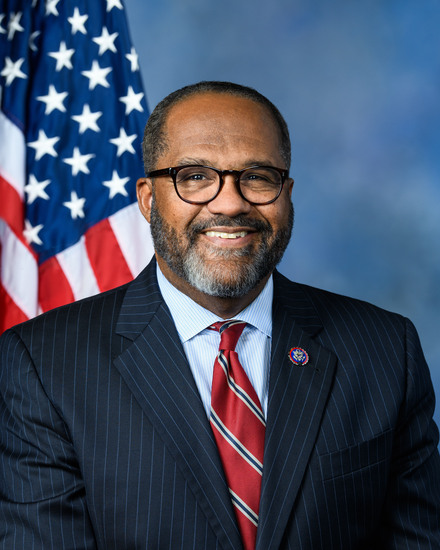
Rep. Troy A. Carter
Sponsored bills
Maddy summaryHR 8524, the Elementary and Secondary School Counseling Act, provides federal grants to help high-need schools hire more mental health staff. It requires states to use these funds to support local schools in meeting specific staffing ratios: no more than 250 students per school counselor or social worker, and 500 students per school psychologist. Schools receiving funds must report annually on staffing levels and progress toward these ratios, with the goal of increasing access to school-based mental health services for students. The bill directly affects public elementary and secondary schools identified as "high-need" under existing law.
Maddy summaryHR 8526, the Trauma-Informed Schools Act of 2024, amends the Elementary and Secondary Education Act to require public schools receiving federal funding to adopt trauma-informed practices. It defines these practices as evidence-based staff training, trauma-sensitive disciplinary approaches (avoiding punishment and bias), and school-wide planning involving families to support student safety and emotional well-being. The bill mandates that schools provide training for all teachers and staff, integrate social-emotional learning into academics, and update discipline policies to align with trauma-informed principles. These changes directly affect K-12 schools, educators, and students by shifting school culture toward prevention and support rather than exclusionary discipline. The law directs existing federal education funds toward implementing these practices without creating new funding streams.
Maddy summaryThis resolution (HRES 616) condemns the Taliban's ongoing human rights abuses in Afghanistan, specifically targeting women, girls, religious minorities (including Hazaras and Sikhs), and ethnic groups. It expresses support for Afghans who assisted U.S. missions and calls for the U.S. government to halt Taliban violence and address systemic repression. Key mechanisms include urging the State Department to assess potential crimes against humanity, developing strategies to support human rights defenders, and expediting refugee processing for Afghans with Special Immigrant Visas. The resolution does not impose new legal requirements but formalizes congressional stance and policy guidance. It directly affects U.S. foreign policy implementation toward Afghanistan.
Maddy summaryHR 8469, the Diverse Cybersecurity Workforce Act of 2024, requires the Cybersecurity and Infrastructure Security Agency (CISA) to establish a new program within its existing education initiative. The program targets underrepresented groups in cybersecurity, including racial and ethnic minorities, women, veterans, people with disabilities, older individuals (40+), those from low-income backgrounds, and people with nontraditional educational paths (like community colleges or HBCUs). CISA must tailor outreach to schools, unions, community colleges, and local workforce offices to promote cybersecurity careers in these communities. The bill authorizes $20 million annually (2025-2030) and mandates annual reports to Congress on the program's impact on workforce diversity.
Maddy summaryThe Public Service Freedom to Negotiate Act of 2024 establishes federal minimum standards for collective bargaining rights for public employees and supervisory employees. The Federal Labor Relations Authority will determine if each state's laws "substantially provide" for these rights, and if not, federal standards will apply to that state. These standards include the right to self-organization, collective bargaining, recognition of labor organizations, and procedures for resolving disputes. The bill preserves existing collective bargaining agreements and excludes certain employee categories like emergency services workers from some provisions.
Maddy summaryThis bill provides compensation to victims of injuries or deaths caused by defects in General Motors vehicles manufactured, sold, or delivered before June 1, 2009. It waives statutes of limitations for eligible claims filed in the 2015 lawsuit *Campbell v. United States* (No. 15-717), requiring the federal government to pay "just compensation" equal to 2.5 times the bankruptcy claim amount from the GM liquidation case (In re Motors Liquidation Co.), plus 3.5% annual interest from July 10, 2009. The compensation covers personal injury or death claims filed in the GM bankruptcy proceedings, directly affecting victims who submitted proof of claim before June 2021. The bill mandates a settlement process with a 30-day deadline for agreements, or a congressional report explaining delays.
Maddy summaryThis bill requires the Consumer Product Safety Commission (CPSC) to create new safety standards for lithium-ion batteries used in electric bicycles and scooters within 180 days of the bill's enactment. The standards aim to prevent battery-related fires by setting specific safety requirements for these batteries and devices. The CPSC must define which battery types and devices fall under the rule as part of the standard. Once established, the standard will function as an official safety rule under existing consumer product safety law.
Maddy summaryThe Rights for the TSA Workforce Act of 2024 would transition Transportation Security Administration (TSA) employees, particularly screening agents, from TSA-specific personnel rules to the standard federal government personnel system under Title 5 of the U.S. Code by December 31, 2024. The bill prohibits changes to current personnel policies for covered employees until the transition date and ensures no reduction in pay or benefits during the conversion process. It preserves certain benefits like law enforcement availability pay for Federal air marshals and maintains collective bargaining rights for screening agents. The bill also requires various reports to Congress on recruitment, implementation, diversity, and workplace safety to be submitted within specified timeframes.
Maddy summaryThis non-binding House resolution expresses support for National Speech-Language-Hearing Month (observed in May), which aims to raise awareness about communication disorders and encourage people to seek treatment. It does not create new laws, funding, or policies - it solely affirms the goals of the month as outlined in the resolution's preamble. The resolution references statistics on hearing and speech disorders affecting millions of Americans but focuses on symbolic recognition rather than concrete action. It was introduced by Rep. Cammack and Rep. Carter and referred to the Energy and Commerce Committee.