

Maddy summaryThe Sustaining Our Democracy Act establishes a federal program providing funding to states for election administration improvements, increased voter access, and protection of election workers. States must submit detailed plans for using funds to upgrade voting equipment, expand early and mail voting options, secure election infrastructure, and address disparities in voting access for underserved communities. The bill prohibits states from using funds for activities that restrict voting access or suppress participation, and creates an Office of Democracy Advancement and Innovation to administer the program. Funded through a $2.5 billion Trust Fund for fiscal years 2026-2035, this legislation directly affects all 50 states, the District of Columbia, and U.S. territories receiving federal election funding.
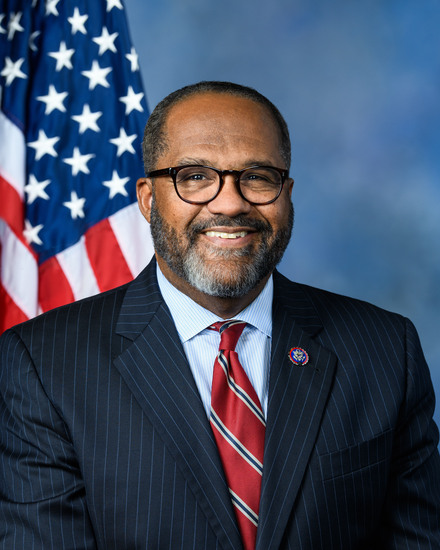
Rep. Troy A. Carter
Sponsored bills
Maddy summaryThis bill adjusts health insurance subsidies by modifying the premium tax credit structure under the Internal Revenue Code. It replaces previous income thresholds with a sliding-scale formula, increasing subsidies for households earning between 150% and 400% of the federal poverty level - reducing their required premium payments as income rises within these tiers. The changes apply to tax years beginning after December 31, 2025, directly affecting middle-income individuals and families purchasing coverage through health insurance marketplaces. It also repeals specific provisions from a prior reconciliation law related to health care.
Maddy summaryHR 4818, the Gas Pipeline Leak Detection and Repair Act of 2025, mandates that the Pipeline and Hazardous Materials Safety Administration's (PHMSA) existing January 2025 rule on gas pipeline leak detection and repair (Docket No. PHMSA-2021-0039) becomes effective immediately upon the bill's enactment. This directly affects gas pipeline operators, requiring them to implement the specific leak detection and repair protocols outlined in the PHMSA rule. The bill allows the Secretary to later adopt stricter regulations but does not alter the current rule's requirements. It is a procedural measure to finalize an existing safety rule, not a new policy.
Maddy summaryThis bill removes a barrier preventing most low-income students from accessing SNAP benefits. It amends the Food and Nutrition Act to explicitly allow students enrolled at least half-time in recognized higher education programs to qualify for SNAP, reversing a prior exclusion. The key change eliminates the previous requirement that students meet specific exceptions (now deleted) and adds a new eligibility category under Section 3(m)(5). This directly affects low-income undergraduate and graduate students at colleges and training programs who were previously ineligible. The changes take effect January 2, 2026.
Maddy summaryHR 4800, the Fisheries Modernization Act of 2025, expands eligibility for fishery disaster relief by adding "infrastructure-related cause" to the definition of qualifying events under the Magnuson-Stevens Act. This specifically covers disruptions caused by Federal or State infrastructure failures (like flood control systems, levees, or spillways) that impact commercial or subsistence fisheries, habitat, or water quality. The bill explicitly includes the red swamp crawfish and white river crawfish fisheries in eligibility requirements, requiring information on hydrological conditions, water quality, or environmental disruptions affecting them. It does not change existing relief for marine or anadromous fisheries but clarifies that infrastructure-related events now qualify for assistance.
Maddy summaryHR 4796, the Restoring Essential Healthcare Act, repeals a provision that blocked Medicaid payments to certain healthcare providers during a specific period. It directly affects Medicaid beneficiaries who received care from these providers between the enactment of the prior law (Public Law 119-21) and this bill's enactment. The key provision retroactively restores Medicaid payments for services already provided during that blocked period, treating the payment restriction as if it never existed. This change ensures eligible individuals and providers receive reimbursement for covered care delivered during the prohibited timeframe.
Maddy summaryHR 4763, the PTO Act, requires most employers to provide employees with at least 1 hour of paid annual leave for every 25 hours worked, with a maximum of 80 hours per year. It applies to private-sector workers and certain government employees, protecting their right to use paid leave for any purpose without disclosing the reason. The bill mandates employers to maintain health benefits during leave, allow carryover of up to 40 hours of unused leave, and pay out unused leave upon separation. It also prohibits employers from discriminating against employees for using paid leave or requiring them to find replacements while on leave. The law includes enforcement mechanisms, allowing employees to file complaints with the Department of Labor or pursue private lawsuits.
Maddy summaryThis bill updates the TRICARE Young Adult Program to make healthcare coverage more accessible for military dependents. It directly affects young adults (ages 21-26) who are children of active-duty service members, by eliminating a separate premium they previously paid for coverage. Key changes include removing an extra cost for young adults and adjusting eligibility rules to simplify enrollment. These amendments aim to reduce out-of-pocket expenses and streamline access to health insurance under the program.
Maddy summaryThis bill requires transportation project sponsors (like cities or transit agencies) to establish "BUMP Funds" for projects over $50 million funded through federal grants. The funds, partially funded by the sponsor's local contribution (up to 25% of their share), reimburse affected private businesses or nonprofits for specific costs like rent, payroll, utilities, or lost income during construction disruptions. Sponsors must detail eligibility, impact assessment, and distribution processes in grant applications. Unused funds can be reused for project enhancements or other eligible work, with oversight by the Secretary of Transportation. The program applies to highway and transit projects under federal grant programs.
Maddy summaryHRES 603 is a symbolic resolution (not a law) that reaffirms core constitutional principles like separation of powers, judicial independence, and Congress's authority over funding. It specifically condemns public officials who ignore court orders, undermine congressional oversight, or attempt to consolidate power across branches of government. The resolution emphasizes that congressional appropriations are binding law, not suggestions, and urges all officials to uphold the constitutional order. It does not create new legal requirements but serves as a formal statement of these principles.