Maddy summaryThe SUN Act (HR 4998) requires the President to submit a detailed report to Congress within 15 days whenever National Guard members are deployed domestically for non-disaster purposes under specific laws. The report must include the legal basis for the deployment, evidence of reduced violence, input from local law enforcement, total costs, and a certification that the deployment won’t interfere with disaster response capabilities. It applies to all domestic uses of the National Guard except for responses to natural disasters under the Stafford Act. The bill aims to enhance congressional oversight of military deployments on U.S. soil.
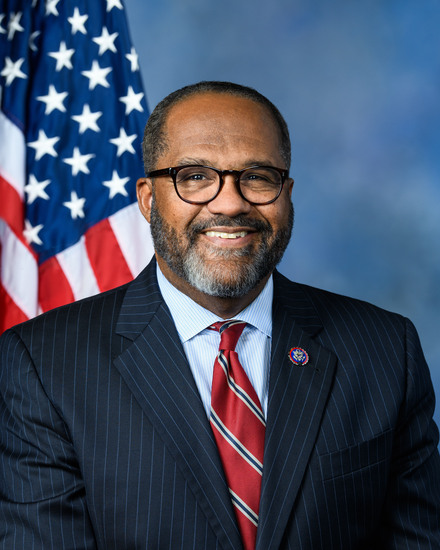
Rep. Troy A. Carter
Sponsored bills
Maddy summaryHJRES 113 designates August 20 as Slavery Remembrance Day to commemorate the arrival of the first 20 enslaved Africans in Virginia in 1619 and honor the enduring legacy of slavery. The resolution requests the President issue a proclamation encouraging the public to observe this day through ceremonies and activities that acknowledge slavery's horrors and its lasting impacts. It includes historical context about the transatlantic slave trade, the Middle Passage, and figures like Harriet Tubman, while posthumously recognizing Reconstruction-era Black Congress members. As a symbolic commemorative resolution, it does not create new laws or directly affect any group, but serves to raise awareness about slavery's history and consequences.
Maddy summaryThis bill (HJRES 115) terminates a presidential emergency declaration made on August 11, 2025, which claimed a "crime emergency" in Washington, D.C. It directly affects the District of Columbia by ending federal restrictions that prevented D.C. from using $1 billion in locally-raised funds for public safety, law enforcement, fire services, and schools. The resolution cites that the emergency declaration was legally flawed - section 740 of the DC Home Rule Act does not permit federalizing the Metropolitan Police Department - and notes that D.C. violent crime has reached a 30-year low. The bill formally ends the emergency under the DC Home Rule Act, restoring D.C.'s authority over its own budget and public safety resources.
Maddy summaryThe Community Parks Revitalization Act establishes a federal program to improve parks and recreation facilities in urban areas through grants and secured loans. It provides competitive grants to eligible local governments for rehabilitation and construction of parks (including safety improvements), innovation programs (like youth services and veteran support), and recovery planning. The program requires local matching funds (3/7 of grant amount) and prioritizes projects that increase access for low-income residents, veterans, and people with disabilities, while incorporating sustainable design features like stormwater management and green infrastructure. The bill also authorizes secured loans and loan guarantees for larger park infrastructure projects with dedicated revenue streams, aiming to improve community health outcomes and economic development through better recreational spaces.
Maddy summaryThis bill reschedules marijuana from the most restrictive Schedule I to Schedule III under federal law. It requires the Attorney General to issue an order effecting this change within 60 days of the bill's enactment. This classification shift would make marijuana less restricted federally, affecting all federal regulations and penalties related to the substance. The change directly impacts federal enforcement, research, and medical access policies for marijuana nationwide.
Youth Voting Rights Act This bill expands voting access for youth. Specifically, the bill establishes a private right of action to enforce the Twenty-Sixth Amendment, which prohibits denying or abridging the right to vote based on age. Further, the bill authorizes the Department of Justice to enforce the Twenty-Sixth Amendment against age-based restrictions for voting by mail. Additionally, the bill directs each state to designate as voter registration agencies all offices within public institutions of higher education (IHEs) that provide assistance to students, implement a preregistration process to allow minors who are 16 years or older to register to vote in federal elections that take place when or after the preregistered individual turns age 18, and ensure the availability of polling places on campuses of IHEs (with the availability of waivers). The bill prohibits durational residency requirements for voting in all federal elections. Currently, this prohibition applies only to voting for the offices of President and Vice President. States and local jurisdictions with voter identification requirements must treat IHE-issued student identification cards as voter identification. The Election Assistance Commission (EAC) must make grants to states to increase the involvement of individuals under age 18 in public election activities. The Government Accountability Office must report to Congress on trends related to voter registration, absentee voting, and provisional voting. The EAC must also collect and make publicly available certain data from states.

Maddy summaryHR 4894, the Deceptive Practices and Voter Intimidation Prevention Act of 2025, prohibits the intentional spread of false information about voting procedures, eligibility, or penalties within 60 days of an election. The bill specifically targets deceptive communications through social media, text messages, and AI-generated content designed to prevent voters from casting ballots, including false claims about voting locations, registration status, or legal consequences. It creates a private right of action for individuals harmed by these deceptive practices and authorizes the Attorney General to issue corrective information to counter false claims. The law directly affects voters, election officials, social media platforms, and anyone spreading false voting information, with penalties including fines and imprisonment for violations.
Maddy summaryThe Time Off to Vote Act requires employers with 25 or more employees to provide two hours of paid leave for federal elections. Employees can use this leave to vote in person, return mail-in ballots, or perform other voting activities during open polling hours. Employers may set the specific two-hour window (excluding lunch breaks) but cannot deny the leave, retaliate against employees who take it, or cause loss of accrued benefits. Violations could result in civil penalties up to $10,000 per violation, enforced by the Department of Labor.
Maddy summaryHR 4909 requires federally assisted housing providers and mortgage lenders to include a uniform voter registration information statement with key documents. It mandates that public housing agencies, rental voucher programs, and multifamily housing owners provide this statement to tenants when signing leases or submitting income forms. Mortgage lenders must include it in writing within 5 business days of a loan application. The statement, developed by the Consumer Financial Protection Bureau and available in English and 10 common languages, explains voter registration options but does not require individuals to register. This affects renters in federally assisted housing and mortgage applicants.
Unhoused Voter Opportunity Through Elections Act or the Unhoused VOTE Act This bill expands voter registration and voting access for unhoused individuals. The bill specifies that no state or political subdivision may deny or abridge the right of any U.S. citizen to vote because the citizen resides at or in a nontraditional abode. Additionally, the bill requires jurisdictions that allow for ballot drop boxes to ensure that these drop boxes are available for in-person use and are accessible and clearly labeled. If a state requires individuals to show proof of residence in order to vote in a federal election, then the state must accept the individual’s written attestation of residence. A state may not prohibit an individual who is residing in a homeless shelter from using the shelter as the individual’s residence for purposes of voting in a federal election. The bill requires chief state election officials to conduct outreach to unhoused individuals. The bill directs the Election Assistance Commission to (1) develop best practices for election officials regarding voter registration and voting access for unhoused individuals, and (2) make grants to eligible states and local governments for programs and activities to support access to voting for unhoused individuals. The bill also revises the National Voter Registration Act of 1993, including by (1) treating emergency shelters as voter registration agencies, and (2) allowing an unhoused individual to use an unsheltered street location as the individual's place of residence for purposes of a voter registration application.