

Maddy summaryHRES 974 is a non-binding House resolution supporting the designation of January 21-27, 2024, as "National School Choice Week." It encourages parents to learn about K-12 education options - including public schools, charter schools, private schools, and homeschooling - and promotes public awareness of educational choice. The resolution does not create new laws or policies but formally expresses the House's backing for this annual observance. It directly affects parents and students by highlighting available education pathways and urging communities to host events celebrating school choice. The resolution was introduced by multiple House members and referred to the Education Committee.
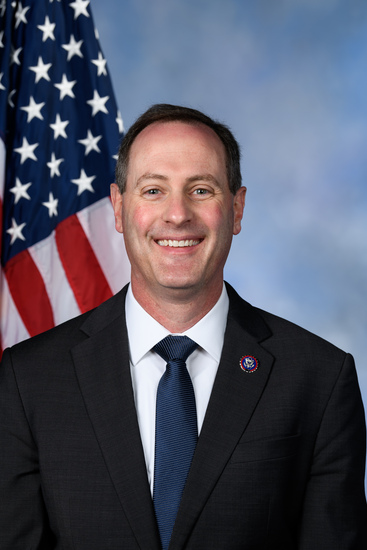
Rep. Tracey Mann
Sponsored bills
Maddy summaryThe Death Tax Repeal Act would eliminate the federal estate tax and generation-skipping transfer tax for estates of people who die on or after the bill's enactment date, and for generation-skipping transfers made after that date. It would also establish a new $10 million lifetime gift tax exemption (adjusted annually for inflation) and replace the existing gift tax rate schedule with a revised structure. These changes would primarily affect high-net-worth individuals and their heirs, as the estate tax and gift tax typically apply to large estates or gifts exceeding the new exemption threshold. The bill's provisions would take effect on the date of enactment, with transitional rules for the year the bill is signed into law.
Maddy summaryThe RIFLE Act of 2024 changes how the federal government handles violations by firearms licensees, affecting gun dealers and manufacturers who hold federal licenses. It creates a graduated penalty system where non-willful violations require the Attorney General to work with licensees to fix issues before taking action, while willful violations may lead to license suspension or revocation only after proper notice, hearing, and evidence of continued noncompliance. The bill establishes new procedures for administrative hearings, defines "willful" violations more clearly, and gives licensees 90 days to liquidate inventory after license expiration or revocation, with extensions possible for reasonable cause. These changes aim to create a more transparent process for addressing violations while maintaining public safety standards.
Maddy summaryThe Protecting Farmers from Drought Act of 2023 modifies eligibility for prevented planting insurance in counties with severe, recurring drought. It replaces the current "1-in-4 rule" (requiring crop planting in at least one of the past four years) with a "1-in-5 rule" for counties experiencing extreme drought (D3 or worse) for three consecutive years, as documented by the U.S. Drought Monitor. This change eases qualification for insurance when drought prevents planting by extending the required planting history window from four to five years. The bill directly affects farmers in designated drought-affected counties by making insurance access more attainable during prolonged dry periods.
Maddy summaryHR 1709, the Tribal Firearm Access Act, allows members of federally recognized tribes to use their Tribal government-issued ID instead of a state-issued ID when purchasing firearms from licensed dealers. It amends federal law (18 U.S.C. § 922(t)(1)(D)) to explicitly accept tribal identification documents as valid proof of identity for firearm transactions. The bill defines "Tribal government" to include recognized tribes listed under the Federally Recognized Indian Tribe List Act of 1994. This change directly affects tribal members seeking to purchase firearms and federally licensed dealers who must now accept tribal IDs as valid identification. The law takes effect 90 days after enactment.
Maddy summaryThis bill clarifies that tax-exempt status for charities (under IRS Section 501(c)(3)) does not count as "federal financial assistance" for other federal programs. It directly affects tax-exempt organizations, such as charities and religious groups, by preventing their tax exemption from automatically qualifying them for other federal benefits or programs. The key provision amends the U.S. Code to define "federal financial assistance" as excluding tax exemptions, ensuring these organizations aren't mistakenly included in programs meant for recipients of direct federal funds. This change applies prospectively and does not alter how tax exemptions were treated before the bill's enactment.
Maddy summaryHR 6998, the FAITH in Small Business Act, makes the Small Business Administration's January 2021 rule on equal treatment for faith-based organizations permanently law. This rule ensures faith-based organizations receive equal access to SBA loan and disaster assistance programs. The bill directly affects faith-based nonprofits and community groups seeking SBA financial support. It codifies the existing SBA rule into law without creating new program requirements.
Maddy summaryH.J.Res. 92 seeks congressional disapproval of a 2022 rule from the Food and Nutrition Service (FNS) that updated how discrimination complaints are processed in federal nutrition programs (like SNAP) following the *Bostock v. Clayton County* Supreme Court decision. The bill aims to block the rule’s implementation, which would have required agencies to handle discrimination complaints under the expanded protections established by *Bostock* (covering LGBTQ+ individuals). If passed, the resolution would make the FNS policy update ineffective, maintaining the previous complaint processing approach. This affects how federal nutrition programs address discrimination claims but does not change the underlying anti-discrimination law.
This resolution supports the designation of National Teach Ag Day and recognizes the important role of agricultural education and the National FFA Organization in developing the next generation of agricultural leaders.
Youth Lead Act This bill reauthorizes through FY2028 National Institute of Food and Agriculture grants to the Girl Scouts of the USA, the Boy Scouts of America, the National 4–H Council, and the National FFA Organization. These grants must be used to establish pilot projects to expand the programs carried out by the organizations in rural areas and small towns.