

Maddy summaryThis bill restricts how credit reporting companies share homebuyers' credit reports during mortgage applications. It prevents companies from sending these reports to third parties (like marketers) just because a lender requested them for a mortgage. Only specific entities can receive the reports: the mortgage lender who originated the loan, the company servicing the loan, or the bank holding the homebuyer's account. This directly protects homebuyers' privacy by limiting unauthorized sharing of their financial data.
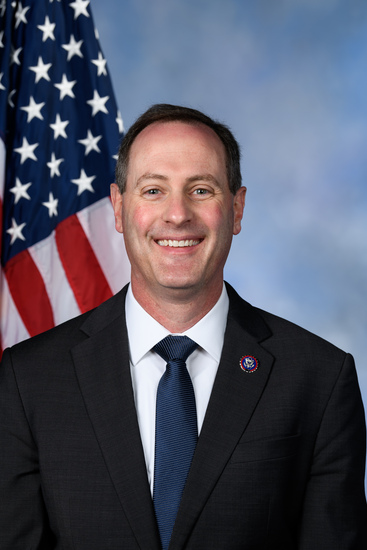
Rep. Tracey Mann
Sponsored bills
This resolution expresses the sense of the House of Representatives that former President Trump did not engage in insurrection or rebellion against, nor give aid or comfort to the enemies of, the United States.
Maddy summaryThe JOBS Act of 2023 would expand Federal Pell Grant eligibility to cover certain short-term job training programs that prepare students for high-demand careers. It defines "eligible job training programs" as those offering 150-600 hours of instruction over 8-15 weeks, aligned with in-demand industry sectors, and leading to recognized credentials that help students meet hiring requirements and take licensure exams. The bill would allow students in these programs to receive Pell Grants under standard terms, with the minimum Pell Grant amount reduced from 10% to 5% of the maximum. It also requires accrediting agencies to evaluate these programs and creates data-sharing between Education and Labor departments to track program effectiveness.
Maddy summaryHR 7212, the PEER Support Act, establishes a formal profession for peer support specialists - individuals with lived experience in mental health or substance use recovery who provide support to others. It requires the Office of Management and Budget to add "peer support specialist" to the Standard Occupational Classification system by January 2025 and creates a new Office of Recovery within SAMHSA to lead workforce development, share best practices, and support training and certification. The bill also mandates a report analyzing state criminal background check policies for peer specialists, aiming to reduce barriers to certification. This directly affects states implementing certification systems, peer specialists seeking employment, and SAMHSA’s operations in mental health services.
Maddy summaryHR 7101, the FTC REDO Act, rescinds the Federal Trade Commission's (FTC) January 2024 rule targeting auto retail scams and prohibits the FTC from finalizing future auto retail rules without meeting specific requirements. Before proposing new rules, the FTC must conduct a quantitative study on deceptive practices, consumer testing on new mandates, and an economic analysis of costs/benefits - each subject to 30 days of public comment and independent peer review. These studies must demonstrate evidence of unfair practices, show new rules enhance consumer protection without unduly burdening businesses, and compare the proposed rule to less burdensome alternatives. The bill directly affects the FTC's rulemaking process for auto retail, impacting how regulations on dealerships, disclosures, and consumer protections are developed.
Maddy summaryHRES 993 is a non-binding congressional resolution designating February as "Career and Technical Education (CTE) Month" to celebrate CTE programs nationwide. It supports CTE as a pathway preparing students for high-demand, skilled careers in fields like infrastructure and technology, recognizing that over 12 million students currently participate in CTE programs across high schools and colleges. The resolution encourages educators, counselors, and parents to promote CTE as a respected educational option, highlighting its role in reducing high school dropout rates and aligning student skills with workforce needs. It does not create new laws or allocate funding, but symbolically affirms bipartisan support for CTE, referencing the 1917 Smith-Hughes Act as foundational to current efforts.
Maddy summaryThis bill repeals a law (18 U.S.C. § 1715) that previously prohibited mailing firearms without a license. It directly affects the U.S. Postal Service, firearm sellers, and individuals mailing firearms by preventing the Postal Service from creating rules that would block firearm mailings or require disclosure of sensitive records like sales receipts or firearm serial numbers. Key provisions include removing the existing ban on mailing firearms and prohibiting the Postal Service from imposing new restrictions on firearm mailings or demanding customer transaction data. The bill ensures that firearm mailings can proceed without these specific federal restrictions, while applying to ongoing legal cases under the repealed law.
Maddy summaryThe Credit for Caring Act of 2024 creates a new federal tax credit for family caregivers. It allows eligible caregivers to claim a credit equal to 30% of qualified caregiving expenses (like home modifications, medical supplies, or respite care) exceeding $2,000 per year, capped at $5,000 annually. To qualify, caregivers must earn over $7,500 in income and provide care for a relative (like a spouse or parent) certified by a healthcare provider as needing long-term care for at least 180 days. The credit phases out for higher earners, with a $75,000 income threshold for single filers and $150,000 for joint returns.
Maddy summaryHR 6991 designates the Department of Veterans Affairs outpatient clinic at 9201 Parallel Parkway, Kansas City, Kansas, as the "Captain Elwin Shopteese VA Clinic." The bill changes the official name of the existing facility and updates all federal references to it. This is a purely ceremonial designation with no impact on veterans' benefits, services, or funding. It directly affects how the clinic is identified in government documents and records.
Maddy summaryHR 7044, the "Woman’s Right To Know Act," requires abortion providers to give patients a specific 24-hour in-person informed consent form before performing an abortion. The form must detail the unborn child’s gestational age, medical risks of the procedure, and developmental milestones (like heartbeat presence), and must be signed by the patient, provider, and a witness. Providers who fail to comply face civil penalties of $100,000-$250,000 per violation or lawsuits from patients seeking damages, including triple the abortion cost. Exceptions apply if compliance poses immediate life-threatening risks to the patient. The bill directly affects abortion providers and patients seeking abortion services, mandating specific disclosure requirements and enforcement mechanisms.