

Maddy summaryHRES 946 is a symbolic House resolution recognizing "Gold Shield Families" - defined as the families of fallen police officers, firefighters, EMTs, correction officers, emergency dispatchers, and emergency service providers who died in the line of duty. The resolution formally honors their sacrifices and resilience, affirming that their hardships should not be forgotten. It includes no new funding, regulations, or policy changes; instead, it serves as a commemorative gesture expressing national gratitude. The resolution directs that a copy be sent to the President and made public to publicly recognize these families' contributions.
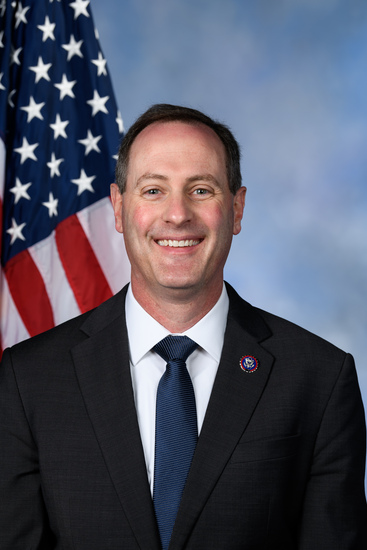
Rep. Tracey Mann
Sponsored bills
Maddy summaryHR 1147, the Whole Milk for Healthy Kids Act of 2023, allows schools participating in the National School Lunch Program to offer whole milk as an option during lunch. It amends the school lunch law to explicitly permit schools to serve flavored and unflavored whole milk alongside reduced-fat, low-fat, and fat-free milk choices for students. The bill also requires the Secretary of Agriculture to adjust meal regulations to account for saturated fat from whole milk, ensuring it doesn't count against meal fat limits. This change directly affects participating schools and the students who receive school lunches, expanding their milk beverage options.
Maddy summaryThe Kelsey Smith Act requires telecom providers to disclose a mobile device's location information to law enforcement or emergency services without delay during emergencies. It mandates disclosure if the device was used for a 911 call within the last 48 hours or if officers have reasonable suspicion of an emergency involving death or serious harm. Providers must comply with these requests, while law enforcement agencies must document each disclosure with specific details. The law protects providers from legal liability for following these rules and does not override stricter state laws governing emergency location sharing.
Maddy summaryHR 6813 blocks the Environmental Protection Agency (EPA) from finalizing, implementing, or enforcing a specific proposed rule about air emissions reporting. The bill directly targets the EPA Administrator, preventing action on the "Revisions to the Air Emissions Reporting Requirements" rule published in the Federal Register on August 9, 2023. This bill does not change current reporting rules but stops the EPA from moving forward with this particular revision. The key mechanism is a direct prohibition on the EPA's regulatory actions regarding this specific rule.
Maddy summaryThe ACE Act expands tax-advantaged education savings by allowing 529 plan funds to cover homeschooling costs and additional K-12 expenses like tutoring, therapies, and curriculum materials. It doubles the annual distribution limit from $10,000 to $20,000 for these expenses and adds a $20,000 annual gift tax exclusion for contributions to 529 plans. The bill also restricts tax-exempt bonds for school construction to states meeting specific school choice program metrics, requiring at least 40% of students to be eligible for programs like vouchers or education savings accounts. These changes directly affect families using homeschooling or private education, states with school choice programs, and contributors to 529 plans.
Maddy summaryThis bill, the Worker’s Choice Act of 2023, allows employees in right-to-work states to negotiate directly with their employers without union representation if they choose not to pay union dues. It amends the National Labor Relations Act to prohibit unions from interfering with workers who opt out of membership or dues, and to clarify that such employees can engage in "independent negotiating" for their own terms. The bill defines "covered States" as those with right-to-work laws, where employees cannot be forced to pay union fees as a condition of employment. This creates a legal framework for individual negotiations while requiring unions to stop providing services to non-paying members in these states.
Maddy summaryHR 6573, the Protecting Military Servicemembers' Data Act of 2023, prohibits data brokers from selling, reselling, or sharing military servicemember lists to "covered nations" (as defined in federal law). It directly affects military members by preventing their personal information - contained in specialized lists created for compiling military service details - from being sold to specific foreign governments. The key mechanism bans the commercial transfer of these lists, with enforcement handled by the Federal Trade Commission and state attorneys general. The law takes effect within one year of enactment or when the FTC issues final rules, whichever comes first. This is a concrete policy change targeting data brokers' practices, not a procedural measure.
Maddy summaryHR 4468, the Choice in Automobile Retail Sales Act of 2023, blocks the Environmental Protection Agency (EPA) from finalizing or enforcing a specific proposed rule setting emissions standards for 2027+ light-duty vehicles. It amends the Clean Air Act to prevent future EPA regulations from mandating specific vehicle technologies or limiting the availability of new vehicles based on engine type (e.g., gasoline vs. electric). The bill directly affects EPA rulemaking authority and automakers' compliance with emissions standards, ensuring new vehicle options remain diverse without technology mandates. This is a procedural change to federal emissions regulations, not a direct consumer or industry mandate.
Wings for Veterans Act This bill directs the Department of Transportation (DOT) to establish a pilot program to award grants to up to 10 flight schools to provide flight training for eligible veterans. Under the bill, an eligible veteran includes an individual who served in the active military, naval, air, or space service and who was honorably discharged, meets the requirements to obtain at least a second class medical certificate, and certifies an intent to pursue a career as a commercial pilot. Flight schools may use grants for (1) the provision of guidance and pilot training services (including tuition and flight training fees); (2) the provision of related books, training materials, and equipment; and (3) program administrative costs. DOT must submit a report to Congress on the program and related issues.
Maddy summaryHR 6578 establishes a 9-member bipartisan commission to study antisemitism in the United States. The commission will investigate current manifestations of antisemitism, evaluate government efforts to combat it, and report findings and recommendations to Congress within one year. It directly affects Jewish communities by examining incidents like the 300% surge in antisemitic activity reported by the Anti-Defamation League, and impacts federal, state, and local governments through its evaluation of existing policies. The commission terminates 120 days after submitting its report, with no predetermined conclusions or interference in ongoing law enforcement.