

Maddy summaryThis bill requires local governments to automatically approve certain small modifications to existing wireless towers and base stations (like adding backup power for public safety or hardening structures) within 60 days, unless they provide specific written reasons for denial. It defines "eligible" modifications as those not changing physical dimensions and directly benefiting public safety, such as improving resiliency. Local governments cannot demand extra documentation beyond publicly listed requirements and must follow strict timelines for incomplete submissions. Wireless companies seeking these modifications gain a clearer, faster approval process under federal enforcement.
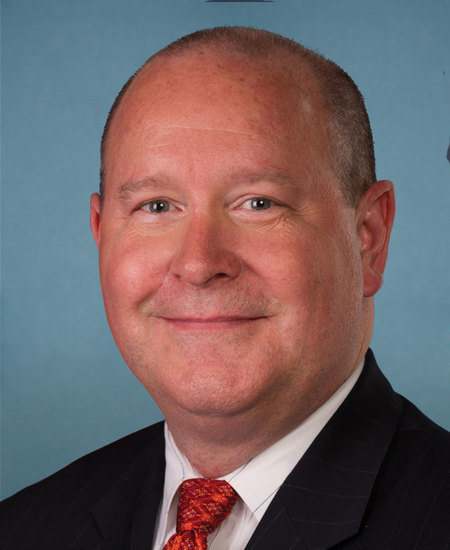
Rep. Larry Bucshon
Sponsored bills
Maddy summaryHRES 399 is a symbolic resolution expressing the U.S. House of Representatives' support for designating the week of May 7-13, 2023, as "National Correctional Officers Week." It honors correctional officers for their service in maintaining safety and dignity within correctional facilities, recognizing their role in protecting public safety and managing inmate care. The resolution does not create new laws or policies but formally acknowledges the contributions of correctional officers across the United States. It directly affects correctional officers by providing a nationally recognized day of appreciation for their work.
Maddy summaryThe Farm Operations Support Act maintains the minimum wage rate for H-2A agricultural workers at the level established in each state on December 1, 2022, through December 31, 2023. This directly affects agricultural employers who hire temporary foreign workers under the H-2A visa program and the workers themselves, by preventing the standard annual adjustment to the wage rate. The bill provides one-year stability in labor costs for employers without altering the underlying wage requirements.
Maddy summaryHRES 396 is a non-binding House resolution recognizing motherhood on Mother's Day. It expresses support for the term "mother" and criticizes language alternatives like "pregnant people" or "birthing person," while stating mothers are defined as women. The resolution contains no policy changes or concrete effects - it is purely symbolic, affirming traditional definitions of motherhood without altering laws or impacting any programs. It was introduced by multiple House members and referred to the Education and Workforce Committee.
Maddy summaryThis bill amends the Additional Ukraine Supplemental Appropriations Act of 2022 to allow Ukrainian nationals with protected status (like those under humanitarian parole) to obtain driver's licenses or state ID cards under the REAL ID Act of 2005, bypassing a standard restriction that would normally deny eligibility. It directly affects Ukrainian nationals in the U.S. who hold temporary protected status under current immigration programs. The key provision adds a new eligibility category to existing law, removing a specific barrier to accessing driver's license services. This is a technical adjustment to immigration-related identification rules, not a new benefit or funding measure. The change applies only to REAL ID-compliant licenses, which are required for federal purposes like boarding domestic flights.
Maddy summaryHR 3238, the Affordable Housing Credit Improvement Act of 2023, updates the Low-Income Housing Tax Credit (LIHTC) program to increase the availability of affordable housing across the United States. The bill makes several key changes including increasing state funding formulas, modifying tenant eligibility rules to better serve vulnerable populations (such as domestic violence victims and students), and expanding credit eligibility for projects in rural and Native American communities. Specific provisions raise the credit for properties serving extremely low-income households, clarify rules around tenant income increases, and require housing providers to protect victims of domestic violence. The bill also updates terminology from "low-income" to "affordable" throughout the tax code and enhances program transparency through data sharing requirements. These changes aim to make the LIHTC program more effective at creating and preserving affordable housing units for low-income households nationwide.
Maddy summaryThe Pay Our Correctional Officers Fairly Act adjusts pay for Bureau of Prisons employees currently assigned to the "Rest of U.S." pay locality. It directs that if an employee's worksite is within 200 miles of another pay locality, they will be paid according to the nearest locality with the highest pay rate - replacing the lower "Rest of U.S." rate. This applies to correctional officers and other Bureau of Prisons staff, but excludes employees whose worksite is more than 200 miles from any other locality. The change takes effect 180 days after the bill is enacted.
Maddy summaryThe ACRE Act of 2023 amends the tax code to exclude interest income from certain rural and agricultural loans from taxable income for eligible lenders. It directly affects banks, savings associations, and their wholly-owned entities that provide qualified loans secured by rural or agricultural real estate, including single-family homes in designated rural areas (with a $750,000 loan balance cap) or aquaculture facilities. The key provision allows these lenders to exclude interest earned on qualifying loans from their gross income, effectively reducing their tax liability on such lending activity. The bill applies to loans made after its enactment date and aligns with existing definitions of rural property from the Agricultural Credit Act of 1987.
Maddy summaryHRES 339 is a non-binding House resolution expressing that an "all-of-the-above" energy strategy - including oil, gas, nuclear, coal, hydropower, and renewables - is the most viable approach to U.S. energy policy. It states this strategy would strengthen national security, lower consumer energy prices, and reduce reliance on foreign energy sources. The resolution highlights that domestic energy production supports infrastructure funding, job creation, and energy independence, while noting U.S. energy sources like Gulf of Mexico oil and nuclear power provide clean, reliable electricity. As a statement of congressional opinion, it does not create new laws or policy changes.
Maddy summaryHRES 333 is a symbolic House resolution supporting the designation of April as "National Donate Life Month" and expressing gratitude to Americans who have registered as organ and tissue donors. It does not create new laws or programs but encourages broader public awareness and registration by urging individuals to consider donation, recognizing donor families and living donors, and asking states to issue proclamations. The resolution directly affects all U.S. citizens by promoting organ donation awareness and thanking registered donors, while acknowledging the ongoing need for donors (with over 104,000 people on the national transplant waiting list as of 2023). It focuses on recognition and education, not policy changes.