

Maddy summaryThe Federal Prisons Accountability Act of 2023 requires the President to appoint the Director of the Bureau of Prisons with Senate confirmation, replacing the current system where the Director is appointed directly by the Attorney General. It also establishes a 10-year term limit for the Director, though the current Director may continue serving for up to three months after the bill's enactment. This change directly affects the leadership structure of the Bureau of Prisons, which oversees over 176,000 federal inmates across 122 facilities and has a budget exceeding $7 billion annually. The bill aims to increase oversight of this major Department of Justice component by aligning its leadership appointment process with other senior Justice Department officials.
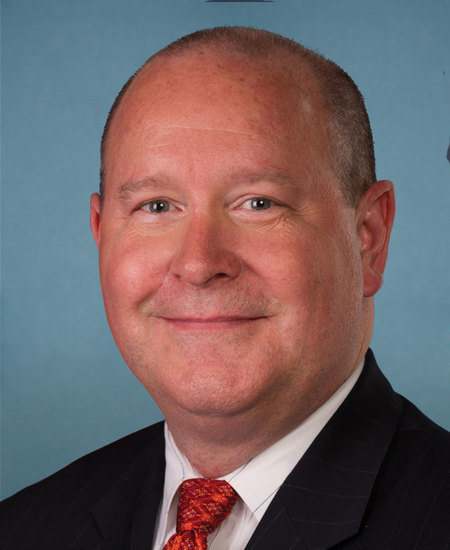
Rep. Larry Bucshon
Sponsored bills
Maddy summaryHR 3910, titled "Dillon’s Law," amends federal public health grants to prioritize states that permit trained individuals to carry and administer epinephrine during severe allergic reactions (anaphylaxis). States receiving these grants must certify they have civil liability protection laws shielding trained individuals who provide emergency aid. The bill defines "trained individual" as someone with approved medical training in epinephrine use and clarifies it does not alter existing liability protections under other laws. This policy change directly affects state governments seeking federal public health funding by linking grant eligibility to specific state-level regulations on emergency epinephrine access.
Maddy summaryHR 3795 requires the U.S. Department of Health and Human Services (specifically the Assistant Secretary for Preparedness and Response) to create and regularly update a national plan for rapid diagnostic testing during public health emergencies like pandemics. The plan must cover developing, authorizing, scaling, and distributing testing tools and lab capacity, with specific focus on new threats like emerging diseases or bioterrorism. It mandates public-private coordination between government agencies and private labs, manufacturers, and distributors to ensure efficient response. The plan must be made public and include a congressional report evaluating its effectiveness during emergencies. This bill directly affects federal health agencies and private-sector testing providers by establishing a structured framework for emergency testing preparedness.
This bill generally prohibits Title X grants for family planning services, research, and training from being used for a hotline, website, or other system that provides individuals with counseling and referrals regarding abortion services. However, the prohibition does not apply (1) in cases of rape or incest, or (2) when a physician certifies that the individual suffers from a physical condition that is life-threatening unless an abortion is performed.
Maddy summaryHR 3792 extends U.S. security funding for Israel through 2028 (Section 3) and expands energy cooperation to include advanced nuclear technologies and carbon capture (Section 5). It requires annual reports on regional security partnerships involving Israel (Section 6) and ensures countries in the Abraham Accords can access U.S. development programs (Section 8). The bill also mandates reports on diplomatic efforts against ICC investigations targeting the U.S. and Israel (Section 10) and encourages people-to-people programs to strengthen the Abraham Accords (Sections 7, 9). These provisions directly affect Israel’s diplomatic engagement, security partnerships, and economic cooperation in the Middle East.
Maddy summaryHR 3036, the Increased TSP Access Act of 2023, amends conservation program rules to expand access to third-party providers (TSPs) who offer technical assistance to farmers on conservation practices. It creates new pathways for non-Federal entities like agricultural cooperatives or professional associations to certify TSPs, streamlines certification processes (requiring Secretary review within 10 business days), and sets payment rates for TSPs equivalent to government-provided technical assistance. The bill mandates public reporting on certification numbers, payment details, and a target utilization rate for TSPs to improve conservation program delivery. It directly affects farmers participating in USDA conservation programs by increasing options for technical support and requiring transparency in how TSPs are certified and compensated.
Maddy summaryThe HALT Fentanyl Act expands the definition of fentanyl-related substances in the Controlled Substances Act to include many structurally similar compounds, making it easier to regulate new fentanyl analogs without individual listing. It defines these substances based on specific chemical modifications to fentanyl, with limited exceptions for substances already controlled or listed elsewhere. The bill also streamlines research procedures for schedule I substances by creating expedited registration processes and allowing multiple studies under one registration, while requiring the Attorney General to publish a list of substances meeting the new definition.
Maddy summaryThis resolution (HRES 443) is a symbolic gesture by the U.S. House of Representatives supporting National Poppy Day, observed on the Friday before Memorial Day. It formally endorses the tradition of wearing red poppies to honor veterans who died serving in the U.S. Armed Forces, referencing the poppy’s historical symbolism from World War I. The resolution encourages all U.S. citizens, residents, and visitors to wear a poppy that day as a sign of appreciation for military service. It does not create new laws, programs, or obligations - it is purely a statement of recognition.
Maddy summaryHR 3624, the Travel Trailer and Camper Tax Parity Act, amends the tax code to include certain towable travel trailers and campers under floor plan financing rules. This change directly affects recreational vehicle (RV) dealers and manufacturers who sell trailers designed for temporary living quarters (like camping or seasonal use) that are towed by or attached to a motor vehicle. The key provision expands the definition in tax law so these vehicles qualify for the same business tax treatment as other floor plan inventory, allowing dealers to deduct financing costs over time instead of upfront. The law applies to taxable years starting after December 31, 2022.
Maddy summaryThis bill requires that AM radio receivers be included as standard equipment in all new motor vehicles (such as cars and trucks) sold in the United States, with a rule to be issued by the Department of Transportation within one year. The rule must ensure AM radio is easily accessible on the dashboard and allows manufacturers to use digital AM radio technology instead of traditional AM. During the one-year period between the bill's enactment and the rule's effective date, manufacturers must clearly label vehicles without AM radio. The bill also directs a study to evaluate whether an alternative system could deliver emergency alerts as reliably as AM radio across the country, especially during crises.