

Maddy summaryHR 4417, the "Ending Agricultural Trade Suppression Act," prevents state and local governments from imposing additional production standards on agricultural products sold across state lines if those standards aren't already required by federal law or the state where the product is grown. It directly affects agricultural producers, distributors, and businesses operating in interstate commerce by allowing them to sue states in federal court to challenge such regulations. The bill creates a private right of action for affected parties to seek court invalidation of the regulations and damages for economic losses, with provisions for preliminary injunctions to halt enforcement during litigation. This aims to reduce regulatory barriers that could hinder the movement of agricultural goods between states.
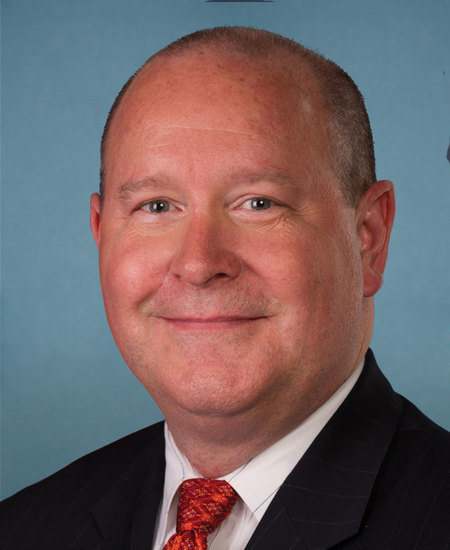
Rep. Larry Bucshon
Sponsored bills
Maddy summaryHR 4378, the SMART Energy Efficiency Standards Act, amends the Energy Policy and Conservation Act to change when efficiency standards apply to certain appliances. It shifts the compliance date from when a product is installed to when it is manufactured or imported into the U.S. This directly affects appliance manufacturers and importers of furnaces, central air conditioners, and heat pumps. The bill ensures these products meet federal efficiency standards at the point of entry into the U.S. market, rather than when installed by consumers.
Maddy summaryThe Consensual Donation and Research Integrity Act of 2023 requires entities that buy and sell human bodies or body parts for education, research, or medical training (not for transplants) to register with the federal government. It mandates detailed record-keeping for each donation - including donor consent documentation, medical history, and chain-of-custody tracking - and sets strict labeling and packaging rules to include donor names, cause of death, and health information. The law restricts how donor information can be used and requires proper disposal of remains, while exempting organ transplant networks, funeral homes, and medical schools from registration. Violations may result in fines or loss of registration.
Maddy summaryHJRES 44 is a congressional resolution seeking to block a 2021 rule by the Bureau of Alcohol, Tobacco, Firearms, and Explosives (ATF). The rule classified firearms with stabilizing braces as "short-barreled rifles," which would have required additional licensing and regulation. This resolution uses a specific legal process (under Title 5, U.S. Code) to formally disapprove the ATF rule, meaning the rule would no longer be in effect. It directly affects firearm owners, manufacturers, and dealers who would have been subject to the rule’s requirements.
Maddy summaryHRES 546 is a symbolic House resolution commemorating the one-year anniversary of the Supreme Court's June 24, 2022, Dobbs v. Jackson Women's Health Organization decision, which overturned Roe v. Wade. The resolution expresses support for the Court's ruling that the Constitution does not guarantee a right to abortion and celebrates the decision's impact on returning abortion policy authority to state legislatures. As a ceremonial resolution, it does not create new laws or directly affect any individuals or policies. The resolution focuses solely on marking the anniversary and affirming the position that unborn life should be protected.
Maddy summaryHR 277 would require Congress to approve major federal regulations before they take effect. Major rules are defined as those with significant economic impact ($100 million+ annually), major cost increases for consumers or industries, or significant adverse effects on competition, employment, or innovation. Agencies must submit detailed information about these rules to Congress, including cost-benefit analyses, before they can take effect. Congress would have 70 session days to approve the rule with a joint resolution; if they don't act within that timeframe, the rule would not take effect. This would increase congressional oversight of federal regulations and require more detailed information about proposed rules before they become law.
Maddy summaryHJRES 69 is a resolution seeking to disapprove an Environmental Protection Agency (EPA) rule published on June 5, 2023, which established a "Federal Good Neighbor Plan" for the 2015 ozone air quality standards. The rule aimed to address ozone pollution crossing state lines, particularly affecting southeastern states and industries subject to the 2015 ozone standards. This resolution would block the rule from taking effect by invoking the Congressional Review Act, preventing it from being enforced. If enacted, it would directly stop the EPA from implementing this specific plan, impacting states and businesses that would have had to comply with the rule.
Maddy summaryHR 4040, the Recycling and Composting Accountability Act, requires federal agencies and states to collect and report detailed data on recycling and composting practices. It mandates the EPA to create reports on composting infrastructure capabilities, federal agency recycling/composting rates, and end-market sales of recyclables, while also developing a national inventory of materials recovery facilities. The bill directly affects federal agencies, state and local governments, and Indian Tribes by requiring standardized reporting on recycling rates, facility capabilities, and contamination rates. Key mechanisms include biannual facility inventories, standardized reporting metrics for recyclable diversion rates, and voluntary guidelines to improve labeling and public education on proper sorting. The goal is to strengthen data collection to address contamination issues and support infrastructure improvements, without imposing new regulatory requirements.
Maddy summaryThis bill prohibits providing, facilitating, or possessing wireless devices (like cell phones) in U.S. detention facilities (e.g., prisons, jails) if such actions violate existing federal or state laws. It imposes civil fines up to $50,000 per violation (capped at $1 million total) or criminal fines up to $50,000 for intentional violations. The law explicitly excludes lawful law enforcement activities and state enforcement powers, and defines "detention facility" broadly to include all correctional and penal institutions. It applies to conduct occurring after enactment.
Maddy summaryHR 1640, the Save Our Gas Stoves Act, prevents the Department of Energy from implementing energy efficiency standards for gas stoves that would make them unavailable in the U.S. market. It amends federal law to require that any new standard for gas stoves must not result in the unavailability of gas stove types, directly affecting gas stove manufacturers and consumers who rely on these appliances. The bill specifically blocks the implementation of the 2023 proposed rule (Energy Conservation Program: Energy Conservation Standards for Consumer Conventional Cooking Products) and any similar rule. This is a policy change focused on maintaining the availability of gas stoves by altering the criteria for energy standard approval.