

Maddy summaryThis bill modifies federal highway funding rules to allow the use of Highway Trust Fund money for constructing specific noise barriers near highways. It permits Type II noise barriers (designed to reduce highway noise) if they separate highways from older residential areas (at least 10 years old) or meet other defined criteria, while generally restricting such funding otherwise. The bill also enables "multipurpose" noise barriers that can host renewable energy or broadband infrastructure, and requires project sponsors to consider aesthetics when building these barriers. It directly affects highway construction projects near residential neighborhoods and state transportation agencies managing federal highway funds.
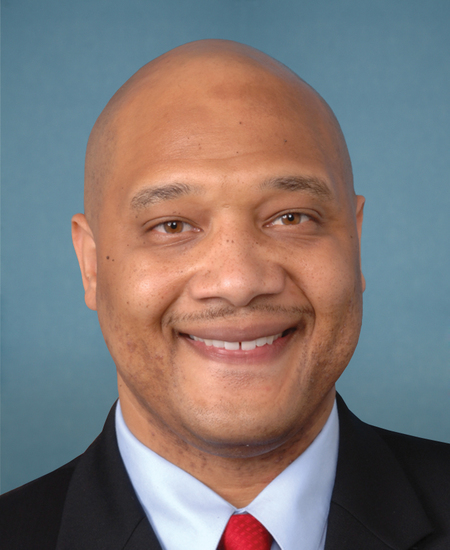
Rep. André Carson
Sponsored bills
Maddy summaryHR 7424, the Renewable Roadsides Act, requires the U.S. Departments of Transportation and Energy to study the feasibility of developing solar energy projects (including generation, storage, and transmission) on federal land adjacent to the National Highway System. The study, due by December 2025, will assess land suitability, identify barriers like safety concerns or competing land uses, and evaluate federal requirements. By December 2026, the agencies must submit a report to Congress with findings, recommendations for enabling such projects, and a process for entities to apply for leases or agreements to build and operate these facilities. The bill does not fund or mandate solar projects but sets the stage for potential future development by analyzing logistical and regulatory pathways. It directly affects federal agencies and could influence future policy on utilizing highway-adjacent federal land for renewable energy.
Maddy summaryHR 7314, the Diversify Tech Act, establishes a federal Task Force within the Department of Commerce to address diversity, equity, inclusion, and accessibility (DEIA) in the tech industry. The Task Force, composed of federal officials and industry experts, must conduct an initial audit within 60 days of enactment to assess minority employment rates, hiring practices, and layoff trends in tech companies (defined as entities with over 10 million users/subscribers). It is required to submit annual reports to Congress evaluating DEIA progress, assessing how layoffs affected diversity efforts, and examining AI's role in discrimination, while also advising on outreach for minority-owned startups. The bill directly affects large U.S. tech companies and minority-owned tech startups by mandating transparency and accountability in DEIA practices.
Maddy summaryHRES 1014 is a symbolic House resolution commemorating the Ukrainian people's sacrifices two years after Russia's February 24, 2022, invasion. It recognizes the war's devastating toll, including over 10,000 civilian deaths, 19,000 abducted children, and 10 million displaced people, while condemning Russia's actions. The resolution reaffirms U.S. support for Ukraine, condemns Vladimir Putin's regime, and stands in solidarity with Ukraine's defense of democratic values. As a commemorative resolution, it has no binding effect but formally acknowledges Ukraine's struggle and resilience. It directly honors Ukrainian civilians, soldiers, and those displaced by Russia's war of aggression.
Maddy summaryHR 7378, the Frederick Douglass Congressional Gold Medal Act, authorizes Congress to posthumously award a gold medal to honor Frederick Douglass's legacy as a pivotal abolitionist, writer, and advocate for civil rights. The medal, designed by the Treasury Secretary, will be presented to the National Museum of African American History and Culture for display, with bronze duplicates available for sale to cover costs. This ceremonial bill does not create new laws or affect current policies - it solely commemorates Douglass's historical contributions to ending slavery and advancing equality.
Maddy summaryHR 7329, the Election Day Holiday Act of 2024, would designate November 5, 2024 (and subsequent general elections) as a federal public holiday. This change would require federal offices to close and provide federal employees a paid day off on Election Day. The bill amends Title 5 of the U.S. Code to add "Election Day" to the list of designated federal holidays, following Columbus Day. This directly affects federal employees and operations, ensuring they have a day off during general elections.
This resolution honors the life and legacy of Rosa Parks by nationally recognizing Transit Equity Day. The resolution also encourages the use of public transportation and the continued work to make public transit accessible for all.
Ensuring Diverse Leadership Act of 2024 This bill requires that, when appointing a president, a Federal Reserve Bank must interview at least one individual reflective of gender diversity and one reflective of racial or ethnic diversity. The bill amends numerous banking-, finance-, and trade-related acts to make references to officials (including those to the Chairman of the Board of Governors of the Federal Reserve System) gender-neutral.
Maddy summaryHR 7252, the Child and Dependent Care Tax Credit Enhancement Act of 2024, increases the maximum credit amounts for child and dependent care expenses to $8,000 for one child and $16,000 for two or more children. It adjusts income thresholds so the credit begins phasing out at $125,000 of adjusted gross income and slows the phaseout rate above $400,000. The bill also makes the credit refundable for eligible taxpayers (allowing refunds even if no tax is owed) and adds automatic annual inflation adjustments to the credit limits starting in 2025. These changes directly affect families paying for childcare or dependent care to work or seek employment.
Maddy summaryThis resolution condemns violence, oppression, and abuse against ethnic minorities in eastern Democratic Republic of the Congo (DRC), particularly targeting Rwandophones like the Banyamulenge and Congolese Tutsi communities. It urges the DRC government to investigate security forces and armed groups (including the M23 rebel group) for human rights abuses, hold perpetrators accountable, and improve protections for displaced civilians. The resolution also calls for U.S. actions such as appointing a special envoy for the Great Lakes region, prioritizing refugee access for affected groups, and coordinating sanctions against human rights abusers - though it is a symbolic statement, not a binding law.