

Maddy summaryThis symbolic resolution (HRES 989) urges the U.S. House of Representatives to recognize January as "Muslim-American Heritage Month" to honor the contributions of Muslim Americans. It highlights their historical and contemporary roles in U.S. society across fields like business, science, sports, and public service. The resolution calls for public observance through ceremonies and programs but has no legal effect or policy changes. It does not allocate funding, alter laws, or directly affect any specific group beyond raising awareness of Muslim-American heritage.
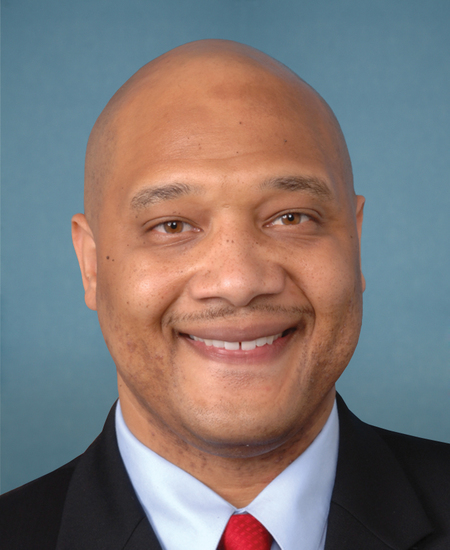
Rep. André Carson
Sponsored bills
Maddy summaryHRES 988 is a non-binding resolution supporting the "Equity or Else" quality-of-life platform, which focuses on racial and economic equity across areas like education, health care, housing, and economic development. It urges the House of Representatives to adopt this framework as a guide for drafting and implementing policy that addresses systemic inequities. The resolution emphasizes the need for the House to change its practices to prioritize input from impacted communities in policy-making. This resolution does not create new laws but expresses the House’s commitment to using the Equity or Else framework as a reference for future legislative efforts.
Maddy summaryThe Credit for Caring Act of 2024 creates a new federal tax credit for family caregivers. It allows eligible caregivers to claim a credit equal to 30% of qualified caregiving expenses (like home modifications, medical supplies, or respite care) exceeding $2,000 per year, capped at $5,000 annually. To qualify, caregivers must earn over $7,500 in income and provide care for a relative (like a spouse or parent) certified by a healthcare provider as needing long-term care for at least 180 days. The credit phases out for higher earners, with a $75,000 income threshold for single filers and $150,000 for joint returns.
Maddy summaryThis bill amends the McKinney-Vento Homeless Assistance Act to allow federal funding through the Emergency Solutions Grant Program to cover "safe parking" initiatives. It defines "safe parking" as providing homeless individuals living in vehicles (including RVs) with overnight parking alongside re-housing and supportive services to transition to stable housing. The key change makes safe parking programs eligible for federal grant funding that previously did not cover this specific activity. This directly affects homeless individuals residing in vehicles and the service providers operating these programs.
Maddy summaryHR 7127, the FAIR Act, establishes pay adjustments for federal employees in 2025. It increases base pay by 4% for most federal workers under statutory pay systems and for "prevailing rate" employees (like those in specific geographic areas), while raising locality pay rates by 3.4%. The bill directly affects all federal employees receiving pay under these systems, as it modifies their 2025 salary calculations. These changes are based on statutory formulas under Title 5 of the U.S. Code, with no new policy mechanisms beyond the specified percentage increases. The adjustments apply to pay rates in effect as of the end of fiscal year 2024.
Maddy summaryThe SWIMS Act of 2024 bans the captivity of orcas, beluga whales, false killer whales, and pilot whales for public display in the United States. It prohibits exporting, importing, or taking these animals for display - except for relocation to a sanctuary meeting specific welfare standards or release into the wild. The bill also makes it illegal to breed these species for public display. This directly affects marine parks and aquariums that currently display these animals, preventing them from acquiring new animals for exhibits or breeding them for that purpose.
Maddy summaryThis bill amends the Servicemembers Civil Relief Act (SCRA) to improve access to existing financial protections for active-duty service members, reservists, and their dependents. It requires military financial literacy training to include SCRA consumer protections (like interest rate limits), mandates notifications about these benefits at key service milestones (e.g., when entering service or being mobilized), and clarifies that creditors must apply the SCRA interest rate cap to *all* pre-service debts, not just specified ones. Creditors must also provide multiple submission methods (online, mail, fax) for servicemembers to submit required documents. These changes aim to make SCRA benefits easier to understand and utilize without creating new financial obligations.
Maddy summaryThis resolution condemns the ongoing violence in Sudan, including attacks on civilians and the use of sexual violence as a weapon of war, and calls for immediate diplomatic action to end hostilities. It directly urges the U.S. President to appoint a special envoy for Sudan and directs the Secretary of State to develop a sanctions strategy targeting military leaders, monitor arms sales, and support humanitarian aid access. Key provisions include requiring regular review of atrocities determinations, deepening coordination with the Treasury for sanctions, and urging regional partners to impose targeted sanctions on violators. The resolution focuses on U.S. policy actions to support civilians and accountability, without proposing new laws or funding.
Maddy summaryThe ACCESS Act of 2024 creates a federal grant program to help clinics and health care providers expand abortion and reproductive health services in states where abortion is legal (outside of life or health exceptions). It authorizes $200 million annually for fiscal years 2024-2028 to fund specific capacity-building activities, including facility expansions, hiring clinical staff, telehealth services, and culturally appropriate patient resources. Priority is given to providers in states experiencing the highest increases in out-of-state patients seeking abortion care. The bill directly supports health care entities serving patients who travel across state lines for services, aiming to reduce wait times and improve access for vulnerable communities.
Maddy summaryThe HOME Investment Partnerships Reauthorization and Improvement Act of 2024 reauthorizes and updates the HOME Investment Partnerships Program, which provides federal funds to states and local governments to develop affordable housing. The bill increases annual funding from $5 billion in 2024 to $6.08 billion in 2028, modifies eligibility requirements for participating jurisdictions, and eliminates a deadline for committing funds. It reforms homeownership resale restrictions, establishes a home loan guarantee program with $2 billion in initial funding (increasing with inflation), and enhances protections for tenants in small-scale affordable housing (defined as housing with no more than 4 rental units). These changes aim to make the program more flexible and effective in creating and preserving affordable housing options for low- and moderate-income households.