

Maddy summaryThe Alzheimer’s Accountability and Investment Act (HR 620) requires the National Institutes of Health (NIH) Director to annually submit a budget estimate for Alzheimer’s-related initiatives - including personnel needs - directly to the President for review and then to Congress. This budget must be prepared after public comment and submitted without changes by the Secretary of Health and Human Services or the Advisory Council. The bill directly affects the NIH’s budget reporting process for Alzheimer’s research and programs, mandating transparency in how funds are allocated. It does not change funding levels but establishes a specific annual reporting mechanism to improve accountability.
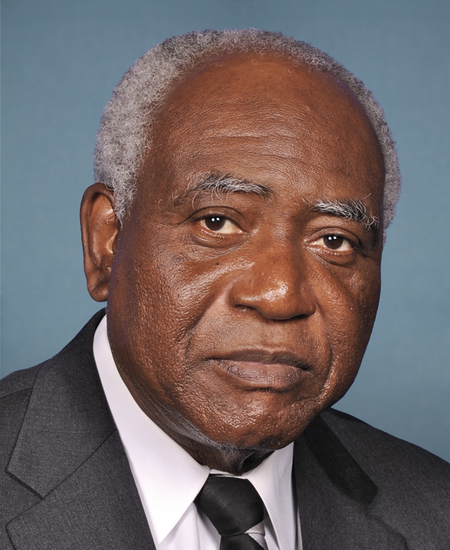
Rep. Danny K. Davis
Sponsored bills
Maddy summaryThe Technology in the Parks Act of 2024 expands existing broadband funding (E-Rate program) to include local parks alongside libraries, allowing parks to receive discounted internet services. It creates a new grant program administered by the Department of Labor to fund technology training programs in parks, targeting "covered individuals" such as those receiving unemployment benefits or welfare assistance. Grants cover costs for training in specific tech fields like coding, cybersecurity, AI, and digital manufacturing, delivered after school, in summer, or as continuing education. The bill also requires internet safety rules for participating parks and defines "covered local parks" as those partnering with non-profits to host these programs.
Maddy summaryThis bill reauthorizes the National Alzheimer's Project Act through 2035 (extending the previous deadline of 2025) and adds new requirements to promote healthy aging and reduce Alzheimer’s risk factors. It mandates the program to provide information on healthy behaviors that may lower cognitive decline risk and expands the advisory group to include representatives from agencies like the Department of Justice, FEMA, and Social Security Administration, plus experts with diverse clinical trial experience. The bill directly affects Alzheimer’s research, care programs, and the federal advisory group overseeing national efforts. Key changes include requiring annual evaluations instead of initial ones and adding a focus on reducing health disparities in Alzheimer’s initiatives.
Maddy summary# Summary of Legislative Text This is a comprehensive legislative proposal focused on addressing substance use disorder through public health approaches, with significant funding and program requirements. Key elements include: 1. **Major Funding Programs:** - **Subtitle A (Local Grants):** $3.0 billion annually (2024-2033) for local entities to provide prevention, treatment, and recovery services - **Subtitle B (State/Regional Grants):** $4.6 billion annually (2024-2033) for state-level programs - **Subtitle C (Other Grants):** $1.0 billion annually (2024-2033) for specific entities and underserved populations - **Subtitle D (Innovation/Training):** $1.5 billion annually (2024-2033) for training, research, and capacity building 2. **Key Program Requirements:** - Mandates for evidence-based treatment services across multiple levels of care - Requirements for cultural competency, particularly for Native American communities - Specific focus on harm reduction, prevention, and recovery support - Provisions for naloxone distribution and overdose reversal programs 3. **Regulatory Changes:** - New certification requirements for covered manufacturers, distributors, and dispensers of Schedule II controlled substances - Penalties for failure to submit certifications or submitting false certifications - Creation of a "Comprehensive Addiction Resources Fund" for penalty revenues 4. **Focus Areas:** - Prevention services (including trauma-informed approaches) - Early intervention services - Recovery support services - Harm reduction programs - Workforce development for treatment providers - Special attention to underserved populations (rural communities, racial minorities, formerly incarcerated individuals) 5. **Funding Priorities:** - 10% of funds for Native American communities - Specific requirements for cultural competency and language access - Mandated data collection and reporting systems This legislation represents a significant shift toward public health approaches to substance use disorder, emphasizing prevention, treatment, and recovery support rather than punitive measures, with substantial funding commitments over a decade.
Maddy summaryHRES 1230 is a non-binding House resolution recognizing the 15th anniversary of the end of Sri Lanka's civil war (May 18, 2009), which the resolution states resulted in "hundreds of thousands of lives lost." It urges the U.S. to support Eelam Tamil communities' right to self-determination and an independence referendum as a peaceful resolution, while stating the resolution "recognizes the genocide against the Eelam Tamil people." The resolution calls for U.S. diplomatic engagement with Tamil groups and international advocacy for political solutions, but does not create new laws or alter policy. As a symbolic measure, it has no legal effect on U.S. or Sri Lankan government actions.
Maddy summaryThe Public Service Freedom to Negotiate Act of 2024 establishes federal minimum standards for collective bargaining rights for public employees and supervisory employees. The Federal Labor Relations Authority will determine if each state's laws "substantially provide" for these rights, and if not, federal standards will apply to that state. These standards include the right to self-organization, collective bargaining, recognition of labor organizations, and procedures for resolving disputes. The bill preserves existing collective bargaining agreements and excludes certain employee categories like emergency services workers from some provisions.
Maddy summaryThe Rights for the TSA Workforce Act of 2024 would transition Transportation Security Administration (TSA) employees, particularly screening agents, from TSA-specific personnel rules to the standard federal government personnel system under Title 5 of the U.S. Code by December 31, 2024. The bill prohibits changes to current personnel policies for covered employees until the transition date and ensures no reduction in pay or benefits during the conversion process. It preserves certain benefits like law enforcement availability pay for Federal air marshals and maintains collective bargaining rights for screening agents. The bill also requires various reports to Congress on recruitment, implementation, diversity, and workplace safety to be submitted within specified timeframes.
Maddy summaryThis bill designates the U.S. Postal Service facility at 616 East Main Street in St. Charles, Illinois, as the "Veterans of the Vietnam War Memorial Post Office." It updates all federal references in laws, maps, and records to use this new name, honoring veterans of the Vietnam War. The bill does not change the post office's operations, services, or funding - it is a purely commemorative naming action with no substantive policy impact.
Maddy summaryHRES 1197 is a non-binding House resolution recognizing the contributions of elementary and secondary school teachers. It formally thanks teachers for their role in building civic, cultural, and economic well-being, aligning with National Teacher Appreciation Week (May 6-10, 2024). The resolution encourages students, parents, school leaders, and officials to acknowledge teachers during this week. It does not create new programs, allocate funding, or impose obligations on schools or educators. As a symbolic gesture, it directly addresses the teaching profession without altering any laws or policies.
Maddy summaryHRES 1180 is a non-binding resolution recognizing the importance of diversity, equity, and inclusion (DEI) efforts in medical education. It affirms that a diverse medical workforce better serves the nation's diverse patient populations and supports medical schools in fostering inclusive environments to improve health equity. The resolution highlights existing disparities in health outcomes and representation, such as Black and Hispanic patients experiencing higher rates of chronic conditions compared to White patients, and notes that current medical school demographics (e.g., 10.8% Black or African American matriculants in 2023) do not reflect U.S. population diversity. It does not create new laws or funding but symbolically endorses DEI initiatives as essential for enhancing patient trust, clinical learning, and equitable care delivery.