

Maddy summaryHR 8764, the Clean Hands Firearm Procurement Act, prohibits federal agencies from entering contracts with gun dealers who are identified as "covered firearms dealers" based on firearm tracing data. A dealer becomes "covered" if 25 or more firearms traced to them were recovered within 3 years of a crime during two of the past three calendar years. Federal agencies must then avoid contracting with such dealers for the current year and the two preceding years, with a 180-day implementation period. The law includes a national security waiver for the Defense or Homeland Security Secretaries, requiring immediate notification to congressional judiciary committees. This directly affects federal procurement decisions and gun dealers meeting the specified tracing thresholds.
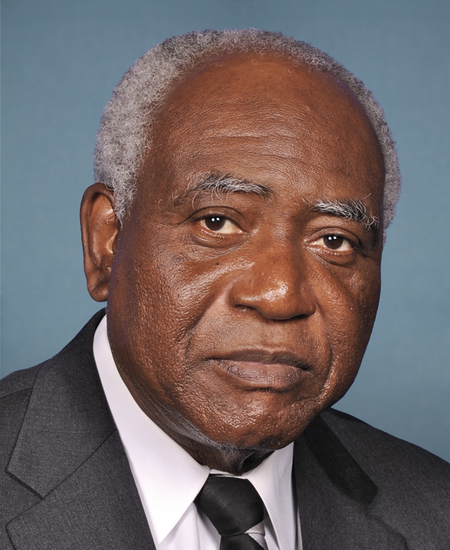
Rep. Danny K. Davis
Sponsored bills
Maddy summaryThis bill amends the Occupational Safety and Health Act to explicitly include public employees - such as those working for federal, state, or local government agencies - under OSHA's coverage. It changes the definition of "employee" to specify that public sector workers are protected, removing previous exclusions. The law takes effect 90 days after enactment for most workplaces, but gives states and local governments without OSHA-approved plans up to 36 months to comply. This directly affects public service workers in government roles by bringing their workplace safety protections under the same federal OSHA framework as private-sector employees.
Maddy summaryHR 8732, the Domestic Workers Bill of Rights Act, would establish new labor protections for domestic workers including nannies, housekeepers, and caregivers who work in private homes. The bill requires written agreements between employers and domestic employees, provides earned sick days, ensures fair scheduling practices, and prohibits unfair wage deductions for cash shortages or communications. It also creates a Domestic Employee Standards Board to recommend workplace standards and establishes a National Domestic Employee Hotline for assistance. The bill specifically targets domestic workers who have historically been excluded from labor protections under the Fair Labor Standards Act and Civil Rights Act, benefiting an estimated 2.2 million domestic workers in the U.S. who are disproportionately women of color and immigrants.
Maddy summaryThis bill allows veterans who served between 1944 and 1977 (and never used VA home loan benefits) to transfer those benefits to family members. Living veterans can transfer benefits to spouses, children, grandchildren, or other direct descendants. For deceased veterans who served in that period and never used benefits, the VA will transfer benefits to eligible family members who apply within 10 years of the law's enactment. Legatees receive full benefits immediately but cannot transfer them further and must still pay applicable fees. The bill updates VA definitions to treat transferred-benefit recipients as "veterans" for home loan purposes.
Maddy summaryHR 537 authorizes a Congressional Gold Medal to honor 60 diplomats who saved Jewish lives during the Holocaust by issuing visas and passports against their governments' orders, risking expulsion and personal danger. The medal will be presented to the next of kin of these diplomats, alongside representatives from their home countries, and permanently displayed at the United States Holocaust Memorial Museum. The bill also permits the sale of bronze duplicates to cover production costs, with proceeds going to the U.S. Mint. This legislation recognizes the diplomats' humanitarian actions without creating new government programs or altering existing laws.
Maddy summaryThis bill delays a Medicare policy that would have restricted coverage to only intravenous drugs for managing phosphate levels in kidney failure patients. It specifically postpones the implementation of the "oral-only" policy under Medicare's ESRD payment system until January 1, 2033, or until an intravenous drug for phosphate control receives FDA approval - whichever comes first. The bill directly affects Medicare beneficiaries with end-stage renal disease (ESRD) who rely on oral medications for phosphate management. It ensures continued Medicare coverage for these oral drugs during the extended timeline, without changing the underlying payment structure.
Maddy summaryThe Student Loan Servicers Accountability Act of 2024 requires the Department of Education to rigorously vet student loan servicers before awarding contracts, evaluating factors like past errors, consumer satisfaction, and ability to serve vulnerable borrowers (including language access and disability accommodations). It mandates specific contract terms, including placing loans in interest-free administrative forbearance during servicer errors, refunding overpayments, correcting erroneous credit reports, and providing credit toward loan forgiveness for periods affected by errors. The bill also requires a review of existing contracts and allows contract revocation for misrepresentation, while directing a Comptroller General study on loan transfer errors and their impact on borrowers' credit. This act directly affects the private companies that service federal student loans, impacting millions of borrowers who rely on these services.
Maddy summaryThis resolution (HRES 1271) is a symbolic gesture expressing the House's support for designating June 7, 2024, as "National Gun Violence Awareness Day" and June 2024 as "National Gun Violence Awareness Month." It does not create new laws or policies but urges the public to wear orange, raise awareness about gun violence, and focus on community safety during summer months when such incidents often increase. The resolution references statistics on gun-related deaths and honors victims like Hadiya Pendleton, who was killed in 2013. It directly affects the public by calling on individuals and communities to participate in awareness activities. This is a non-binding, commemorative measure with no direct legal impact on legislation or regulations.
Maddy summaryThis bill, the GOSAFE Act, prohibits the sale, manufacture, transfer, and possession of gas-operated semi-automatic firearms and large capacity ammunition feeding devices (those holding more than 10 rounds). It defines "gas-operated" firearms as those using gas from fired cartridges to cycle the action, and requires the Attorney General to maintain a list of prohibited firearms. Manufacturers must seek approval for new semi-automatic firearms before selling them to civilians, and the bill creates a fund to support buy-back programs for prohibited firearms and devices. Violations could result in fines up to $5,000 or 12 months in jail, with harsher penalties for those who commit other federal crimes while in possession of prohibited firearms.
Maddy summaryThe George Floyd Justice in Policing Act of 2024 establishes a National Police Misconduct Registry to track complaints and disciplinary actions against officers, requiring all federal, state, and local law enforcement agencies to report use-of-force incidents with racial, gender, and age data. It bans chokeholds and carotid holds in police encounters, prohibits no-knock warrants in drug cases, and reforms qualified immunity to make it harder for officers to avoid accountability for misconduct. The bill mandates body cameras for federal officers, requires independent investigations of officer-involved shootings, and creates new data collection systems to monitor racial profiling and use-of-force patterns. It also includes provisions for civilian oversight boards, improved officer training on de-escalation and implicit bias, and restrictions on military equipment transfers to local police departments. This law affects all law enforcement agencies receiving federal funding under programs like Byrne and COPS grants.