

Maddy summaryHRES 1601 is a symbolic resolution designating November 8, 2024, as "National First-Generation College Celebration Day." It urges all Americans to celebrate this day, recognize first-generation college students' contributions to the workforce, and honor the 1965 Higher Education Act and its programs (like Pell Grants and TRIO) that support these students. The resolution does not create new laws or funding but highlights the challenges faced by first-generation students - such as higher employment rates during studies and household responsibilities - while acknowledging their growing presence in U.S. higher education (54% of undergrads identify as first-generation). This is a non-binding gesture of recognition, not a policy change.
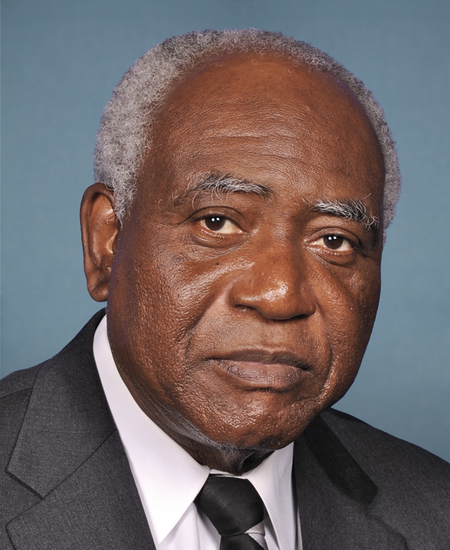
Rep. Danny K. Davis
Sponsored bills
Maddy summaryHR 5861, the BRIDGE for Workers Act, requires that all individuals receiving unemployment benefits automatically receive reemployment services (such as job training and career counseling) and eligibility assessments. This change expands existing services by removing prior restrictions, ensuring every unemployment claimant - rather than only those previously referred - accesses these supports. The bill amends Section 306(a) of the Social Security Act to update eligibility language, directly affecting unemployed workers filing for regular unemployment compensation. It takes effect upon enactment (November 25, 2024), aiming to streamline access to job assistance for all eligible claimants.
Maddy summaryThis bill renames a specific U.S. Postal Service facility in Rockford, Illinois, to honor Jay P. Larson. The building at 5225 Harrison Avenue will officially be called the "Jay P. Larson Post Office Building." All government documents, maps, and records referencing the location will automatically update to use the new name. This is a purely administrative designation with no policy changes or direct impact on citizens or services.
Maddy summaryThe Minority Diabetes Initiative Act (HR 10193) creates a federal grant program to improve diabetes care in minority communities. It authorizes the Secretary of Health and Human Services to fund public and nonprofit health providers - including community health centers, tribal health departments, and community organizations - to deliver specific diabetes services. These grants must cover routine care, prevention education, eye/foot care, and treatment for complications like kidney disease, while requiring services to be culturally appropriate and offered in accessible languages. The program is funded through annual appropriations for fiscal years 2025-2030. This bill directly affects minority communities with high diabetes rates by expanding access to comprehensive, culturally responsive care through eligible health providers.
Maddy summaryHRES 1588 is a House resolution supporting Transgender Day of Remembrance (TDoR) by recognizing the epidemic of violence against transgender people and memorializing those killed between October 1, 2023, and September 30, 2024. It specifically honors 38 transgender or gender-nonconforming individuals whose lives were lost to violence during that period, highlighting that transgender women of color face disproportionate risks. The resolution acknowledges systemic issues like underreporting, barriers to healthcare, and higher rates of homelessness and suicide within the community. It calls for the U.S. government to prioritize solutions to this violence while affirming transgender people's right to dignity and safety. As a symbolic resolution, it does not create new laws or policies but formally recognizes these issues for congressional record.
Maddy summaryThis resolution supports the United Nations' second International Decade for People of African Descent (2025-2034) and urges the U.S. Department of State to advance global efforts to combat racial discrimination. It specifically calls for U.S. backing of the UN Declaration on human rights for people of African descent, funding for the UN Expert Mechanism on racial justice, and collaboration with civil society to address systemic racism in areas like education, health, and justice. The resolution emphasizes a gender-focused approach, including support for Afro-descendant women, LGBTQIA+ individuals, and other marginalized groups. As a non-binding resolution, it directs U.S. foreign policy priorities without creating new legal obligations.
Maddy summaryThis bill extends the operating period for the African American Civil Rights Network program from 7 years to 10 years after the act's enactment. It directly affects the existing program, which supports organizations preserving civil rights history and promoting education, by allowing it to continue operating for a longer duration without needing new congressional approval. The change is a straightforward extension of an existing authorization period under federal law.
Maddy summaryHRES 1577 is a resolution expressing congressional support for National Adoption Day (November 23, 2024) and National Adoption Month (November 2024). It highlights that over 108,000 children in U.S. foster care are waiting for adoption and encourages Americans to consider adoption to help provide safety, permanency, and well-being for children. The resolution does not create new laws but formally recognizes the importance of adoption and urges the public to support efforts to place children in permanent families. It directly affects public awareness and encourages citizen engagement during these designated observances.
Maddy summaryHRES 1566 is a symbolic House resolution honoring all U.S. veterans on Veterans Day 2024. It recognizes the service and sacrifice of the estimated 15.8 million veterans living in the U.S. as of 2023, including those who served in conflicts from World War II to post-9/11. The resolution calls on the American public to observe Veterans Day to acknowledge veterans' role in preserving national freedom. As a non-binding resolution, it has no direct policy impact but formally expresses congressional recognition of veterans' contributions.
Maddy summaryThis resolution (HRES 1558) is a symbolic House of Representatives measure supporting October as "National Domestic Violence Awareness Month." It does not create new laws or allocate funding but formally expresses the House's support for raising awareness about domestic violence and its impacts, and urges continued backing for existing programs that address domestic violence. The resolution cites statistics on domestic violence prevalence (e.g., 24 people per minute affected by intimate partner violence) to underscore the importance of the observance. It directly affects public awareness efforts but does not change policies or directly impact individuals.