

Maddy summaryHRES 1548 is a non-binding resolution supporting the designation of October 2024 as "National Learning Disabilities Awareness Month." It highlights that specific learning disabilities affect 34% of students receiving special education services and notes significant academic challenges, with over 95% of affected 4th and 8th graders not proficient in reading or math in 2022. The resolution calls on schools to continue providing appropriate support for students with learning disabilities but does not create new laws or funding. It aims to raise public awareness about learning disabilities, not to change educational policies.
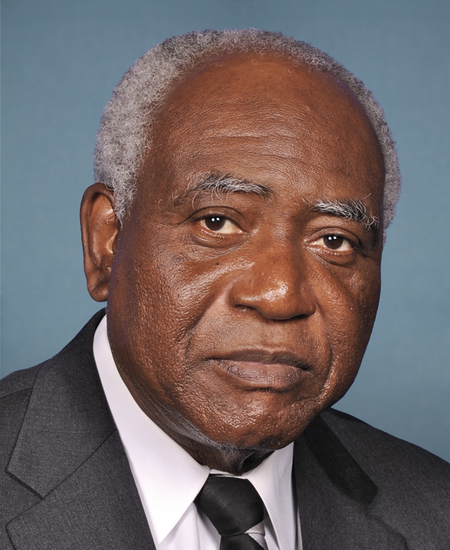
Rep. Danny K. Davis
Sponsored bills
Maddy summaryThe VA Employee Fairness Act of 2024 modifies collective bargaining rules for employees of the Veterans Health Administration (VHA). It removes existing subsections (b), (c), and (d) from the law governing VHA employee bargaining and renumbers the remaining provision. This change streamlines the collective bargaining framework but does not alter the Secretary of Veterans Affairs' existing authorities over incentive pay and expedited hiring. The bill directly affects VHA employees by changing how their collective bargaining rights are structured under federal law. The law remains neutral, focusing solely on procedural adjustments to the existing bargaining framework.
Maddy summaryHRES 1539 is a symbolic resolution recognizing certified nurse-midwives (CNMs) and certified midwives (CMs) for their role in providing maternal and women’s health care. It acknowledges their contributions during National Midwifery Week (October 6-12, 2024), highlighting their work in rural and underserved communities where they attend over 30% of rural births. The resolution does not create new laws or alter funding; it simply formally recognizes CNMs/CMs as essential providers of evidence-based care for women and childbearing families. It encourages broader awareness of their credential and profession through National Midwifery Week activities.
Maddy summaryThis bill removes a key barrier preventing student loan debt from being discharged in bankruptcy. It amends the U.S. Bankruptcy Code by eliminating the exception that previously made most federal student loans non-dischargeable, meaning borrowers could not erase this debt through bankruptcy proceedings. The change applies only to bankruptcy cases filed on or after the bill's enactment date, affecting new cases where student loan borrowers may now seek relief. This is a procedural change to bankruptcy law, not a direct loan forgiveness or repayment program.
Maddy summaryThe National Food as Medicine Program Act of 2024 creates a federal grant program to help states implement or expand initiatives that provide medically prescribed, nutrient-rich food (like fresh produce or tailored meals) to address chronic health conditions and food insecurity. States must partner with healthcare providers and community organizations to offer these interventions, using locally-sourced, sustainably produced food grown through regenerative or organic methods. The program requires states to evaluate outcomes like reduced hospital visits and improved health metrics, with reports submitted to the federal government after three years. It directly affects state Medicaid programs and healthcare providers participating in these initiatives.
Maddy summaryHRES 1530 is a non-binding House resolution recognizing former President Jimmy Carter's 100th birthday. It honors his life, public service, and key achievements, including his presidency (noting the Panama Canal treaties, Camp David Accords, and founding the Departments of Education and Energy), post-presidency work with the Carter Center, and decades of humanitarian efforts. The resolution does not create new laws or affect any policies; it is purely commemorative. It formally acknowledges his contributions to Georgia, the U.S., and global peace efforts, including his 2002 Nobel Peace Prize. This symbolic gesture has no direct impact on citizens or government operations.
Maddy summaryThis bill establishes procedures for handling requests to dismiss criminal prosecutions against the President. It requires the Attorney General to submit a sworn statement confirming whether a dismissal request came from the President or their direction, and mandates that courts consider evidence of bad faith before granting such dismissals. A three-judge court must hear these cases, and the Justice Department's Inspector General must report to Congress if they find a dismissal was requested by the President. The bill directly affects the President, Attorney General, courts, and Justice Department oversight mechanisms during presidential criminal cases.
Maddy summaryHR 9878, the No Shame at School Act of 2024, requires schools to automatically certify students from households with unpaid meal fees for free or reduced-price meals (instead of allowing discretion), and mandates retroactive reimbursement for past unpaid meals. It directly affects school districts and students in households owing meal fees by prohibiting stigmatizing practices like special tokens, public lists of names, or withholding grades due to unpaid fees. Key provisions ban schools from physically segregating students, using debt collectors, or taking food away from students who owe fees, while requiring clear communication to households about meal applications. The bill defines "covered child" as any student enrolled in a participating school meal program whose household owes fees or is eligible for free/reduced meals.
Maddy summaryHR 9864, the Keep Food Containers Safe from PFAS Act of 2024, prohibits the sale of food packaging containing intentionally added PFAS chemicals (like those used in non-stick coatings) in interstate commerce. It directly affects food manufacturers and packaging producers who currently use these chemicals. The bill amends federal food safety law to ban such packaging starting January 1, 2025, defining PFAS as man-made chemicals with at least one fully fluorinated carbon atom. This is a concrete policy change to remove specific chemicals from food contact materials.
Maddy summaryHR 9872, the Sickle Cell Disease Treatment Centers Act of 2024, establishes a federal grant program to create coordinated care networks for sickle cell disease patients. It funds "hub-and-spoke" systems where medical hubs (like hospitals or universities) partner with local spokes (clinics, health centers) and community organizations to provide comprehensive, lifelong care - including pain management, genetic counseling, mental health services, and pediatric-to-adult transition support. The program specifically prioritizes underserved communities, historically Black colleges, rural areas, and regions with high sickle cell disease prevalence, while requiring data collection on patient outcomes and health disparities. Grants allocate 70% to hub-spoke networks, 20% to community organizations, and 5% each to the National Sickle Cell Coordinating Center and CDC data collection efforts.