

Maddy summaryThe EACH Act of 2023 would require federal health programs - including Medicaid, Medicare, the Indian Health Service, and TRICARE - to cover abortion services without restrictions. It repeals a provision in the Affordable Care Act that allowed states to limit abortion coverage in health insurance plans sold through state marketplaces. The bill also prohibits the federal government from restricting abortion coverage in private health insurance plans. This would directly affect millions of people, particularly low-income individuals and people of color, who are disproportionately enrolled in Medicaid and currently face barriers to abortion care due to coverage restrictions.
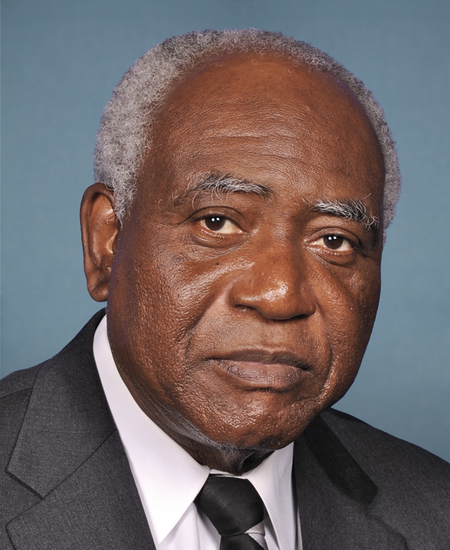
Rep. Danny K. Davis
Sponsored bills
Maddy summaryHR 415, the "End the Threat of Default Act," repeals the statutory debt ceiling (section 3101 of Title 31, U.S. Code), which currently limits how much the federal government can borrow. This would eliminate the need for Congress to approve increases to the borrowing cap, removing the risk of a government default on its debts. The bill directly affects the Treasury Department’s ability to manage federal borrowing, as it would no longer require congressional action to authorize new debt issuance. The technical amendments update references to the debt ceiling in other laws to reflect this change.
Maddy summaryThe Assuring Medicare’s Promise Act of 2023 directs that taxes collected under the net investment income tax (a tax on investment income for high earners) be added to the Medicare Hospital Insurance Trust Fund, which helps finance Medicare Part A benefits. It modifies the tax code to include certain business income of high-income individuals (with modified adjusted gross income over $400,000 for single filers or $500,000 for joint filers) in the tax base, but includes a phase-in mechanism to limit immediate tax increases. This bill primarily affects high-income taxpayers and aims to strengthen Medicare’s financial stability by increasing trust fund revenue.
Maddy summaryHR 4338 formally designates the historic Route 66 as a National Historic Trail under the National Trails System Act, covering approximately 2,400 miles from Chicago, Illinois, to Santa Monica, California, along its original alignments between 1926 and 1985. The bill specifies that the National Park Service will administer the trail while prohibiting the federal government from acquiring land beyond one-quarter mile on either side of the trail or creating buffer zones, and explicitly states it will not interfere with energy development or use eminent domain. This designation primarily affects the public by recognizing Route 66's historical significance and landowners along the route by limiting federal land acquisition and management restrictions. It is a procedural act focused on formal recognition, not new regulatory requirements.
Maddy summaryThis bill (HR 1432, the VETT Act) amends the tax code to allow members of the Armed Forces to deduct charitable contributions made to certain military service organizations. Specifically, it adds qualifying federally chartered military service organizations (under IRS section 501(c)(19)) as deductible charities for active duty and retired service members. The change applies to tax returns filed for taxable years beginning after the bill's enactment date (December 12, 2024). It directly affects military personnel who make donations to these designated organizations, expanding their eligible charitable deductions.
Maddy summaryHR 10367 requires all U.S. detention facilities - including jails, prisons, and law enforcement custody - to notify families within 12 hours of a death or 48 hours of serious illness or injury occurring in custody. It mandates that notifications include specific details (like cause of death, medical procedures, and investigation status) and provides families with options for communication, visitation, and handling remains. The bill establishes standardized procedures for collecting emergency contact information at the time of booking and ensures families receive compassionate, professional notifications during critical moments. It applies to all federal, state, local, and tribal detention agencies, aiming to standardize a process that currently lacks consistent national guidance.
Maddy summaryThis bill extends funding for the existing Public Health Service Act program focused on raising public awareness about Alzheimer's disease and related dementias. It authorizes $33 million annually for fiscal years 2025 through 2029 to support public health education and outreach initiatives. The program directly affects public health organizations and community groups that develop and distribute educational materials about Alzheimer's prevention, diagnosis, and care. The key provision is the multi-year funding extension, ensuring continued support for nationwide awareness efforts without altering the program's core structure.
Maddy summaryHRES 1613 is a non-binding resolution recognizing the U.S. House of Representatives' support for continued U.S. leadership in ending pediatric HIV/AIDS globally. It highlights that 57% of children with HIV were on treatment in 2023 (compared to 77% of adults) and calls for scaling up prevention of mother-to-child transmission and expanding pediatric HIV treatment access. The resolution specifically encourages the PEPFAR program to develop a dedicated pediatric HIV strategy aligned with global goals. As a formal expression of congressional support, it does not create new law but reaffirms the U.S. commitment to reducing new pediatric HIV infections.
Maddy summaryHR 6751 authorizes the U.S. Mint to produce commemorative coins honoring Roberto Clemente, a Hall of Fame baseball player and humanitarian, including 50,000 $5 gold coins, 400,000 $1 silver coins, and 750,000 half-dollar coins. The coins must feature Clemente's image and inscriptions like "Roberto Clemente" and "2027," with all sales including a surcharge ($5-$35 per coin) paid to the Roberto Clemente Foundation. The foundation, which supports youth sports, education, and disaster relief programs, will use these funds for its mission, while the U.S. Treasury must recover all production costs. The coins will be sold exclusively in 2027, with no net cost to the government.
Maddy summaryThe Jeanette Acosta Invest in Women’s Health Act of 2024 would expand access to preventive cancer screenings (including breast, cervical, ovarian, and uterine cancer screenings) for women, with a focus on low-income women, women of color, rural communities, and underserved populations. It authorizes $20 million annually for grants to health care providers - such as family planning centers - to increase screenings and establishes a training program for health care providers on best practices and cultural competency to address racial disparities. The bill also mandates a study analyzing cancer screening rates and disparities by race, income, geography, and insurance status, with reports to Congress every five years. These provisions aim to improve early detection, reduce mortality, and address systemic barriers in women’s cancer care.