

Maddy summaryHRES 846 is a symbolic resolution designating October 2025 as National Domestic Violence Awareness Month. It expresses the House's support for raising awareness about domestic violence and its impacts, and calls for continued congressional attention to ending domestic violence through existing programs. The resolution does not create new laws, allocate funding, or directly affect any specific groups - it is purely a statement of support. It references statistics on domestic violence prevalence but focuses on awareness rather than policy changes.
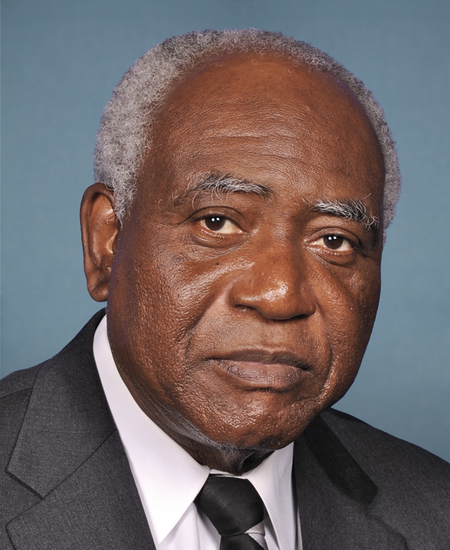
Rep. Danny K. Davis
Sponsored bills
Maddy summaryThis bill amends the Safe Drinking Water Act to require community water systems to participate in cybersecurity training focused on protecting against and responding to cyberattacks. It updates funding periods for these training programs, extending them from 2020-2021 to 2026-2031. The key provision mandates that training programs must cover specific cyber threat mitigation and response strategies. This directly affects community water systems receiving federal funding under the Safe Drinking Water Act.
Maddy summaryThe American Energy Independence and Affordability Act extends multiple clean energy tax credits that were set to expire between 2025 and 2026. It specifically extends residential clean energy credits through 2034, clean electricity investment credits for wind and solar through 2032, and clean vehicle credits for electric vehicles through 2032. The bill also reinstates special rates for sustainable aviation fuel and modifies requirements for energy-efficient home improvements. These provisions directly affect homeowners installing solar panels, businesses investing in clean energy infrastructure, and manufacturers producing clean energy equipment.
Maddy summaryHR 5830, the Guaranteed Income Pilot Program Act of 2025, would establish a 3-year pilot program providing monthly cash payments to 20,000 eligible low-income individuals aged 18-65. Participants would receive payments equal to the fair market rent for a 2-bedroom apartment in their ZIP code, paid monthly on the 15th, with these payments not counting as income for other federal benefits. The program, funded at $495 million annually for fiscal years 2026-2030, requires a study tracking impacts on participants' financial stability, health, housing, and other outcomes. The final report would assess the program’s feasibility for broader expansion.
Head Start Shutdown Protection Act of 2025 This bill requires the Department of Health and Human Services to reimburse a state, local government, or school district that uses its funds to maintain participation in the Head Start program or the Early Head Start program during a government shutdown in which there is a lapse in federal appropriations for the programs. The Head Start programs provide comprehensive early childhood education and development services to low-income children. The programs seek to promote school readiness through the provision of educational, health, nutritional, social, and other services.
Maddy summaryHCONRES 57 is a symbolic resolution honoring Wadee Alfayoumi, a 6-year-old Palestinian-American boy murdered in a hate crime in Illinois on October 14, 2023. It commemorates his life and condemns the perpetrator’s anti-Muslim, anti-Palestinian hate speech that led to his death. The resolution states that the U.S. has "zero tolerance for hate crimes, Islamophobia, anti-Semitism, and anti-Palestinian and anti-Arab discrimination." As a concurrent resolution, it does not create new laws or policies but serves to recognize the victim and affirm national principles against hate-based violence.
Maddy summaryThis bill makes federal funding for the WIC program mandatory by requiring Congress to appropriate necessary funds annually for fiscal year 2026 and each subsequent year. It removes discretionary language from WIC funding requirements and clarifies that eligible participants must be served without participation limits. The bill directly affects low-income pregnant women, new mothers, and young children who rely on WIC for nutrition assistance, ensuring continued access to critical food, health, and education services.
Maddy summaryHRES 797 is a non-binding resolution expressing concern about the rising number of book bans in U.S. schools and libraries. It cites PEN America data showing 6,870 book bans affecting 3,751 titles between July 2024 and June 2025, with books about race, LGBTQ+ experiences, and marginalized communities disproportionately targeted (e.g., *The Handmaid’s Tale*, *Maus*, *This Book Is Gay*). The resolution calls on schools to follow best practices for book challenges, protect students’ access to diverse materials, and return books removed from military schools under recent executive orders. It directly addresses students, educators, librarians, and authors impacted by censorship, emphasizing that such bans threaten free expression and democratic values.
Maddy summaryHRES 793 is a non-binding resolution supporting the designation of October 2025 as "National Learning Disabilities Awareness Month." It highlights that specific learning disabilities affect 32% of students receiving special education services, with over 96% of affected 4th and 8th graders lacking reading proficiency and 92% lacking math proficiency in 2023-2024. The resolution calls on schools to continue providing free appropriate public education for these students, emphasizing evidence-based instructional methods. This is a symbolic measure with no new funding or mandates, aimed at raising awareness about learning disabilities and educational gaps.
Maddy summaryHRES 786 is a symbolic resolution designating September 30, 2025, as "Impact Aid Recognition Day" to commemorate the 75th anniversary of the Impact Aid program. It does not create new policies or funding but formally recognizes the program's history and purpose. The resolution highlights that Impact Aid reimburses local schools for revenue losses due to tax-exempt federal properties (like military bases or tribal lands), serving over 8 million students across 1,100 school districts. It emphasizes bipartisan support for the program since its 1950 establishment and its role in ensuring equitable education access for federally connected children. The resolution has no binding effect beyond the symbolic recognition.