

Maddy summaryHR 6085, the "Stop Ballroom Bribery Act," restricts donations for specific government properties tied to the President or Vice President, including White House grounds, monuments honoring presidents, or events on those grounds. It prohibits donations from individuals or entities involved in government litigation, under investigation, seeking contracts/grants, lobbying the executive branch, or requesting pardons/appointments. Key provisions require federal approval before accepting donations, ban donor recognition (like logos), mandate quarterly public disclosures of donations and related meetings, and prohibit "straw" or anonymous donations. Violations face civil penalties up to $100,000 or criminal fines/imprisonment for large-scale breaches. The bill directly affects donors seeking to contribute to projects involving the White House, Vice President’s residence, or related honors.
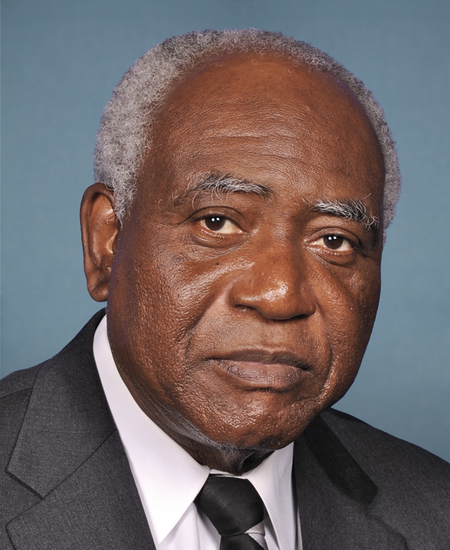
Rep. Danny K. Davis
Sponsored bills
Maddy summaryHR 6049, the No Payola Act, repeals a requirement that Senate staff notify the Senate when legal process seeks to disclose Senate data. It also requires Senators who received funds from private lawsuits under the repealed provision to repay those funds to the Treasury. The bill directly affects Senators who might have been involved in legal cases related to the repealed notification rules. This is a procedural change eliminating specific reporting obligations and financial penalties for certain Senate-related legal actions.
Maddy summaryHR 6056, the International Human Rights Defense Act of 2025, establishes a permanent Special Envoy at the State Department to lead U.S. foreign policy efforts addressing discrimination and violence against LGBTQI+ people globally. The bill requires the U.S. government to develop and update a biannual global strategy to prevent criminalization and violence against LGBTQI+ individuals, mandate detailed reporting on such abuses in annual country reports, and ensure all U.S. foreign assistance programs include inclusive nondiscrimination policies. This legislation directly affects U.S. foreign policy implementation, federal agencies receiving funding, and LGBTQI+ communities facing persecution worldwide. The bill aims to coordinate U.S. government efforts across departments and with international partners to advance LGBTQI+ rights globally through concrete policy mechanisms.
Maddy summaryThis bill amends an existing law to require the Comptroller General to review the Department of Veterans Affairs' medical care budget requests for fiscal years 2026, 2027, and 2028. It mandates that the Comptroller General examine the President's budget submissions for VA medical care accounts (including Medical Services, Support, Facilities, and Community Care) and report the findings to relevant congressional committees. The bill does not change healthcare services or access but establishes a specific review process to increase transparency in how the VA budgets its medical care spending. This procedural requirement directly affects the VA's budget submission process and congressional oversight committees.
Maddy summaryHRES 865, the "Opening the People’s House Resolution," would amend House rules to allow any member to end a "district work period" (a time when members work in their districts instead of in Washington) by submitting a letter to the Clerk. If a majority of House members submit such letters, the current district work period would end within two days, and the Speaker could not schedule a new one for three weeks after the House reconvenes. The Clerk would publicly list all signers in the Congressional Record and online daily. This resolution directly affects House members and the Speaker by changing how district work periods are terminated.
Maddy summaryHR 5941, the Restoring Access for Detainees Act, requires U.S. Immigration and Customs Enforcement (ICE) to provide immigration detainees in DHS custody with specific communication access. It mandates 200 free monthly minutes for general outgoing calls, unlimited free minutes for contacting legal counsel, courts, consulates, or oversight offices, and special initial contact provisions during arrival or transfer. Detention facilities must allow uninterrupted legal communication time, cannot restrict minutes for legal calls, and must provide private spaces for confidential legal discussions. The bill also requires facilities to establish clear, publicly available communication policies that comply with these requirements.
Maddy summaryThis bill ensures continuous funding for SNAP (food assistance) and WIC (nutrition program for mothers/children) during government funding gaps. It authorizes emergency Treasury funds to cover SNAP/WIC benefits and reimburse states for costs if Congress fails to pass regular appropriations for the Department of Agriculture by September 30, 2025. The funding covers missed payments retroactively from September 30, 2025, through the bill’s enactment date, and continues until either regular appropriations pass or September 30, 2026. It directly affects low-income households relying on these programs and state agencies administering them during funding lapses.
Maddy summaryThis bill, HR 5973, requires federal immigration enforcement personnel to follow strict limits on force use, including proportional application, mandatory de-escalation efforts, and prohibitions on equipment like flash bangs or rubber bullets except for specific public safety threats. It mandates body-worn and vehicle cameras for all operations, with footage retained for one year (three years for force incidents or complaints), and grants affected individuals the right to inspect recordings. The law also requires annual training on force policies, First Amendment compliance, and racial bias avoidance, while demanding detailed quarterly reports to Congress on force usage, assaults on agents, and equipment approvals. These provisions directly affect all federal immigration agents conducting enforcement actions, aiming to increase transparency and accountability during operations.
Maddy summaryHRES 855 is a non-binding House resolution expressing support for National Adoption Day (November 22, 2025) and National Adoption Month (November). It promotes awareness about children in foster care awaiting adoption - highlighting that 49,994 U.S. children were waiting for adoptive families in 2023 - and encourages the public to consider adoption. The resolution recognizes that every child deserves a permanent, loving family and urges Americans to support this goal throughout November and the year. As a symbolic gesture, it does not create new laws or policies.
Maddy summaryThis joint resolution designates October 2025 as Head Start Awareness Month to symbolically recognize the program's 60-year impact. It highlights Head Start's service to over 40 million children and families nationwide, emphasizing its role in early childhood development, health screenings, and educational support. The resolution serves as a ceremonial acknowledgment of the program's legacy and achievements, not as a policy change or funding measure. It was introduced by multiple representatives to honor Head Start's contributions to child well-being and educational outcomes.