

Maddy summaryThe ADOPT Act of 2025 creates federal offenses to prevent exploitation in private domestic interstate adoptions. It prohibits unlicensed groups from acting as intermediaries between birth parents and adoptive parents, restricts certain adoption advertising, and caps payments to birth parents at $2,500 before consulting a licensed agency or attorney. The bill directly affects unlicensed adoption facilitators, birth parents, and prospective adoptive parents by requiring all adoption services to occur through licensed providers or exempt entities like attorneys and nonprofit agencies. Violations carry fines up to $100,000 for organizations or $50,000 plus 5 years in prison for individuals, with exemptions for public agencies, licensed child-placing organizations, and attorneys.
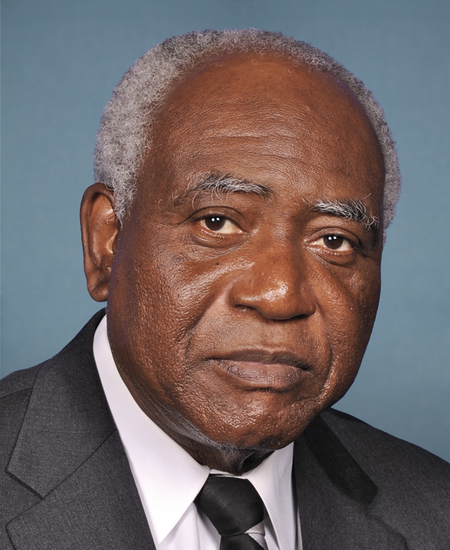
Rep. Danny K. Davis
Sponsored bills
Maddy summaryThis bill establishes a federal grant program to improve diabetes care in underserved urban and rural communities. It authorizes the Health Secretary to fund eligible providers - including community health centers, rural clinics, and tribal health departments - to deliver comprehensive services like routine diabetes treatment, prevention education, eye/foot care, and kidney disease management. Grants require providers to offer culturally appropriate care in local languages and conduct community outreach. Funding must be distributed equitably between urban and rural areas, with authorization for fiscal years 2026-2031. The program directly supports patients in medically underserved communities facing barriers to diabetes care.
Maddy summaryHR 6181, the John Lewis Every Child Deserves a Family Act, prohibits child welfare agencies receiving federal funds from discriminating against children, youth, or prospective foster/adoptive parents based on religion, sex (including sexual orientation and gender identity), or marital status. It directly affects LGBTQ youth in foster care - overrepresented at 30% of the system - who face higher risks of trauma, group home placements, and suicide attempts compared to non-LGBTQ peers. Key provisions require agencies to collect data on sexual orientation and gender identity, establish a National Resource Center for LGBTQ youth support, provide cultural competency training, and eliminate discriminatory practices. The law aims to improve safety, permanency, and placement stability by expanding access to family-based care and ensuring equitable services for all children in the system.
Maddy summaryHR 6172, the Ending Forced Arbitration of Race Discrimination Act of 2025, prevents companies from requiring employees or consumers to use private arbitration to resolve race discrimination claims. It makes any pre-dispute arbitration agreement unenforceable for disputes involving alleged race, color, or national origin discrimination under federal, tribal, state, or local law. The bill ensures courts - not arbitrators - determine if this law applies to a case, giving people the choice to pursue claims in court instead of forced arbitration. It directly affects individuals alleging race discrimination who would otherwise be barred from court by such agreements. The law applies to claims arising on or after its enactment date.
Maddy summaryThis bill (HR 6015) ensures existing labor agreements between the Department of Veterans Affairs (VA) and employee unions remain in full effect through their scheduled terms. It also cancels two executive orders (14251 and 14343) that previously excluded VA from standard federal labor-management programs. The bill directly affects VA employees and their unions by preserving current collective bargaining rights and requiring VA to follow standard federal labor rules. It does not change veterans' benefits or healthcare access; it only modifies VA's internal labor relations procedures. This is a procedural bill focused on labor-management processes, not direct policy changes for veterans.
Maddy summaryThis bill allows Inspector General (IG) offices to continue operating during government funding gaps. It permits IGs to spend funds at the previous year's funding rate to cover basic operations and oversee programs that remain active when Congress hasn't passed new appropriations. The law directly affects federal IGs and the agencies they monitor, ensuring oversight continues without interruption during shutdowns. It amends existing law to provide this authority without requiring new appropriations.
Maddy summaryThis bill establishes fairer pay and retirement benefits for federal firefighters. It requires that overtime hours worked during a firefighter's regular schedule be included in retirement calculations, improving retirement payouts. The bill also sets a maximum 60-hour regular workweek for federal firefighters, to be defined by the Office of Personnel Management within one year. These changes directly affect federal firefighters by addressing pay disparities with municipal firefighters and enhancing recruitment and retention.
Maddy summaryHR 6126 authorizes the minting of commemorative coins to mark the 100th anniversary of the U.S. Foreign Service (established in 1924). It specifies three coin types: up to 50,000 $5 gold coins (90% gold), 400,000 $1 silver coins (90% silver), and 750,000 half-dollar coins, all to be sold during 2029. A surcharge of $35 per gold coin, $10 per silver coin, and $5 per half-dollar is added to the sale price, with all surcharge funds directed to the Association for Diplomatic Studies and Training to support its diplomatic history preservation work. The coins must include standard inscriptions (e.g., "Liberty," "United States of America") and will be legal tender, but the bill does not create new policy or affect government operations.
Maddy summaryThe Global Respect Act (HR 6151) requires the U.S. President to publicly list foreign officials responsible for severe human rights violations against LGBTQI individuals, including torture, prolonged detention, or violence based on sexual orientation or gender identity. It mandates denying visas and entry to listed individuals and requires annual reports on the list's updates and impacts. The bill also directs the State Department to track global violence against LGBTQI people and update annual human rights reports to include discrimination based on sexual orientation or gender identity. These provisions directly affect foreign government officials and entities implicated in such abuses, aiming to increase accountability through U.S. visa restrictions.
Maddy summaryHR 4405, the Epstein Files Transparency Act, requires the U.S. Attorney General to publicly release all unclassified Department of Justice documents related to Jeffrey Epstein within 30 days of the law’s enactment. This includes investigations, flight logs, immunity deals, internal communications, and records about Epstein’s detention or death, while prohibiting redactions for "embarrassment" or political sensitivity. The law allows limited redactions only for victim privacy, child sexual abuse materials, active investigations, or national security (with justification), and mandates an unclassified summary for withheld classified information. The Attorney General must submit a detailed report to Congress within 15 days of release, listing all redactions and naming any government officials referenced in the materials.