

Generating Relief for Academic Debt Using Assisted Tax Efficiency Act or the GRADUATE Act This bill expands the tax deduction for student loan interest to include payments toward principal. It also increases the maximum allowable amount of the deduction.
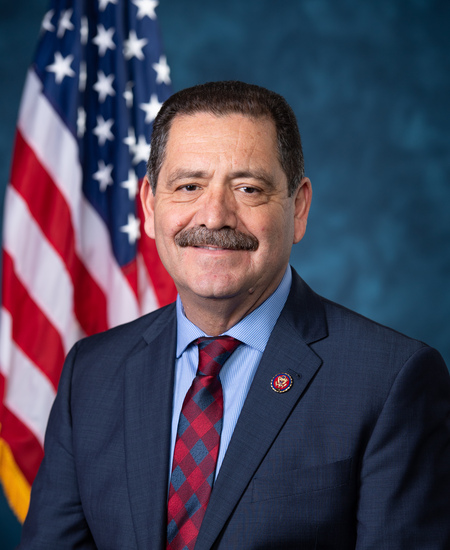
Rep. Jesús G. "Chuy" García
Sponsored bills
Maddy summaryHR 6381, the Veterans Visa and Protection Act of 2023, helps noncitizen veterans and service members who face deportation by creating a pathway to legal permanent residency in the U.S. It requires the government to reopen removal cases for eligible veterans, adjust their status to lawful permanent residents if they served honorably without certain serious criminal convictions (like crimes of violence), and prohibit deportation except for such crimes. The bill also ensures these individuals can access military and veterans benefits they lost due to removal proceedings and allows them to apply for naturalization through military service. It mandates that immigration officials identify service members/veterans early in proceedings and track their cases to prevent unjust removal.
Maddy summaryHR 6318, the Public Housing for the 21st Century Act of 2023, requires the Department of Housing and Urban Development (HUD) to identify and share best practices for developing mixed-income public housing. It directs HUD to create training and technical assistance for state and local governments, public housing agencies, and housing finance agencies on using local tools - like tax incentives, public land, and cross-subsidizing market-rate units - to increase affordable housing for extremely low-, very low-, low-, and moderate-income households. The bill focuses on maximizing the use of existing Federal subsidies to target the most vulnerable residents while ensuring developments maintain affordability and avoid displacing neighboring communities. This law does not create new funding but aims to improve how current resources are applied to expand affordable housing supply.
Billionaire Minimum Income Tax Act This bill imposes a minimum tax on individual taxpayers whose net worth for the taxable year exceeds $100 million. The tax is equal to 25% of the sum of a taxpayer's taxable income, plus net unrealized gains for the taxable year. The tax may not exceed 40% of the amount by which the taxpayer's net worth exceeds $100 million.
Maddy summaryHRES 793 is a resolution passed by the U.S. House of Representatives calling on Hamas to immediately release all 199 hostages taken during Hamas' October 7, 2023 attack on Israel. The resolution condemns Hamas for the attack, the taking of hostages, and threats against hostages, while stating that holding hostages violates international humanitarian law under the Geneva Conventions. It demands the immediate release of all hostages and expresses sympathy for victims and their families. As a symbolic resolution, it does not create legal obligations but formally expresses the House's position.
Maddy summaryHR 6451, the Mental Health Justice Act of 2023, provides $250 million in federal grants to states, tribes, and localities to hire mental health professionals as first responders for specific emergencies. It directs these professionals to replace police in situations involving mental health crises, substance use, or intellectual/developmental disabilities - such as when a 911 caller describes a mental health emergency or a first responder identifies someone needing mental health support. The bill requires grantees to train responders in de-escalation techniques, link individuals to community-based services (not incarceration), and report on outcomes like reduced arrests or use of force. It also mandates data collection on demographics and prevents funneling people into institutional settings, with annual reports to Congress on program effectiveness.
Maddy summaryHRES 886 is a non-binding House resolution supporting Transgender Day of Remembrance (TDoR) by recognizing the epidemic of violence against transgender people and memorializing those lost in the year ending September 30, 2023. It specifically acknowledges the disproportionate impact of violence on transgender women of color, citing 33 documented deaths in the U.S. during that period (with estimates suggesting the actual number is higher due to underreporting). The resolution calls for Congress to prioritize studying and preventing such violence while affirming that all transgender people deserve dignity and respect. As a symbolic resolution, it does not create new laws or allocate funding but serves to raise awareness and honor victims.
Maddy summaryThe Climate Displaced Persons Act establishes a new admission pathway for individuals displaced by climate-related environmental disasters, defining "climate-displaced persons" as those compelled to leave their homes due to climate events like floods, droughts, or sea level rise who cannot safely return or integrate locally. The bill sets a minimum annual admission goal of 100,000 climate-displaced persons to the United States beginning in fiscal year 2024, requires the government to collect and analyze data on climate displacement, and mandates the creation of a Global Climate Change Resilience Strategy to address climate impacts on vulnerable populations. It also requires training for U.S. diplomats and immigration officers on climate displacement and establishes procedures for applications, including exemptions for unaccompanied children and cases of changed circumstances. The legislation aims to provide a structured humanitarian response to climate-driven displacement while acknowledging the U.S. historical responsibility for climate change.
Maddy summary# Summary of the Government Surveillance Reform Act of 2023 This comprehensive legislative proposal aims to reform government surveillance practices in the United States with a strong emphasis on privacy protections, judicial oversight, and government transparency. The key components include: 1. **Cell Site Simulator Restrictions**: - Comprehensive ban on cell-site simulators (stingrays) except under specific circumstances requiring warrants - Requires judicial approval for most uses, with strict limitations on scope, duration, and minimization of incidental collection - Mandates disclosures about potential disruptions to emergency services - Includes detailed reporting requirements for government agencies 2. **Vehicle Data Protections**: - Prohibits warrantless access to vehicle data (including telematics and onboard sensors) - Requires warrants for most access, with specific exceptions for consent and emergencies - Creates detailed definitions and procedures for consent requirements 3. **Enhanced Foreign Intelligence Surveillance Oversight**: - Requires more detailed reporting by the Foreign Intelligence Surveillance Court - Mandates annual reports on accuracy and completeness of applications - Increases transparency around Section 702 collection - Requires reporting on queries targeting U.S. persons 4. **Data Broker and Service Provider Protections**: - Strengthens privacy protections for data held by data brokers - Requires court orders for government access to certain data - Includes minimization requirements for handling collected data - Prohibits warrantless use of data obtained through cell site simulators 5. **Transparency Requirements**: - Mandates detailed public reporting on surveillance activities - Requires annual reports on accuracy of applications - Increases granular reporting on targets and queries - Requires public disclosure of statistics on surveillance use The legislation represents a significant shift toward greater privacy protections and government accountability in surveillance practices, with detailed technical requirements for compliance and enhanced reporting obligations for government agencies. It would significantly impact how law enforcement and intelligence agencies conduct surveillance operations while attempting to balance public safety needs with constitutional privacy rights.
Maddy summaryThe Advanced Coursework Equity Act aims to increase access to advanced courses like AP, STEM programs, and Algebra I for students in under-resourced schools, particularly focusing on historically underrepresented groups including Black, Latino, Native American students, students with disabilities, English learners, and low-income students. The bill establishes a federal grant program requiring states and schools to implement either "open enrollment" (allowing any student to enroll in advanced courses without academic prerequisites) or "universal screening" (systematically screening all students for advanced courses based on objective measures) to improve equitable access. It mandates data collection and reporting on enrollment and performance by student subgroups (race, disability, socioeconomic status, etc.) and sets specific 3-year equity goals for each subgroup. The grant program provides funding to states and schools to support these changes, with requirements for staff training, advisory councils, and communication with families about advanced course opportunities.