

This resolution expresses the sense of the House of Representatives that regular journalistic activities, including the obtainment and publication of information, are protected under the First Amendment and that the federal government should drop all charges against and attempts to extradite Julian Assange.
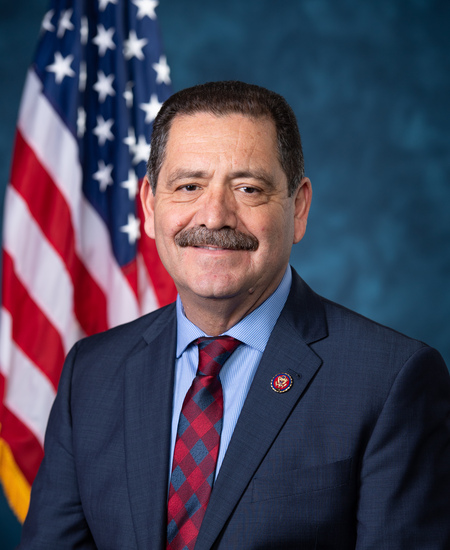
Rep. Jesús G. "Chuy" García
Sponsored bills
Maddy summaryHR 6720 creates a grant program administered by the U.S. Department of Agriculture to provide stabilization payments to farmworkers, meat processing workers, and grocery workers affected by natural or other disasters designated by the Secretary. Eligible entities - such as labor unions or membership organizations representing these worker groups - can apply for funding to support affected workers. The program is authorized to spend up to $50 million, with the Secretary required to report on its outcomes within four years. This bill directly affects workers in specific food industry sectors during disaster events, offering financial stabilization through grants administered by the Agricultural Marketing Service.
Maddy summaryThe Hunger Clearinghouse Enhancement Act of 2023 updates the National School Lunch Act to improve a USDA resource hub for schools and community organizations. It requires the clearinghouse to include information on trained volunteers and practical ways to prevent hunger, beyond just food assistance details. The bill also increases annual funding for the clearinghouse from $250,000 to $750,000, effective through fiscal year 2031, to support expanded resources. This directly affects the USDA's operations and the schools, nonprofits, and communities relying on the clearinghouse for hunger-related information.
Maddy summaryHR 6654, the Farewell to Foam Act of 2023, bans the sale and distribution of expanded polystyrene foam food containers, packaging peanuts ("loose fill"), and coolers starting January 1, 2026. It directly affects food service providers (like restaurants and schools), manufacturers, distributors, and retailers who sell these foam products. The bill prohibits selling these items, with enforcement starting with a written warning for first violations, followed by escalating civil penalties ($250 for a second violation, up to $1,000 for fourth+ violations), while exempting small businesses with low annual revenue from repeated penalties within a 7-day period.
Maddy summaryThe Affordable Drug Manufacturing Act of 2023 establishes a new Office of Drug Manufacturing within the Department of Health and Human Services to directly manufacture and sell specific prescription drugs. It prioritizes drugs with expired patents or limited manufacturers (like insulin, asthma inhalers, naloxone, epinephrine injectors, and antibiotics) that face high costs or shortages, requiring the Office to produce at least 15 such drugs within one year and 25 within three years. The Office sets "fair prices" based on manufacturing costs, patient access, and impact on competition, while mandating public transparency in all pricing and requiring federal agencies to purchase these drugs. This directly affects patients and consumers by aiming to lower costs and improve access to essential medications through government-manufactured alternatives.
Maddy summaryThis bill authorizes the posthumous presentation of a Congressional Gold Medal to honor Marshall "Major" Taylor, a pioneering Black cyclist who broke racial barriers in the late 19th and early 20th centuries. It recognizes his athletic achievements, including world records and international championship wins, as well as his advocacy for equality in sports. The medal, designed by the Treasury Secretary, will be presented to Taylor's great-granddaughter, Karen Donovan, following the congressional authorization. As a commemorative act with no policy changes, it serves solely to honor Taylor's legacy as a trailblazer and role model.
Maddy summaryThe ARMAS Act of 2023 transfers regulatory control of certain firearm exports from the Department of Commerce to the Department of State. It designates Mexico, Guatemala, Honduras, El Salvador, Haiti, Jamaica, and other Caribbean nations as "covered countries" requiring special oversight for firearm exports. The bill requires the State Department to develop strategies to disrupt illegal firearm trafficking to these countries, implement tracking systems for firearms, and submit annual reports on exports. It establishes certification requirements for exports to covered countries, including detailed reporting to Congress about proposed exports. The law aims to improve tracking of firearms used in violence and reduce illegal trafficking that fuels crime and violence in the region.
Maddy summaryThe Poverty Line Act of 2023 updates how the federal poverty line is calculated to better reflect current costs of basic needs. It requires annual revisions using detailed data on food, housing (adjusted for regional Fair Market Rents), childcare, and health costs (including premiums and out-of-pocket expenses), with adjustments for household size and geographic location. This revised line will directly affect households applying for federal assistance programs like SNAP, Medicaid, and housing subsidies, as it determines eligibility thresholds. The bill mandates regional poverty line variants and a public lookup tool, with implementation beginning three years after enactment. The changes aim to align the poverty measure with actual household spending patterns rather than the current methodology.
Maddy summaryThis bill amends the Equal Credit Opportunity Act to require lenders to collect and report data on loans to LGBTQI-owned businesses. It specifically adds "LGBTQI-owned" to existing categories for data collection, includes sexual orientation, gender identity, and intersex status as protected characteristics in lending data, and defines an "LGBTQI-owned business" as one where over 50% of ownership/control and net profit/loss accrues to self-identifying LGBTQI individuals. The policy change directly affects financial institutions that report lending data to the government, mandating they track and disclose these new categories. This provides concrete data on lending practices for LGBTQI business owners, who face documented barriers in accessing credit.
Maddy summaryThis bill makes the Department of Education's 2023 SAVE Plan repayment regulations permanent by incorporating them directly into federal law. It directly affects federal student loan borrowers who use the SAVE Plan, which sets income-driven repayment terms. The key mechanism is transferring the specific rules from the 2023 regulations (published in the Federal Register) into Title 34 of the U.S. Code, ensuring those terms remain in effect without needing future regulatory updates. This change provides stability for borrowers and eliminates the need for the Department to reissue the same rules as new regulations.