

Maddy summaryThe Transit Emergency Relief Act (HR 7012) amends federal transportation law to provide more flexible funding for public transit agencies facing emergencies. It allows funds designated for emergency relief (under 49 U.S.C. § 5324) to remain available until spent, be used for prior or current fiscal years, and not reduce existing funding. The bill also increases annual funding caps for transit programs and adds $50 million per year (2024-2027) specifically for this emergency relief program. Public transportation agencies receiving federal grants are directly affected, as the changes simplify access to funds during crises while requiring compliance with labor standards (49 U.S.C. § 5333). This creates more predictable support for transit systems recovering from unexpected disruptions.
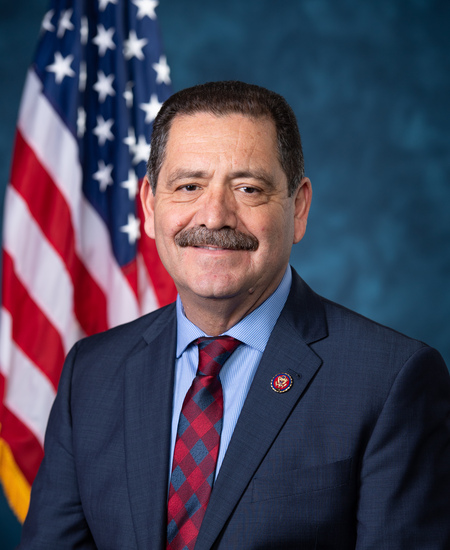
Rep. Jesús G. "Chuy" García
Sponsored bills
Maddy summaryThis bill restores visa eligibility for immigrants who had diversity visas allocated for fiscal years 2017-2022 but were denied entry due to specific travel restrictions (like Executive Orders 13769/13780 or related proclamations) or pandemic-related delays. The State Department must notify affected individuals within 90 days of the bill’s enactment, giving them one year to confirm they wish to proceed with their visa applications. Unused visas from those years can be reallocated without counting against current annual limits, and applicants who fail to respond or are denied for standard reasons (like education requirements) lose eligibility. The policy directly affects individuals impacted by these specific past barriers to immigration.
Maddy summaryHR 6986 limits patent holders from asserting multiple patents in infringement lawsuits against companies developing generic drugs or biosimilars. Specifically, it allows only one patent per "Patent Group" (commonly owned patents related through certain legal filings) to be claimed against such companies in a single lawsuit. This directly affects drug/biosimilar manufacturers submitting applications under FDA approval pathways (21 U.S.C. 355 or 42 U.S.C. 262) or selling approved versions of these products. The rule applies to new applications filed after the bill's enactment, aiming to reduce complex patent litigation tactics.
Maddy summaryThe Affordable Connectivity Program Extension Act of 2024 allocates $7 billion in funding for the Affordable Connectivity Program (ACP) during fiscal year 2024. The ACP provides subsidies to low-income households to help cover the cost of internet service and connected devices like laptops or tablets. This funding ensures the program can continue supporting eligible households throughout the year, with the money remaining available until fully spent. The bill extends existing program funding without changing eligibility criteria or service requirements.
Maddy summaryThis resolution calls on the U.S. government to formally end the Monroe Doctrine - a historical policy used to justify U.S. intervention in Latin America - and develop a new "Good Neighbor" policy focused on partnership. It specifically urges the State Department to declare the doctrine obsolete, end unilateral sanctions (like the Cuba embargo), reform international financial institutions, and support regional cooperation on issues like climate change and human rights. The resolution targets U.S. foreign policy mechanisms and aims to improve relations with Latin American and Caribbean nations by shifting from intervention to mutual respect. As a non-binding resolution, it expresses congressional intent but does not create new law.
Maddy summaryThe Menopause Research and Equity Act of 2023 requires the National Institutes of Health (NIH) to evaluate existing and ongoing research on menopause, perimenopause, and mid-life women’s health, identifying gaps in knowledge and funding over the past five years. The NIH must then develop a strategic plan with health professionals (including specialists like gynecologists and endocrinologists) to address these gaps and guide future research on treatments for menopause symptoms. The bill also mandates new NIH research on causes, symptoms, and treatments for menopause-related health issues, including a study on hormonal treatments. All activities must be funded using existing NIH resources, with no new appropriations authorized. This aims to improve scientific understanding of women’s mid-life health needs.
Maddy summaryHR 6746, the Iron Deficiency Education and Awareness Act, creates a national public health campaign to increase screening and awareness of iron deficiency among women and children under two. The bill directs the Secretary of Health and Human Services to fund a $7 million annual campaign (2024-2028) using evidence-based media, culturally tailored resources, and partnerships with health providers and community organizations. It specifically targets high-risk groups including menstruating women, pregnant/breastfeeding individuals, women with gastrointestinal conditions, Black and Hispanic women, and parents of children under two. The campaign will disseminate information on symptoms, screening recommendations, and prevention strategies through social media, health facilities, schools, and community outreach.
Maddy summaryHR 6768, the Public Health Nursing Act, authorizes $5 billion annually (2024-2033) to expand public health nursing services through federal grants to state and local health departments. The bill requires grantees to use funds for recruiting and training registered nurses in underserved areas, covering wages, medical supplies (like PPE), and administrative costs to improve maternal/infant health and chronic disease management. Priority is given to applicants serving communities with high chronic disease rates, maternal mortality, low-income populations, rural areas, or health professional shortage zones. This directly affects public health departments and their ability to hire nurses providing in-person care, home visits, and mobile clinic services.
Maddy summaryThe Restore Honor to Service Members Act of 2023 establishes a Department of Defense "Tiger Team" to improve outreach to veterans with certain discharge statuses (specifically those discharged under "former section 654" before 2011, often related to policies like the "Don't Ask, Don't Tell" era). The team will collaborate with the VA, veterans' groups, and other stakeholders to identify eligible veterans, share contact information, and guide them through the existing review process under Section 527 of the 2020 National Defense Authorization Act. The bill requires the team to submit regular progress reports to Congress and a final report within three years, tracking how many veterans successfully changed their discharge status to "honorable" through the review process. This focuses on streamlining access to an existing review mechanism, not creating new benefits or altering discharge standards.
Maddy summaryThe Brittany Clardy Missing and Murdered Black Women and Girls Act establishes a new Office within the Department of Justice to address the disproportionate rates of missing and murdered Black women and girls in the U.S. The Office will collect and analyze data on these cases - including case resolution times, Amber Alert usage, and trafficking links - and create a public dashboard for tracking. It also creates a grant program for community organizations to provide culturally appropriate prevention services, law enforcement training, and victim support. The Office must submit biennial reports to Congress with findings and recommendations to improve the criminal justice response to these cases. This bill directly affects Black women and girls facing violence, law enforcement agencies, and community organizations providing related services.