

Maddy summaryThe FAMILIES Act creates a program allowing courts to divert eligible parents and caregivers from incarceration into community-based supervision instead of prison or probation. Eligible individuals include parents of minor children, expectant parents, and caregivers for minors, elderly, or disabled family members. The program provides comprehensive services like education, job training, substance abuse treatment, and family counseling, with provisions to prevent financial barriers from hindering participation. Courts must consider factors like caregiver responsibilities and risk to family members when determining eligibility, and successful participants may qualify for record expungement.
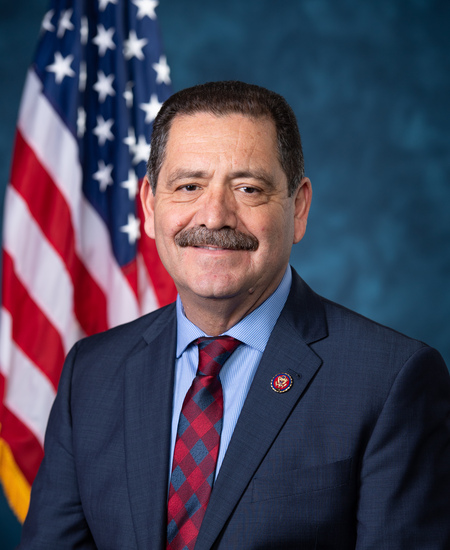
Rep. Jesús G. "Chuy" García
Sponsored bills
Maddy summaryHR 6121, the Filipino Veterans Fairness Act of 2023, expands U.S. veterans benefits for individuals who served in the Philippine Army, Philippine Scouts, or recognized guerrilla forces during World War II. It directly affects Filipino veterans who previously faced challenges proving service due to limited documentation. The bill allows the Secretary of Veterans Affairs to consider alternative records beyond the National Personnel Records Center rosters when determining eligibility, requires annual reports to Congress on applications and approvals, and clarifies that the Filipino Veterans Equity Compensation Fund does not apply to these veterans. These changes aim to streamline access to benefits for this specific group of veterans.
Maddy summaryHR 6293, the Fair Wages for Incarcerated Workers Act of 2023, would extend the Fair Labor Standards Act (FLSA) to require that incarcerated workers in public or privately operated correctional facilities receive fair wages. The bill directly affects individuals working in prisons or related programs (like UNICOR or work release) by prohibiting deductions for board, lodging, or court-imposed fees from their wages. Key provisions amend the FLSA to define "incarcerated worker" and explicitly state that such workers must be paid at least the minimum wage, with costs for facilities and court fees excluded from their earnings. This would ensure incarcerated workers keep more of their earnings from prison labor programs.
Maddy summaryHR 6298, the Stop Shackling and Detaining Pregnant Women Act, prohibits the detention of pregnant, lactating, or postpartum noncitizens in immigration custody, requiring their immediate release except in narrow cases involving an immediate threat to safety. It bans the use of restraints during labor, delivery, and postpartum care, except under strict conditions with documented justification, and mandates access to comprehensive reproductive health services including abortion. Detention facilities must conduct biweekly reviews to reassess detention needs and report detailed data on restraint use, detention lengths, and pregnancy outcomes. The bill applies directly to pregnant noncitizens held under U.S. immigration law and requires training for DHS staff on its provisions.
Maddy summaryHR 6297, the Payer State Transparency Act of 2023, requires the federal government to calculate each state's annual federal tax burden and federal spending. It mandates that individual tax payments be counted as a burden on the state where the person resides, and business taxes be allocated proportionally based on where business activity occurs. Similarly, federal spending (including contracts) must be allocated by state based on where work is performed. The results will be published annually in a public report to Congress and online by the Bureau of Economic Analysis.
Maddy summaryHR 6105, the No Toxics in Food Packaging Act of 2023, prohibits the use of specific chemicals in food packaging by deeming them unsafe under existing law. It directly bans ortho-phthalates (like DEHP and DBP), PFAS, certain bisphenols (including BPA), styrene, and antimony trioxide in all food contact materials. The bill requires the FDA to consider vulnerable populations - such as infants, pregnant women, and workers - when evaluating alternative substances. The ban takes effect two years after the bill's enactment. This law primarily affects food manufacturers, packaging producers, and the FDA's regulatory oversight of food contact substances.
Maddy summaryHR 5976, the Youth Mental Health Research Act, establishes a new NIH research initiative led by the National Institute of Mental Health. The bill directs collaboration between three NIH institutes to coordinate research on youth mental health, focusing specifically on building community resilience for at-risk youth and improving how mental health services reach young people in schools, communities, and other settings where they live and work. It authorizes $100 million annually for fiscal years 2024 through 2028 to fund this research. The bill does not create direct services but aims to generate evidence to inform future mental health support strategies for young people.
Maddy summaryHRES 832 is a symbolic resolution recognizing Día de los Muertos (Day of the Dead) as an annual cultural observance in the U.S. and globally. It acknowledges the holiday's origins in Mesoamerican traditions, its significance in honoring deceased loved ones through altars (*ofrendas*), and its role in celebrating Latino cultural heritage. The resolution specifically highlights the contributions of Mexican and Mexican American communities to U.S. society and culture, without creating new laws or obligations. It is a ceremonial gesture by Congress, not a policy with concrete effects on individuals or communities.
Maddy summaryThe PHASE Act of 2023 directs the National Institute of Standards and Technology (NIST) to identify innovative traffic control technologies that improve safety for pedestrians and cyclists without causing distraction. It requires the Transportation Secretary to conduct a study analyzing urban areas with rising pedestrian fatalities and test physical safety measures like crosswalk technology, better lighting, and accessible sidewalks. The bill also creates a $5 million annual grant program for cities, tribes, and municipalities to fund specific pedestrian safety infrastructure, including marked crosswalks, adaptive lighting, accessible curb ramps, and upgraded traffic signals. These grants must comply with federal regulations and the Americans with Disabilities Act. The law directly affects local governments seeking funding and aims to protect pedestrians and vulnerable road users through concrete infrastructure improvements.
National Museum of American LGBTQI+ History and Culture Act This bill establishes within the Smithsonian Institution the National Museum of American LGBTQI+ History and Culture. The museum (1) may carry out educational and liaison programs in support of its goals, and (2) shall establish specified grant and scholarship programs.