

Maddy summaryHR 8768, the Restoring Trust in Public Safety Act, provides $15 million annually (2025-2030) for federal grants to state, tribal, and local governments to safely destroy firearms. Eligible entities must use funds to fully destroy firearms (including all parts and accessories) through methods like shredding or crushing, maintain detailed records, and provide documented proof of destruction. The bill requires grantees to use no more than 10% of funds for administration and prioritizes funding for rural areas and Metropolitan Statistical Areas. It directly affects local law enforcement agencies and governments seeking to eliminate firearms through certified destruction programs.
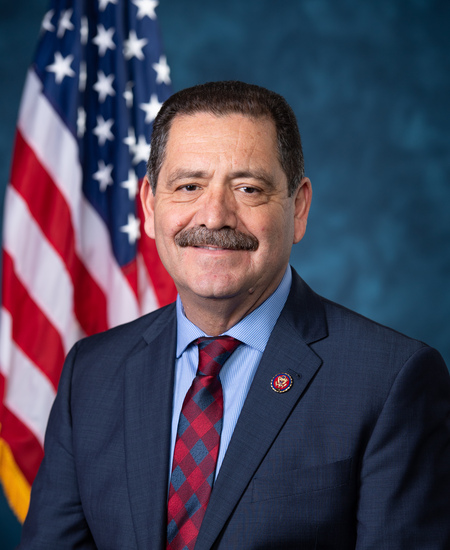
Rep. Jesús G. "Chuy" García
Sponsored bills
Maddy summaryThis bill expands eligibility for the Public Service Loan Forgiveness (PSLF) program by allowing borrowers to count their first 60 monthly payments toward the required 120 payments, provided they're on specific repayment plans under the Higher Education Act. It directly affects federal student loan borrowers working in public service jobs who may have previously been excluded from counting certain payments. The law requires the Secretary of Education to notify affected borrowers within 180 days about this change and provide guidance on adjusting repayment plans. This update simplifies the path to loan forgiveness for qualifying public service workers by broadening which payments count toward the 120-payment threshold.
Maddy summaryThis bill requires employers to provide safety warnings and materials in English and a language workers actually understand, tailored to their literacy level and education. It directly affects workers with limited English proficiency (including those whose native language differs from English or who live in non-English-speaking communities) in workplaces like agriculture and service industries. Key provisions include amending OSHA to mandate multilingual safety information, directing the Labor Secretary to update safety standards within 180 days, and creating competitive grants to fund translation services for covered workers. Grants prioritize organizations serving migrant workers or those in agriculture/service sectors, with reporting requirements to track assistance.
Maddy summaryHR 8732, the Domestic Workers Bill of Rights Act, would establish new labor protections for domestic workers including nannies, housekeepers, and caregivers who work in private homes. The bill requires written agreements between employers and domestic employees, provides earned sick days, ensures fair scheduling practices, and prohibits unfair wage deductions for cash shortages or communications. It also creates a Domestic Employee Standards Board to recommend workplace standards and establishes a National Domestic Employee Hotline for assistance. The bill specifically targets domestic workers who have historically been excluded from labor protections under the Fair Labor Standards Act and Civil Rights Act, benefiting an estimated 2.2 million domestic workers in the U.S. who are disproportionately women of color and immigrants.
Maddy summaryHR 8714, the "Home of Your Own Act of 2024," establishes a federal grant program administered by the Department of Housing and Urban Development (HUD) to assist first-time homebuyers. It provides up to $30,000 per person for down payments, closing costs, or necessary home repairs to make a home accessible for people with household incomes up to 120% of local median income (150% in high-cost areas). States and tribes receiving funds must distribute at least 25% through community development financial institutions and require financial counseling for applicants. The assistance must be repaid if the home is not occupied as a primary residence for 60 months, with exceptions for hardship or selling at a loss, and the program is funded at $6.7 billion annually for 2025-2029.
Maddy summaryHR 537 authorizes a Congressional Gold Medal to honor 60 diplomats who saved Jewish lives during the Holocaust by issuing visas and passports against their governments' orders, risking expulsion and personal danger. The medal will be presented to the next of kin of these diplomats, alongside representatives from their home countries, and permanently displayed at the United States Holocaust Memorial Museum. The bill also permits the sale of bronze duplicates to cover production costs, with proceeds going to the U.S. Mint. This legislation recognizes the diplomats' humanitarian actions without creating new government programs or altering existing laws.
Maddy summaryHRES 1278 is a congressional resolution condemning violence against Garífuna land rights defenders in Honduras and calling for the Honduran government to implement a 2015 Inter-American Court ruling requiring land returns to Garífuna communities. It specifically urges the U.S. State Department to coordinate with Honduras on human rights compliance and requests that multilateral development banks (World Bank and IDB) suspend funding for projects violating Garífuna land rights. The resolution also asks these institutions to review past projects that may have contributed to human rights violations against Garífuna communities and to consult with Garífuna communities before approving new projects. This resolution does not create new laws but serves as a formal statement of congressional position, directly affecting the Garífuna people of Honduras whose cultural survival and land rights are threatened by ongoing displacement and violence.
Maddy summaryThis bill bans rental property owners (with 4+ units) and software services from using algorithms that coordinate pricing or lease terms among landlords, which could enable price-fixing. It specifically prohibits "coordinating functions" like collecting and analyzing rental data to recommend prices or occupancy levels, deeming such use a per se violation of antitrust law. The Federal Trade Commission and state attorneys general can enforce these rules, and victims of violations can sue for triple damages. Pre-dispute arbitration agreements or waivers preventing class actions related to these violations are also invalidated.
Maddy summaryHR 8639, the Warehouse Worker Protection Act, requires employers in covered warehouse facilities (including distribution centers, storage facilities, and delivery services) to provide workers with clear written descriptions of any quotas they're subject to, including how performance is measured and monitored. The bill prohibits quotas that interfere with breaks, safety compliance, or anti-discrimination protections, and mandates that employers provide employee work speed data in human-readable formats. It creates new anti-retaliation protections for workers who exercise these rights or file complaints, and establishes a Fairness and Transparency Office within the Department of Labor to oversee implementation. The act also amends the National Labor Relations Act to explicitly prohibit quotas that discourage workers from exercising their labor rights.
Maddy summaryThis resolution (HRES 1271) is a symbolic gesture expressing the House's support for designating June 7, 2024, as "National Gun Violence Awareness Day" and June 2024 as "National Gun Violence Awareness Month." It does not create new laws or policies but urges the public to wear orange, raise awareness about gun violence, and focus on community safety during summer months when such incidents often increase. The resolution references statistics on gun-related deaths and honors victims like Hadiya Pendleton, who was killed in 2013. It directly affects the public by calling on individuals and communities to participate in awareness activities. This is a non-binding, commemorative measure with no direct legal impact on legislation or regulations.