

Protecting Pain-Capable Unborn Children from Late-Term Abortions Act This bill establishes a new criminal offense for performing or attempting to perform an abortion if the probable gestational age of the fetus is 15 weeks or more. A violator is subject to criminal penalties—a fine, a prison term of up to five years, or both. The bill provides exceptions for an abortion (1) that is necessary to save the life of the pregnant woman, or (2) when the pregnancy is the result of rape or incest. A physician who performs or attempts to perform an abortion under an exception must comply with specified requirements. A woman who undergoes a prohibited abortion may not be prosecuted for violating or conspiring to violate the provisions of this bill.
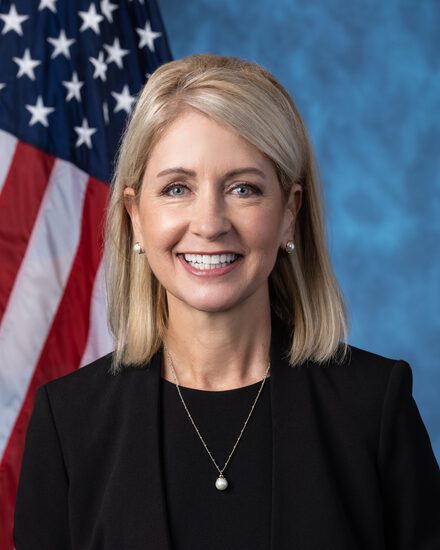
Rep. Mary E. Miller
Sponsored bills
Protect Children's Innocence Act This bill places restrictions on the provision of gender affirming care. Gender affirming care includes performing surgery, administering medication, or performing other procedures for the purpose of changing the body of an individual to correspond to a sex that differs from the individual's biological sex. Specifically, the bill makes it a felony to perform any gender affirming care on a minor and it permits a minor on whom such care is performed to bring a civil action against each individual who provided the care. Additionally, the bill prohibits the use of federal funds for gender affirming care or for health insurance that covers such care. Such care may not be provided in a federal health care facility or by a federal employee. The bill also prohibits qualified health plans from including coverage for gender affirming care. Further, plans that include coverage for such care are not eligible for federal subsidies. Finally, the bill prohibits institutions of higher education from offering instruction in gender affirming care. It also makes any non-U.S. national ( alien under federal law) who performs gender affirming care on a minor deportable and inadmissible to the United States. The restrictions under this bill do not apply to the provision of care under certain circumstances such as when an individual does not have normal sex chromosome structure, sex steroid hormone production, or sex steroid hormone action.
Promoting Free and Fair Elections Act This bill prohibits federal agencies from using funds made available for salaries and expenses to solicit or enter into agreements with nongovernmental organizations to conduct voter registration or voter mobilization activities on the agency's property or website. The bill also requires federal agencies to delay carrying out certain activities pursuant to Executive Order 14019 (which established requirements for expanding access to voter registration and election information) until various conditions are met, such as the agency submitting reports to Congress.
Shall Not Be Infringed Act This bill repeals the Bipartisan Safer Communities Act, which was signed into law on June 25, 2022. The act makes various changes to federal firearms laws, including to expand background check requirements, broaden the scope of existing restrictions, and establish new criminal offenses. The act also reauthorizes, funds, and supports various programs, grants, and activities to promote access to behavioral and mental health services, enhance school safety and security initiatives, and address gun violence in communities.
Maddy summaryHR 8196, the "Protecting Mothers and Babies from Terrorism Act," designates the groups Jane’s Revenge and Ruth Sent Us as domestic terrorists under existing law (18 U.S.C. §2331), based on their claimed responsibility for vandalism and arson targeting pregnancy centers and related facilities in 2022. The bill does not create new protections for mothers or babies but formally classifies the conduct described in its findings as domestic terrorism. It directly affects the legal status of these groups under federal terrorism statutes. The bill’s sole action is this designation, using current definitions without introducing new policy changes.
Protect Our Judiciary Act of 2022 This bill removes the intent requirement for the criminal offense related to picketing or parading in or near a building or residence used by a judge, juror, witness, or court officer.
Biometric Verification for Entry and Reconfirming Identity with Forensics Act of 2022 or the B-VERIFY Act of 2022 This bill addresses various issues pertaining to immigration, such as (1) requiring any applicant for an immigration benefit, including a U.S. national applying for a noncitizen beneficiary, to provide biometric information, including DNA; (2) permanently barring a noncitizen from becoming a U.S. citizen if the noncitizen is the parent of an unaccompanied alien child who arrives at the U.S. border; and (3) prohibiting the Department of Health and Human Services from expending government funds to provide counsel to detained unaccompanied alien children in legal proceedings.
This bill nullifies the executive order that was published on March 10, 2021, and established requirements for expanding access to voter registration and election information.
Leaker Accountability Act of 2022 This bill establishes a new federal crime for the unauthorized disclosure of confidential information by officers or employees of the Supreme Court. Specifically, the bill prohibits an officer or employee of the Supreme Court from knowingly publishing, divulging, disclosing, or making known in any manner or to any extent not authorized by law any confidential information coming to that officer or employee in the course of the employment or official duties of that officer or employee. A violation is subject to criminal penalties—a fine, a prison term of up to five years, or both.
Maddy summaryThis bill prohibits federal funding for any activities related to Executive Order 14074 (issued May 25, 2022), which aimed to improve policing and criminal justice practices. It directly affects federal agencies that would otherwise implement the executive order's requirements using taxpayer dollars. The key provision blocks all federal funds from being used to carry out the order's provisions, effectively halting its implementation through budgetary means. The bill does not alter the executive order itself but prevents its federal financial support.