

Maddy summaryThis resolution designates the week of May 1-7, 2022, as "National Correctional Officers Week" to recognize correctional officers' service. It expresses House support for the observance and honors correctional officers nationwide for their role in maintaining safety within correctional facilities. The resolution highlights their responsibilities in protecting public safety, managing inmate care, and working in high-risk environments. It does not create new laws, policies, or funding but serves as a symbolic gesture of appreciation for correctional officers' contributions.
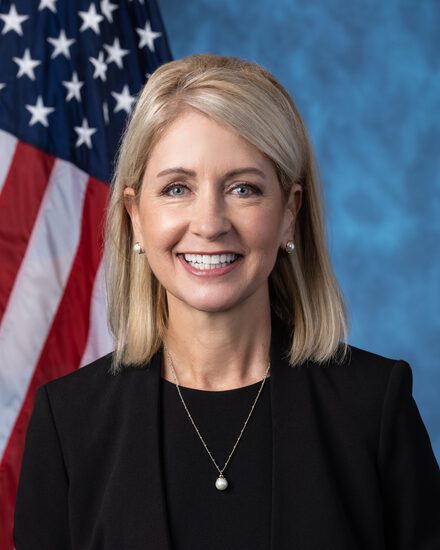
Rep. Mary E. Miller
Sponsored bills
This resolution condemns the Biden administration for (1) incentivizing illegal immigration by compensating illegal migrants who cross the southern border illegally, and (2) stopping construction on the southern border wall and failing to enforce Migrant Protection Protocols.
This resolution urges the Biden Administration to expeditiously restore the Migrant Protection Protocols, a policy requiring many asylum seekers arriving at the southern border to wait in Mexico while their cases are being adjudicated. It also urges the Administration to use certain public health powers, commonly referred to as Title 42 authority, to promptly expel migrants.
This resolution requests that the President provide to the House of Representatives documents concerning certain aspects of U.S. Customs and Border Protection (CBP) operations. For example, the resolution requests information, starting from January 20, 2021, about (1) the number of individuals apprehended by CBP along the southern border and demographic information about such individuals, (2) CBP officers stationed along the southern border, (3) individuals who had unlawfully entered the United States and have been released from CBP custody, and (4) the amount of federal funds expended relating to the care of individuals who had unlawfully entered the United States.
Maddy summaryHRES 493 is a non-binding House resolution expressing disapproval of President Biden's immigration enforcement actions. It specifically criticizes the 100-day pause on deporting individuals with final removal orders and the preservation of the DACA program, alleging these actions violate the President’s constitutional duty to "take Care that the Laws be faithfully executed." The resolution demands the removal of DHS Secretary Alejandro Mayorkas, calls for full enforcement of immigration laws, and asserts that the President has unlawfully usurped Congress’s legislative authority. It cites court rulings and a GAO opinion stating the President cannot substitute policy priorities for enacted laws. The resolution serves as a symbolic censure, not a policy change.
287(g) Program Protection Act This bill requires the Department of Homeland Security (DHS) to allow qualified state and local law enforcement agencies to perform certain immigration enforcement activities if the agency requests such authority. DHS may refuse to grant the request only if there is a compelling reason. Currently, DHS is authorized to grant such authority but is not required to do so.
Homeland Security Fentanyl Enforcement Act This bill specifically allows Special Agents of Homeland Security Investigations to enforce the Controlled Substances Act during their normal course of duties and to the same extent as the Drug Enforcement Administration.
Stop Harassing Owners of Rifles Today Act or the SHORT Act This bill removes certain short-barreled rifles, short-barreled shotguns, and other weapons from the definition of a firearm for purposes of regulation under the National Firearms Act (NFA). The bill also eliminates certain restrictions that apply to the sale or transportation of such rifles and shotguns in interstate commerce. If a state or local registration or licensing requirement is determined by reference to the NFA, the bill treats persons who acquire or possess a short-barreled rifle, short-barreled shotgun, or other weapon in accordance with the Gun Control Act of 1968 as meeting the registration and licensing requirements. The bill preempts certain state or local laws that tax or regulate these rifles and shotguns. The Bureau of Alcohol, Tobacco, Firearms and Explosives must destroy records relating to the registration, transfer, or manufacture of applicable weapons described by this bill within one year after the enactment of this bill.
Ending Catch and Release Act of 2022 This bill changes the treatment of certain non-U.S. nationals ( aliens under federal law) without lawful immigration status, including by prohibiting the release of asylum seekers into the United States while their cases are pending. The Department of Homeland Security (DHS) may not (with some exceptions) release an individual who is not clearly entitled to admission into the United States while the individual's case is pending, even if the individual is an asylum seeker. DHS may instead detain the individual or return the individual to a neighboring country in certain situations. The bill also expands expedited removal from the United States (i.e., removal without further hearing or review) to include individuals present in the United States without being admitted, with certain exceptions. Under current law, individuals are subject to expedited removal if they lack proper documentation or obtained an immigration benefit through fraud; such individuals are still subject to expedited removal under the bill. The bill also modifies the standard for establishing a credible fear of persecution to avoid expedited removal. Generally, an asylum seeker may avoid expedited removal if an asylum officer finds such a credible fear. Under this bill, an officer may find credible fear if it is more likely than not the individual can establish their eligibility for asylum, whereas under current law, the officer may find credible fear if there is a significant possibility that the individual can establish their eligibility.
Combating Violent and Dangerous Crime Act This bill revises various statutes with respect to violent crimes and establishes new criminal offenses. For example, the bill (1) increases the statutory maximum penalty for carjacking, and (2) establishes enhanced criminal penalties for certain federal drug offenses involving the manufacture or distribution of candy-flavored controlled substances or similar products for minors.