

Border Safety and Security Act of 2022 This bill requires the Department of Homeland Security (DHS) to suspend the entry of any non-U.S. nationals ( aliens under federal law) without valid entry documents during any period when DHS cannot detain such an individual or return the individual to a foreign country contiguous to the United States. A state may sue DHS to enforce this requirement. (Under current law, non-U.S. nationals who arrive at the border without entry documents are generally subject to expedited removal. However, if such an individual is found to have a credible fear of persecution, they are typically subject to detention while their asylum claim is being considered.) The bill also authorizes DHS to suspend the entry of non-U.S. nationals without entry documents at the border if DHS determines that such a suspension is necessary to achieve operational control over such a border.
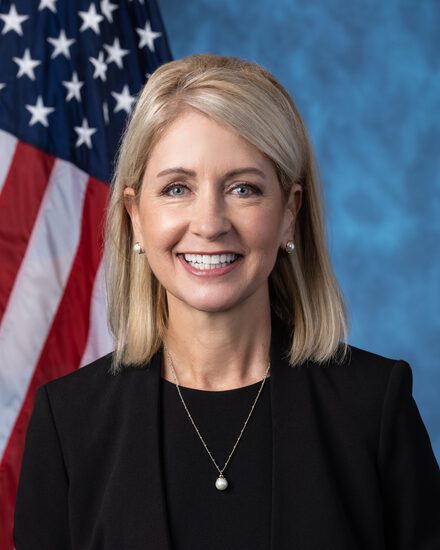
Rep. Mary E. Miller
Sponsored bills
Preserving Border Integrity Act This bill imposes restrictions on non-U.S. nationals (aliens under federal law) seeking asylum in the United States. Under this bill, a non-U.S. national may not, except in certain situations, seek asylum if the individual (1) entered (or attempted to enter) the United States through the northern or southern border, and (2) did not apply for protection from persecution or torture in at least one country that the individual transited through to reach the United States.
National Education Association Charter Repeal Act This bill repeals the federal charter granted to the National Education Association of the United States.
Anti-Caravan Act of 2022 This bill imposes criminal penalties on any individual who organizes or provides material support for a group of 25 or more non-U.S. nationals ( aliens under federal law) crossing international land borders with the intent to enter the United States without valid entry documents or lawful immigration status and in violation of any law. The bill also bars any non-U.S. national who participates in or organizes such a group from receiving any immigration benefit or status for specified periods of time.
Maddy summaryHR 7415 would repeal the 1990 Gun-Free School Zones Act, which prohibited firearms within 1,000 feet of school grounds. It removes specific references to school zones from federal gun law provisions in Title 18 of the U.S. Code. This change would eliminate the federal prohibition on firearms in designated school zones, altering the scope of existing gun law enforcement. The bill does not create new safety measures but modifies how federal gun laws apply to school areas.
No User Fees for Gun Owners Act This bill prohibits a state or local government from imposing any insurance requirement, tax, user fee, or similar charge as a condition of the manufacture importation, acquisition, transfer, or continued ownership of a firearm or ammunition, with the exception of a proportionate sales tax. The bill imposes the same prohibition under the Internal Revenue Code for firearms, pistols, or revolvers, but allows for the assessment of a proportionate sales tax.
Preventing Terrorist Sympathizers from Appeasing Terrorists Act This bill prohibits the revocation of the designation of the Islamic Revolutionary Guard Corps as a foreign terrorist organization except by a joint resolution of Congress. Currently, the Department of State may revoke such a designation. Such a designation carries various legal effects. For example, it is unlawful to knowingly provide material support to such an organization. Furthermore, a member of such an organization is barred from entering the United States if the member is a non-U.S. national (an alien under federal law).
TPS Reform Act of 2022 This bill changes the procedures for designating a country with temporary protected status (TPS). (Qualified nationals of a TPS-designated country shall have work authorization and may not be removed from the United States while the status is in effect.) Specifically, the bill requires an act of Congress to designate a TPS country, whereas currently the Department of Homeland Security has such authority. The initial act of designating a TPS country must include a time period for the designation of up to 18 months and also contain certain information, including an estimate of the number of individuals who would benefit from the status. Congress may also pass an act to terminate or extend a designation. The bill also establishes that an alien who lacks lawful immigration status may not receive the benefits of temporary protected status.
Prosecutorial Remedies and Other Tools to end the Exploitation of Children Today Act or the PROTECT Act of 2022 This bill alters federal sentencing for individuals who commit certain child pornography offenses. It generally requires judges to impose a sentence that is not less than the minimum period specified in the sentencing guideline range. The bill also increases certain criminal penalties for possession of child pornography.
Countering Russian Influence in our Politics Act of 2022 This bill requires tax-exempt organizations that receive any thing of value from a Russian foreign principal (e.g., Russia's government or a Russian national) to register as an agent of a foreign principal, with certain exceptions. Such an organization must periodically report to the Department of Justice certain information relating to its relationships to the relevant Russian foreign principals. The bill also imposes additional reporting requirements on a tax-exempt organization that has (1) received any thing of value from a Russian foreign principal since February 1, 2014; and (2) engaged in political activities to discourage the U.S. production of oil, petroleum products, natural gas, or critical minerals.